China's Encroachment in Arunachal Pradesh Complicates Modi's Diplomatic Balancing Act Before BRICS Summit
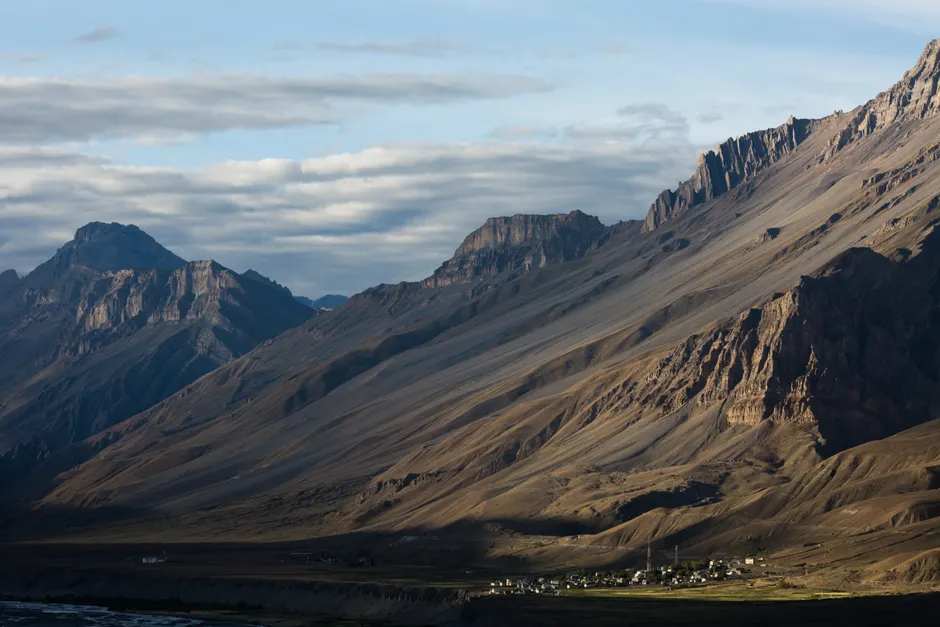
A fact-finding team from the People's Party of Arunachal Pradesh (PPA) has reported that China has blocked Indian army access to key patrolling points and encroached on land in Upper Subansiri district of Arunachal Pradesh — a state Beijing claims as part of southern Tibet. The findings, released as reported by Al Jazeera on August 17, 2026, come weeks before Chinese President Xi Jinping is expected to visit India for the BRICS summit in New Delhi on September 12–13, 2026.
The PPA, which is part of the North East Democratic Alliance — a regional bloc led by the Bharatiya Janata Party (BJP) — sent a four-member team to the remote area following initial reports of alleged encroachment, according to PPA Vice President Kaling Jerang. Arunachal Pradesh is governed by the BJP, placing the findings within the political orbit of Prime Minister Narendra Modi's governing coalition.
Jerang's team found that Indian armed forces are unable to patrol the Taksing area from April to October due to harsh weather, while Chinese forces reportedly remain active throughout that window. Residents told the team that Indian forces abandoned Shera 5, a border patrolling point, after a confrontation with China's People's Liberation Army (PLA) in 2023. Jerang said locals were "furious" over losing ancestral hunting grounds and called the ground reports of the intrusions "irrefutable" (Al Jazeera).
The Nah Welfare Society (NWS), a local tribal body, wrote to government officials that Chinese encroachment has "increased manifold" with an "intention to occupy as much land as possible." India and China share a 3,488-km disputed border along India's northern and eastern frontiers, including in Jammu and Kashmir, Ladakh, Sikkim, and Arunachal Pradesh, where the contested segment runs 1,129 km.
The report ignited political outrage in New Delhi, where opposition parties criticised Modi for silence over alleged Chinese encroachment across multiple border fronts in recent years. The timing is especially delicate given Xi's expected arrival for the BRICS summit in September, which would mark a high-level diplomatic engagement between the two countries amid persistent friction along the Line of Actual Control (LAC) — the de facto boundary separating Indian- and Chinese-controlled territory, which has no mutually agreed demarcation across large stretches.
This is not an isolated flashpoint. In December 2022, PLA troops attempted to unilaterally change the status quo by encroaching on the LAC in the Yangtse area of Arunachal Pradesh. In October 2024, Al Jazeera reported a border confrontation in which Beijing accused Indian forces of obstructing a routine patrol while New Delhi said Chinese soldiers had encroached upon Indian territory. A similar pattern recurred in November 2025, when China again accused Indian forces of obstructing a patrol and India alleged a fresh Chinese encroachment (Al Jazeera). India's Ministry of External Affairs states that China disputes the legality of the McMahon Line — the colonial-era border dividing Arunachal Pradesh from China's Tibet Autonomous Region — and "illegally claims about 90,000 square kilometres of Indian territory."
The cartographic dimension has also intensified. In April 2023, China released a map renaming 11 places in Arunachal Pradesh, prompting India to formally protest. India rejected the renaming, with New Delhi asserting that Arunachal Pradesh is an integral part of Indian territory (Reuters). The tit-for-tat continued: India formally named 27 places in Arunachal Pradesh, a move China criticised in August 2026 as "unilateral" and threatening to bilateral relations (The Hindu).
India's Ministry of External Affairs states that the government "regularly takes up any transgression along the Line of Actual Control with the Chinese side through established mechanisms," including border personnel meetings and flag meetings. The lack of a mutually agreed boundary across large stretches of the LAC is the structural source of recurring friction — think of it as two neighbours disputing where one property ends and the other begins, with no shared fence to settle the argument.
The broader context here is one of calibrated pressure. Beijing's pattern of activity in Arunachal Pradesh — seasonal exploitation of terrain advantages, incremental patrolling point takeovers, and cartographic assertion — tracks with a strategy of salami-slicing along disputed borders without triggering a full-scale military response. Each move is small enough to avoid war but cumulatively shifts facts on the ground. The PPA fact-finding report, coming from a party within Modi's own coalition structure, adds domestic political weight to the allegations and complicates the Indian government's preference for quiet diplomacy with Beijing.
With the BRICS summit weeks away, New Delhi faces a familiar dilemma: confront the encroachment publicly and risk derailing a carefully managed diplomatic rapprochement, or absorb the political cost of silence while opposition pressure builds. The fact that findings of this nature have surfaced from within the ruling bloc's own ranks suggests the issue is becoming harder to manage at the cabinet level. How Modi navigates Xi's visit in September — whether border friction is raised publicly, relegated to sideline discussions, or papered over entirely — will signal the trajectory of India-China relations in the months ahead.


