SpaceX Goes Public at $135 a Share: What You Need to Know

SpaceX Goes Public at $135 a Share: What You Need to Know
The IPO Price and Size
SpaceX priced its initial public offering — an IPO, or the first time a private company sells shares to the public — at $135 per share, according to Reuters (published 2026-06-02 GMT). The company expects to raise $7.5 billion from the offering. That puts it among the largest technology IPOs in recent years by dollar amount, though the actual trading price will likely differ from this opening figure in the days and weeks that follow.
Goldman Sachs is the lead underwriter — essentially the bank managing the deal and guaranteeing the sale, as CNBC reported (published 2026-05-21 GMT). SpaceX filed formal disclosure documents with the SEC (the Securities and Exchange Commission) weeks earlier, laying out its finances and business operations for public investors to review.
What SpaceX Actually Does
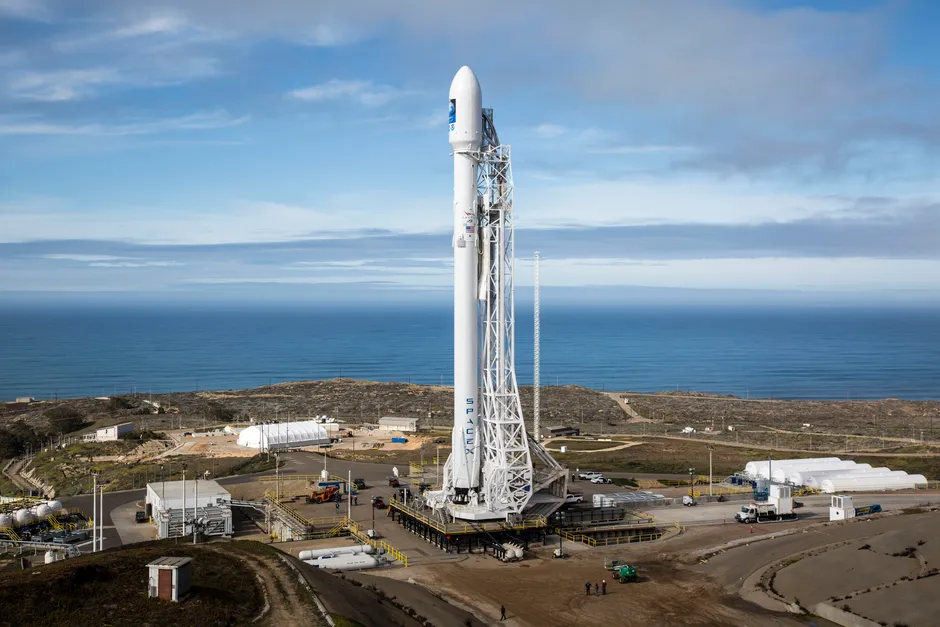
According to SEC filings, SpaceX designs, manufactures, launches, and operates rockets and spacecraft. It also runs Starlink, a satellite broadband service, and offers satellite-to-mobile phone connectivity. This matters for valuation — the company has two quite different money-making engines running at once.
Launch services are project-based: customers (NASA, the military, commercial firms) pay to send cargo or satellites into orbit. Revenue depends on how many launches the company actually completes. Starlink subscriptions, by contrast, are recurring: customers pay monthly for internet access, which creates predictable, scalable revenue with different financial characteristics and growth potential. Any analyst pricing this IPO had to value both businesses simultaneously, which is part of why it took time to settle on the $135 figure.
SpaceX was founded in 2002 and operated privately for nearly a quarter-century. It funded itself through NASA and Department of Defense contracts, private investment rounds at rising valuations, and secondhand share sales to insiders — all without the transparency public company shareholders would normally demand. That history matters: institutional investors buying at the IPO are inheriting a company with limited public financial track record.
How the Deal Works
Goldman Sachs controls the order book — the list of who wants to buy shares and in what quantity. The bank decides which investors get allocations (shares at $135) and in what amounts. Goldman also manages price support if the stock drops sharply in early trading. For a deal this size, these decisions shape whether the stock rises or falls on day one more than media buzz or retail enthusiasm do.
SpaceX filed a standard IPO registration form (Form S-1) with the SEC. It includes audited financial statements, a description of the business, risk factors, and details on how the company plans to use the $7.5 billion. Institutional investors (pension funds, mutual funds, hedge funds) studied these filings closely, looking for segment-level revenue breakdowns, how many Starlink subscribers there are and what they pay, the backlog of launch orders, and projected capital spending. The depth of detail SpaceX disclosed — especially on Starlink's financial performance — was negotiated throughout the roadshow (the period when company executives pitch the deal to major investors).
At $135 per share, SpaceX is issuing roughly 55.6 million new shares to raise $7.5 billion. The market capitalization implied by this offering — derived from the total share count disclosed in SEC filings — is the baseline figure analysts will use to compare SpaceX's valuation to other companies. It is worth waiting for actual trading data before treating any analyst's price target as gospel.
The Shift from Private to Public Ownership
This pattern plays out repeatedly. Major capital-intensive technology companies — think Amazon, or more recent satellite and infrastructure platforms — come to market after years of private funding. They arrive with a mix of government contracts (steady revenue) and a consumer product that may not yet be profitable but could be huge if it scales. Investors are asked to bet on future growth more than current earnings.
Here is what often happens: investors who bought shares in late private rounds at prices near or above the IPO price have little reason to hold if the IPO price matches what they paid. They may sell once their lock-up period ends (typically six months), when they are finally allowed to trade. New IPO buyers are making a forward bet, betting that Starlink in particular will reach critical scale before the capital cost of building and launching rockets eats up free cash flow.
SpaceX's satellite-to-mobile capability — which lets people send texts and calls via satellite rather than cell towers — is a third revenue stream the company did not emphasize in its early private years. This repositions Starlink from a fixed broadband competitor to a potential layer that mobile phone operators might bypass altogether. That kind of strategic optionality is genuinely hard to value, which is why secondary trading will test the $135 price hard.
The practical upshot: Goldman's decisions about who gets stock at $135 will matter more than retail enthusiasm for the first few weeks of trading. Deals anchored by long-term institutional holders tend to trade more orderly; deals flooded with retail order flow tend to be volatile and erratic. The pattern should be clear within a week of trading.
Key Unknowns
Several material details have not been independently confirmed as of 2026-06-09. The exact use-of-proceeds breakdown — how much of the $7.5 billion goes to expanding the Starlink satellite constellation, developing Starship (the company's heavy-lift rocket), or adding balance-sheet cash — should be verified directly in the S-1 filing. Lock-up duration (how long early shareholders must wait before selling) and the identity of any insiders or private investors selling shares alongside the IPO are similarly material.
The three numbers that every serious valuation model needs are: (1) how much revenue Starlink generates from satellite-to-mobile, (2) Starlink's average revenue per user and churn rate (how fast customers leave), and (3) the backlog of launches SpaceX has already sold. Whether SpaceX disclosed these figures in sufficient detail is something the S-1 itself will reveal. The market's judgment on whether the disclosure was good enough will arrive quickly once trading starts.
SpaceX has priced itself at $135 a share targeting $7.5 billion in gross proceeds. The operational complexity — rockets, satellites, broadband subscriptions, and mobile connectivity all at once — means the price discovery process in the first months of public trading is unlikely to be straightforward.