AST SpaceMobile's First Five Satellites: What You Need to Know

Five Satellites, One Step Forward
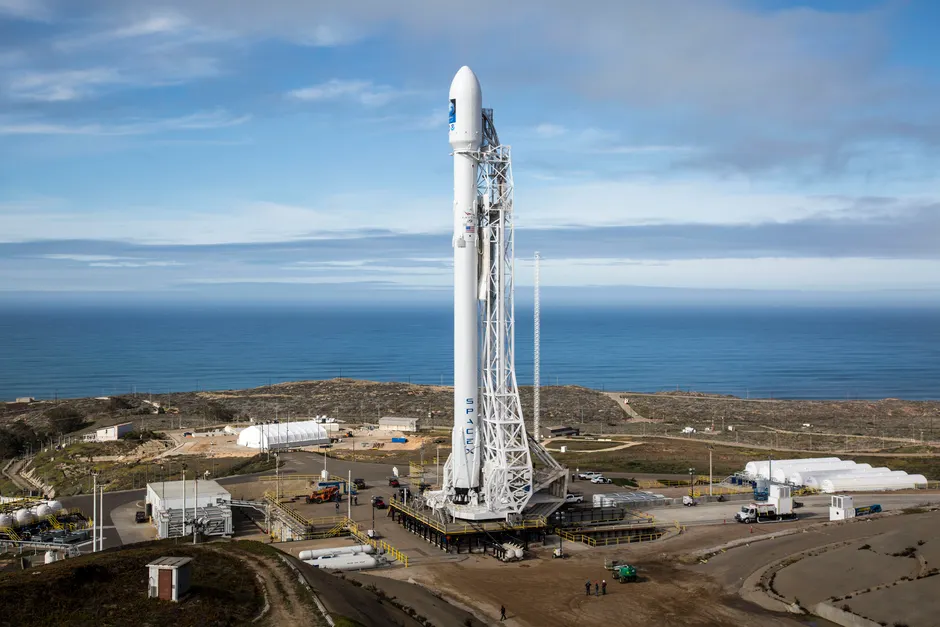
On September 12, 2024, a SpaceX Falcon 9 rocket launched from Cape Canaveral carrying AST SpaceMobile's first five commercial satellites — called BlueBird 1 through 5 — into orbit. This launch marks a shift for the company: it's moving from testing prototypes to actually putting working hardware in space designed to make money.
What makes this different from other space internet companies is the goal: these satellites will let your regular smartphone connect to the internet directly from space, without any special antenna or equipment. That's a harder technical problem than it sounds, and only a few companies are trying to solve it this way. Starlink, Skylo, and Lynk Global are all working on satellite-to-phone connections too, but they're each using different technology and strategies.
The Spectrum Strategy: Borrowing Verizon's Signal
Here's the clever part: AST SpaceMobile isn't trying to get its own satellite frequency band (which would take years and involve complicated international negotiations). Instead, in May 2024, the company announced a partnership with Verizon to use Verizon's existing 850 MHz cellular spectrum from space.
Why 850 MHz? Lower-frequency signals travel farther and pass through walls and trees better than higher frequencies. When your satellite is 700 kilometers above the ground, it needs every advantage to reach a phone that wasn't designed to pick up space signals. Using Verizon's existing spectrum also makes the legal and technical setup simpler — to a phone connecting to the network, it looks and acts like a regular cell tower, just orbiting overhead instead of sitting on a hill.
For Verizon, this fills a real gap. Building cell towers in rural areas where few people live doesn't make financial sense. But satellite coverage of those same areas costs nothing extra whether you serve ten people or ten thousand. The economics of space-based backup coverage only make sense in places where building traditional infrastructure is too expensive.
Multiple Launch Partners: Spreading the Risk
Building a large constellation of satellites requires regular, reliable launch access. Too often in the past, companies relying on a single launch provider got stuck when that provider hit a problem or hiked prices. In November 2024, AST SpaceMobile signed launch agreements with three different companies: Blue Origin, India's ISRO, and SpaceX. This diversification matters.
Splitting launches across providers reduces the leverage any one company has over AST's schedule and budget. It also creates natural competition that should help keep costs down. Each provider has different capabilities too — they can reach different orbital altitudes and angles — which gives AST flexibility as the constellation grows.
The history lesson here is instructive. Earlier satellite internet companies like Iridium and Globalstar in the 1990s relied too heavily on single providers. When launch bottlenecks appeared, costs soared and timelines slipped, contributing to both companies' bankruptcies. AST seems to have learned that lesson: diversify early, before you're desperate.
How BlueBird Actually Works
The core challenge with satellite-to-phone connectivity is physics: a tiny satellite antenna can't send enough power over the huge distance to a phone without a special receiver. AST's answer is to make the satellite antenna much larger than usual — BlueBird's phased-array aperture (essentially an electronically steerable collection of smaller antennas) is substantially bigger than typical satellite antennas.
The tradeoff is obvious: larger antennas require larger, heavier satellites. Heavier satellites cost more to launch and need more fuel to stay in orbit against atmospheric drag. But if the technology works, each satellite can serve more users, which improves the economics per satellite over its operational life.
The BlueBird 1-5 launch on Falcon 9 is the first real test of whether this approach actually works at a production scale with five units at once. Five satellites won't give full coverage across North America — you'd need dozens, maybe a hundred, for that. But they validate that AST can actually build and launch these satellites reliably, which is essential if the company wants to deploy a full constellation.
The Competitive Picture
Satellite-to-phone service is moving from theory to practice. T-Mobile partnered with Starlink, AT&T and Deutsche Telekom partnered with Skylo, and Verizon partnered with AST SpaceMobile. The carriers — the big phone companies — are essentially saying this kind of backup coverage is worth building into their networks.
Each approach has different tradeoffs. AST's model uses existing carrier spectrum and integrates directly into Verizon's network. That potentially makes it simpler for customers (the same Verizon account, the same billing) and smooths the handoff between satellite and regular cell coverage. It also means Verizon maintains direct control over the spectrum, which aligns the business incentives.
The competitive reality now turns on execution rather than speculation. AST has signed binding contracts for launches, committed money to manufacturing, and set timelines. The financial and operational risks are no longer theoretical — they'll appear in quarterly results. Success depends on three things: whether BlueBird satellites perform reliably in orbit, whether AST can manufacture them in volume without defects, and whether the company can launch them fast enough to build the full constellation before competitors capture the market.
What Happens Next
The immediate technical hurdles are real: getting the phased-array antennas working properly in orbit, confirming the connection to Verizon's 850 MHz spectrum works as designed, and making sure it all plays nicely with actual phones in Verizon's device lineup.
The commercial pressure is equally real. A functioning constellation covering all of North America with acceptable coverage frequency would require somewhere between dozens and a hundred satellites — far more than five. The multi-launch agreements show AST is betting it can get there, but the actual test is in execution: Can the company build satellites fast enough? Are they reliable enough? Can the launches happen on schedule?
The broader context here matters: the BlueBird 1-5 launch is not the finish line. It's the first data point in what will be a years-long, capital-intensive infrastructure program. The partnerships, the spectrum, and the launch contracts are all necessary, but none of them guarantees success. What happens in orbit, on the production line, and on the launch schedule over the next 18 months will determine whether AST and Verizon can deliver on their coverage promises before competitors do.