ByteDance and Tencent Receive First 10,000 NVIDIA H200 GPUs Each

ByteDance and Tencent have each received 10,000 NVIDIA H200 GPUs over the past several weeks — the first confirmed deliveries under a deal pipeline that has been taking shape since the start of the year. According to the Financial Times, Chinese authorities directed both companies to route the chips to Hong Kong, where neither currently operates data centers (Financial Times).
The shipments fall under a broader authorization covering ten Chinese firms. Reuters reported in May that the US government cleared H200 sales to ten companies, including Alibaba, Tencent, and ByteDance, with Lenovo and Foxconn approved as distributors (Reuters, May 2026). The Financial Times, in its most recent reporting, put the per-company ceiling at 75,000 units. ByteDance and Tencent are each allowed to buy up to 100,000 H200s, though China reportedly wants them to keep most of those chips off the mainland to support its domestic semiconductor industry (Financial Times). The two figures, 75,000 and 100,000, may reflect different categorizations of the total allowance or updates between the May and August reporting; the Financial Times's August article is the more recent source.
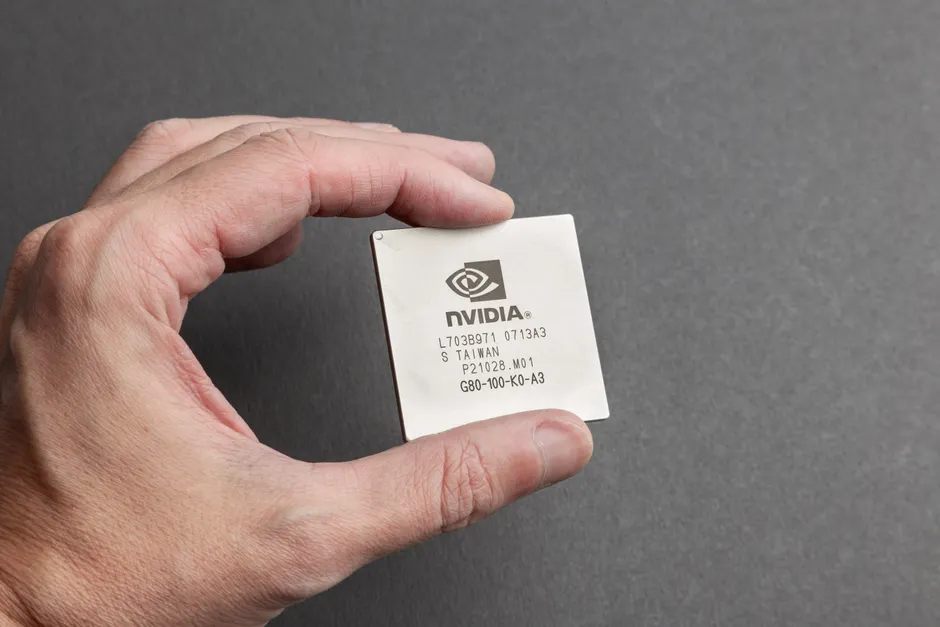
The H200 is an AI accelerator — a specialized GPU designed for the intense, parallel computation required to train large language models. Think of it as the engine that powers modern AI: without large clusters of these chips, training a frontier model is impractical.
The path to these deliveries was anything but straightforward. The Biden administration had banned shipments to China of the H200 and other advanced AI accelerators over military-use concerns (Financial Times). At one point, China's internet regulator prohibited the country's largest technology companies from purchasing NVIDIA's AI chips altogether (Financial Times). Suppliers of H200 components paused production after Chinese customs blocked shipments (Financial Times).
The turning point came when the White House reversed the export prohibition and authorized NVIDIA to begin shipping H200s to China, while also imposing a 25% tariff on NVIDIA and AMD chip sales (Financial Times). The US permitted sales to approved Chinese customers starting in December 2025, by which point the H200 was already two years old (Engadget). On the Chinese side, Beijing's own hesitation was the primary remaining barrier. Reuters reported in February that the Trump administration was willing to let ByteDance buy H200s, but NVIDIA had not agreed to the proposed conditions (Reuters, February 2026). In March, Reuters reported that China granted preliminary approval for H200 sales (Reuters, March 2026).
In January, Reuters reported that China had approved the import of over 400,000 H200 chips in total (Reuters, January 2026). The current 10,000-unit shipments to ByteDance and Tencent are the first tangible evidence of that pipeline producing actual silicon.
The Financial Times reports that other Chinese companies could soon receive H200 shipments of the same size. China reportedly allowed the processors to enter the mainland to boost local firms' ability to train frontier AI models and compete with American counterparts (Financial Times).
The Hong Kong routing requirement adds a layer of logistical complexity worth examining. Neither ByteDance nor Tencent currently maintains data centers in the territory, which means any training workloads running on these chips will require either new infrastructure buildout in Hong Kong or a cross-border data and compute arrangement that satisfies Chinese regulatory constraints. The directive to keep most chips off the mainland, while permitting enough to support frontier model training, suggests a deliberate balancing act: Beijing wants its champions to have access to NVIDIA's accelerator ecosystem for competitive AI development, but is unwilling to fully abandon its push for domestic semiconductor self-sufficiency by flooding the mainland with foreign silicon.
For context, the H200 launched in late 2023 and has since been partially superseded by NVIDIA's Blackwell architecture in the US market. The two-year gap between a chip's stateside availability and its arrival in China is a familiar pattern in the export-control era. What is less familiar is the joint US-China choreography on display here: Washington sets a tariff and approves a customer list, Beijing approves import volumes and dictates delivery geography, and the chips land in a jurisdiction where the buyers do not yet have the facilities to use them.
The broader pattern worth noting is that the 25% tariff mechanism shifts the US-China chip trade from a binary permission model — either blocked or allowed — to a revenue-generating one. Rather than imposing a flat prohibition, the US is now extracting fiscal value from the export of chips it previously blocked entirely, at least for chips that are no longer at the absolute frontier. Whether that framework extends to future architectures, or remains specific to H200-class parts that the US considers sufficiently aged, will shape how Chinese AI labs plan their compute roadmaps.