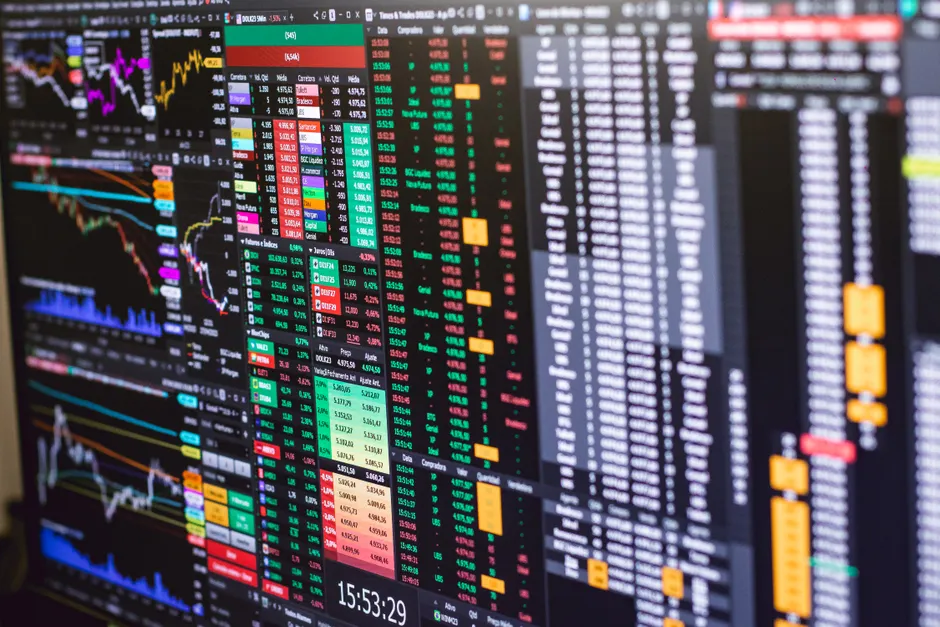
Chip Stocks Steady, Nasdaq Higher Ahead of Fed Minutes in a Week Packed with Signals

U.S. chip stocks were flat in premarket trading on August 19, 2026, while Nasdaq futures edged higher, after a sharp rise in borrowing costs added to concerns around artificial intelligence stocks. The moves come against a heavy week of scheduled events: the Federal Reserve is set to release minutes from its latest Federal Open Market Committee meeting on Wednesday, and a slate of major retail earnings reports is also on the docket (WSJ; CNBC).
The FOMC held its two-day meeting on July 28–29, 2026, concluding with a press conference on July 29. At that meeting, the Committee voted to maintain the target range for the federal funds rate — the interest rate banks charge each other for overnight loans, which serves as the Fed's main lever for steering the economy (Federal Reserve; Federal Reserve). The minutes to be released this week will be the first detailed account of the deliberations behind that hold decision.
The release is being closely watched for an unusual reason. Kevin Warsh, who chairs the Federal Reserve as of August 2026, is averse to the central bank providing forward guidance — the practice of signaling the likely future path of interest rates to shape market expectations. That stance makes the minutes a primary channel through which investors will search for any hint of the Committee's thinking, since Warsh's own public communications have been deliberately sparse on future policy direction (WSJ).
The last set of FOMC minutes, covering the June 16–17, 2026 meeting, was released on July 8, 2026 (Federal Reserve). Those minutes preceded the July hold decision and will serve as a reference point for market participants looking for shifts in the Committee's internal debate between June and July.
Bond markets and chip-sector equities have steadied in premarket trading, with chip stocks holding flat and Nasdaq futures posting modest gains. The semiconductor space has been sensitive to AI-related valuation concerns, and the sharp rise in borrowing costs adds a second pressure point for a sector that carries high duration risk — meaning its stock prices are especially sensitive to changes in interest rates because investors expect much of the companies' cash flow to come far in the future — relative to the broader market (WSJ).
The broader context here is a market caught between two forces. The combination of elevated rate sensitivity in the AI-adjacent equity complex and a Fed chair who has structurally limited the market's ability to pre-commit to a rate path creates a particular setup for the minutes release. Traders who would normally calibrate positioning around the chair's press conference tone are instead left to parse the internal deliberation record for dispersion — that is, how much disagreement existed around the consensus hold vote. Any heterogeneity in the discussion around inflation, labor market conditions, or the terminal rate assumption (the level where the Fed is expected to stop adjusting rates) will carry outsized weight precisely because Warsh has chosen not to pre-empt those signals through forward guidance.
The retail earnings slate adds a second dimension to the week's risk calendar. Consumer-facing corporate results will feed directly into the growth and inflation signals the FOMC is monitoring, and soft or strong prints could shift the framing of the minutes before markets have fully digested them. The sequencing matters: if retail earnings land on the inflationary side, the minutes' internal debate around price pressures will be read through a more hawkish lens — meaning investors will interpret the text as leaning toward keeping rates higher for longer — regardless of what the text itself says.
For fixed-income and equity desks, the practical question is whether the July minutes reveal a Committee that held with conviction or one that held reluctantly. Under a chair who restricts forward guidance, that distinction, visible only in the minutes' language around dissent, patience, and data dependency, becomes the primary tradable signal. Markets are pricing in the hold itself; what they cannot price with confidence is the trajectory, and Warsh's communications framework ensures that gap remains wide until the minutes are in hand.