Calendly Launches AI Notetaker and Scheduling Assistant Callie
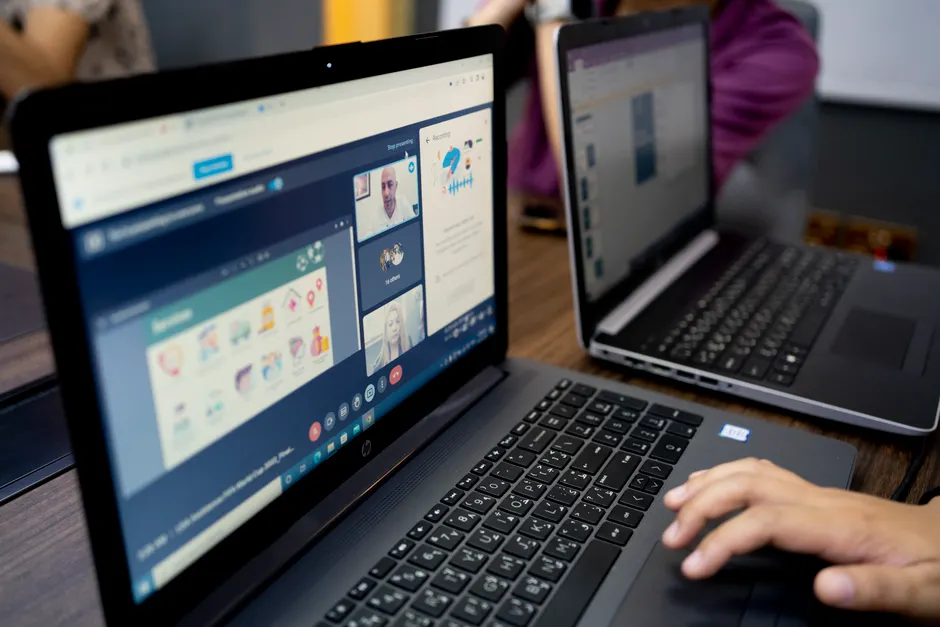
Calendly announced a new meeting note-taking product and an AI scheduling assistant named Callie at its 'Powered by Calendly' virtual launch event on August 19, 2026 [https://calendly.com/powered]. The note-taker joins meetings, records audio and video, transcribes them, and generates summaries, action items, and draft follow-up emails [https://techcrunch.com/2026/08/19/calendly-throws-its-hat-into-meeting-note-taker-circus/].
The company is also testing a feature that uses system audio to transcribe meetings, an approach similar to Granola's local transcription model [https://techcrunch.com/2026/08/19/calendly-throws-its-hat-into-meeting-note-taker-circus/]. The Notetaker works with Zoom, Google Meet, and additional platforms [https://calendly.com/notetaker]. It informs participants that recording is active by sending a message in the meeting chat, allows any user to ask the app to leave, and can notify people before the meeting starts via integration with Calendly's scheduling system [https://techcrunch.com/2026/08/19/calendly-throws-its-hat-into-meeting-note-taker-circus/].
Callie, currently in private beta and available only to select users, functions as an AI assistant for the work before and after meetings, handling calendar coordination over email [https://calendly.com/help/callie-ai-assistant-overview]. Users can schedule meetings with Callie by email [https://calendly.com/help/how-to-schedule-with-callie]. The assistant uses Calendly's meeting and scheduling stack to set up meetings, check availability, and surface context from prior meetings [https://techcrunch.com/2026/08/19/calendly-throws-its-hat-into-meeting-note-taker-circus/]. Calendly's homepage describes Callie as an AI assistant that finds times that work for everyone [https://calendly.com/].
CEO Tope Awotona said the company wanted to automate workflows for top users in outward-facing roles like sales and marketing [https://techcrunch.com/2026/08/19/calendly-throws-its-hat-into-meeting-note-taker-circus/]. He positioned the opportunity in the note-taking space around automating tasks after the meeting is transcribed, noting that many existing notetakers handle recording and transcription but leave work remaining after meetings end [https://techcrunch.com/2026/08/19/calendly-throws-its-hat-into-meeting-note-taker-circus/].
Calendly also renamed its Meetings page to 'Calendar' in the product, and users can still manage scheduled meetings from the Calendar page [https://calendly.com/help/meet-the-new-calendly].
The launch arrives amid ongoing debate about AI notetakers in professional settings. A July 2026 Associated Press spotlight reported that while AI notetakers promise easy meeting recaps, some professionals question their use [https://www.ap.org/news-highlights/spotlights/2026/ai-notetakers-promise-easy-meeting-recaps-but-some-professionals-question-their-use/].
The broader competitive context here is that Calendly is leveraging its position at the scheduling layer to push downstream into meeting execution and post-meeting workflow. The integration point is natural: if Calendly already knows who is meeting, when, and why, extending that context into transcription, summarization, and follow-up draft generation reduces friction for the user. The question is whether that scheduling-layer advantage outweighs the head start of dedicated note-taking tools that have been iterating on transcription quality, summarization accuracy, and CRM integration for longer.
The consent mechanism is worth noting. By using its scheduling integration to notify participants before a meeting starts that recording will occur, Calendly addresses the pre-meeting awareness gap that has been a friction point for bot-based notetakers that join calls unannounced. The ability for any participant to ask the app to leave via chat adds a layer of in-meeting control.
The system-audio transcription feature, still in testing, follows a different architectural pattern than the bot-joins-the-call approach. Rather than injecting a participant into the meeting, it captures audio locally from the system, similar to Granola's method. This can reduce the visible footprint in the meeting and sidestep some platform-specific bot restrictions, though it raises different questions about where the audio is processed and stored.
For tech professionals evaluating this, the combined Callie and Notetaker stack targets the full meeting lifecycle, from scheduling through follow-up. Awotona's emphasis on post-meeting automation, rather than transcription alone, aligns with where the market has been heading. Raw transcripts are table stakes; the value is in structured action items, CRM updates, and draft communications that reduce manual post-meeting labor. Whether Calendly's execution matches the ambition will depend on transcription quality, summary accuracy, and the depth of its integrations with the sales and marketing tools its target users already depend on.
The private beta status of Callie means the scheduling assistant is not yet broadly available, and the system-audio feature remains in testing. The note-taking product itself appears to be launching alongside today's event [https://calendly.com/powered].