April Inflation Jumps Back Above 3.8%—What It Means for Rate Cuts

What the April Numbers Show
The Bureau of Labor Statistics released April 2026 inflation data on May 12, 2026, and the headlines exceeded what most economists expected. The Consumer Price Index — a measure of what Americans pay for goods and services — jumped 0.6 percent in a single month (after accounting for seasonal patterns), pushing the 12-month inflation rate to 3.8 percent, up from 3.3 percent a month earlier. That's a jump of 50 basis points in one month. (A basis point is one hundredth of a percent — the smallest unit economists use to measure rates.) (BLS, May 12 2026)
Context matters here. The Federal Reserve aims to keep inflation at 2 percent over the long term. A 3.8 percent reading sits well above that target, and the gap widened this month rather than narrowed. That's the opposite of what the Fed — and markets betting on rate cuts — wanted to see.
Core Inflation: The Stubborn Part
When you strip out the most volatile items — food and energy prices, which jump around a lot — you get "core inflation." For the 12 months ending April 2026, core inflation came in at 2.8 percent, up from 2.6 percent the month before. (BLS, May 12 2026)
A 20-basis-point rise in one month is less dramatic than the headline jump, but it's significant because core inflation is supposed to be steadier and more predictive of longer-term trends. It had been running at 2.6 percent as recently as November 2025, so this upward drift — two months in a row now — signals that price pressures are not disappearing as quickly as many people thought they were.
The Grocery Bill Is Still Rising
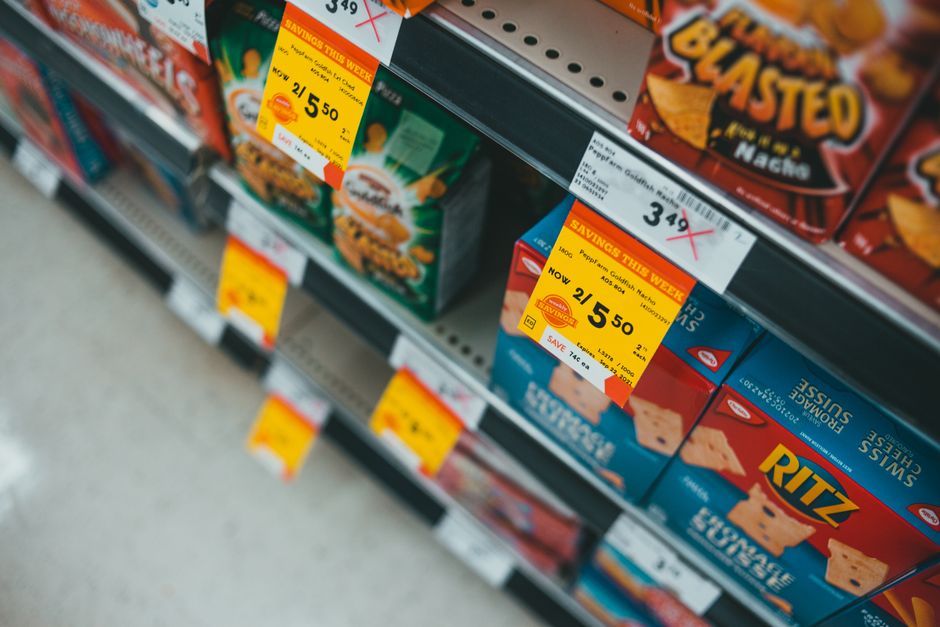
Food inflation hit 3.2 percent for the 12 months ending April 2026. What you actually pay at the supermarket — the "food-at-home" index — came in at 2.9 percent. (BLS, May 12 2026)
These may not sound alarming on their own. But consider this: lower-income households spend a larger share of their budget on food than wealthier ones do. A 3 percent rise in grocery costs matters far more to a family stretching their paycheck than to someone with substantial savings. And because people check their grocery bills constantly, persistent food inflation keeps ordinary Americans expecting higher prices even if other costs stabilize.
Why the Monthly Jump Matters
A 0.6 percent monthly increase sounds small until you annualize it — that pace would run above 7 percent a year, nowhere near the Fed's comfort zone. The BLS report doesn't detail exactly which items drove the jump, but the combination of rising food costs, sticky core inflation, and that headline number suggests this was broad-based, not just an energy blip.
The fact that core inflation also accelerated rules out the explanation "it's just oil prices spiking again." This is genuinely wider price pressure.
Why the Fed Can't Just Cut Rates Yet
Here's the harder story for rate expectations. Back in 2021 and 2022, the Fed downplayed rapidly rising inflation as "transitory" — temporary. By the time they acted, they had to raise rates by 525 basis points over about 16 months. It was the most aggressive tightening since the early 1980s. The lesson the Fed learned: waiting is expensive.
April's data won't spark another campaign like that, but it does make a near-term case for rate cuts much harder to argue. The Fed has two jobs: maximize employment and keep prices stable. The labor market still looks solid (nothing in this report contradicts that), so the Fed has little reason to lower rates while headline inflation is running nearly 200 basis points above target.
Futures markets — the betting pools where traders price in the odds of future Fed moves — will need to shift their bets away from cuts later this year. But remember: markets are guessing, not predicting. The next two inflation reports will shape expectations at least as much as this one.
What Happens Next
The May 2026 inflation data will land in mid-June 2026. Between now and then, the market will watch for new signals from Federal Reserve officials, fresh employment reports, and any signs that tariffs are pushing goods prices higher — a concern that has lingered throughout 2025 and into 2026.
Who Feels This
For people with mortgage debt or other adjustable-rate loans, a Fed that stays on hold means your borrowing costs could stay elevated longer than you'd hoped. For retirees living on fixed income, inflation erodes the value of each dollar more slowly than they need — so a pause on rate cuts is a headwind, not a help.
For investors in longer-term stocks and bonds, a Federal Reserve that can't or won't cut rates anytime soon pushes down what those future profits and coupon payments are worth in today's dollars. That's a structural drag on valuations even if companies are still earning healthy profits.
The Takeaway
April's inflation data is clearly a setback for anyone hoping the Fed would start cutting rates soon. Headline inflation at 3.8 percent, core at 2.8 percent, a 0.6 percent monthly jump, and grocery costs still running at 3.2 percent paint a picture of an economy where prices are not falling back toward the Fed's 2 percent target quickly enough to justify rate cuts. No single number in this report is a catastrophe, but the pattern they form matters: the Fed is likely stuck higher for longer. The next inflation prints will tell us whether this month was an outlier or the start of a new trend.