Flock Safety Is Testing an AI Tool That Identifies Drivers by Behavior and Matches People to Physical Descriptions
Flock Safety is testing an AI-powered investigation tool, called OS Investigate, that can identify individual drivers by their driving habits and locate people based on physical descriptions, according to reporting by Wired and confirmed by Engadget on August 19, 2026.
OS Investigate draws from a network of cameras deployed across 6,000 communities and logs the movements of drivers within those communities. The software was previously developed under the name Nightshift. It can be used to find potential witnesses to a crime by analyzing vehicle movements near a crime scene, then cross-referencing that data with police case files, 911 dispatch logs, and commercial identity records. According to Wired, the tool can "search for people in an area drawn on a map based on nothing more than a physical description."
The software includes a chatbot component that allows officers to type plain-language requests — for example, asking it to find all blue SUVs that passed through a specific intersection on a given night. OS Investigate ships with 69 prewritten prompts. Flock says it is testing the tool with select law enforcement partners and that current capabilities "may not reflect" what it eventually ships commercially.
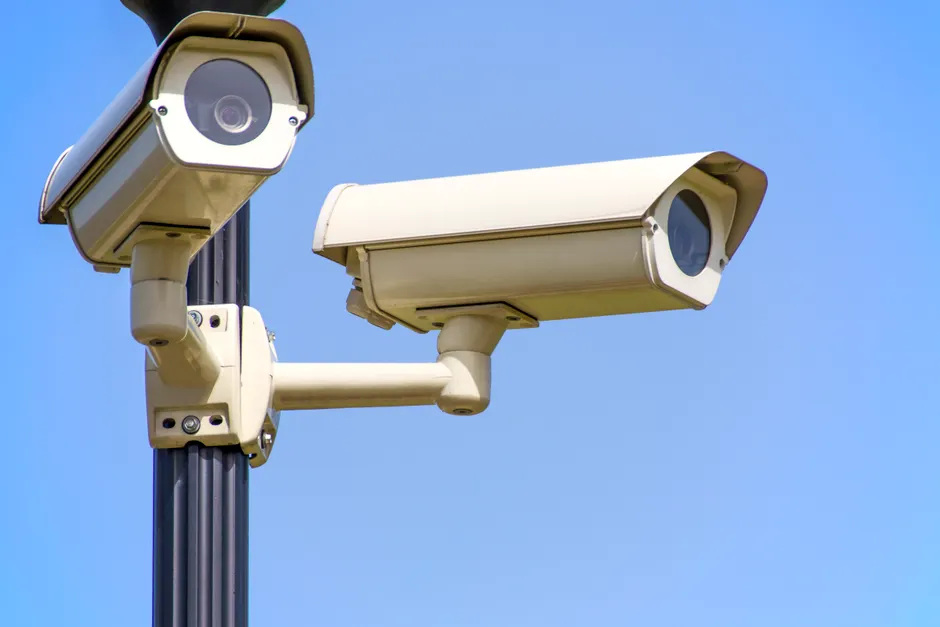
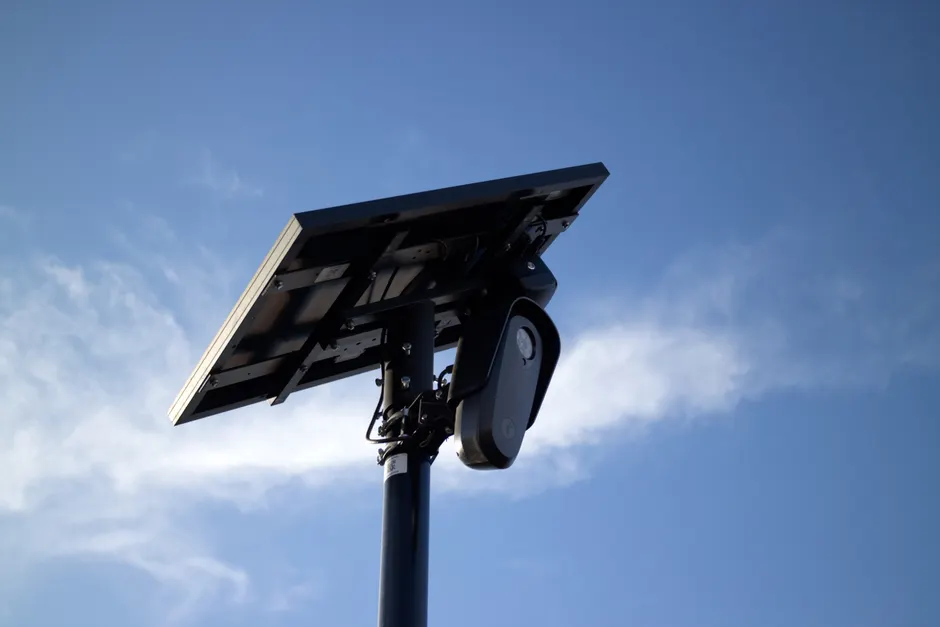
The OS Investigate reporting builds on an already extensive surveillance infrastructure. Flock's automatic license plate readers (ALPRs) — cameras that photograph passing vehicles and record plate numbers — identify vehicles not only by license plates but also by bumper stickers, roof racks, and other physical features, according to Wired. The company uses machine learning to automatically detect license plates, vehicles, and people, including the clothing they are wearing (Wired). Flock Safety's cameras log vehicle details and capture images of people, feeding data into one searchable system operating across 49 states, CNN reported. PBS NewsHour has reported that U.S. law enforcement agencies use AI-powered cameras to scan billions of vehicles each month, often without drivers' awareness.
Flock's reach extends to major public events. Wired identified 1,181 Flock-manufactured ALPR cameras near U.S. World Cup stadiums. Flock CEO Garrett Langley said in a CNN interview that the company's AI cameras assisted police in the case of the Brown suspect.
Flock had previously signaled its direction in AI-powered investigations. In a February 2025 blog post, the company described its FreeForm Search tool, which lets officers find vehicles using plain-language descriptions such as "blue SUV with racing stripe." OS Investigate appears to be a substantially more capable evolution of that approach, layering chatbot-driven querying and cross-database correlation on top of the existing ALPR infrastructure.
The reaction from law enforcement and civil liberties advocates has been divided. Noel Pichardo, a former police officer who reviewed the software and related prompts for Wired, said the tool sounds "completely insane" and argued that Flock literally tracks people. An anonymous current police officer told Wired that OS Investigate's witness-finding capability makes him "slightly uncomfortable" but that law enforcement needs to use every tool available. Chad Marlow, an attorney with the ACLU, said the lack of limitations on OS Investigate prompts could enable police to lead the AI toward particular outcomes, effectively shaping what the tool produces rather than receiving neutral analysis.
The concerns Marlow raises are structural rather than hypothetical. A chatbot-driven search interface with 69 prewritten prompts, operating across a camera network logging movements in 6,000 communities and cross-referencing commercial identity databases, concentrates investigative power in the hands of whoever writes the prompt. If an officer can draw a map boundary and search for people matching a physical description, the difference between a legitimate lead and a dragnet — a broad, indiscriminate sweep of people who happen to be nearby — depends almost entirely on departmental policy and officer discretion, not on technical constraints in the software itself.
Flock's FAQ page states that its LPR cameras use machine learning to capture and organize license plate data. The company has also described its Gunshot Detection feature as designed to recognize specific public safety events rather than conversations or speech, recording only short clips (Flock Safety blog).
What makes OS Investigate distinct from the ALPR status quo is the correlation layer — the software's ability to pull together data from separate databases and find connections between them. Plate readers that log vehicle locations across 49 states already exist at scale. The new tool adds the ability to query that location history in natural language, fuse it with 911 dispatch logs and commercial identity records, and return named individuals who were physically near a given event. The investigative workflow shifts from searching a plate database after a suspect vehicle is identified to generating a list of people who were simply in the vicinity, then working outward from there.
The broader question this raises is whether that shift becomes a breakthrough for solving cases or an invitation to mass surveillance, and the answer depends on guardrails that do not yet appear to exist in the software itself. Flock's own caveat that current capabilities "may not reflect" the final product leaves room for revision, but the architecture is visible, and the camera network feeding it is already deployed.