Reform UK's Richard Tice Tells Britons to 'Enjoy' the Heatwave While Wildfires Burn — and Climate Politics Heat Up

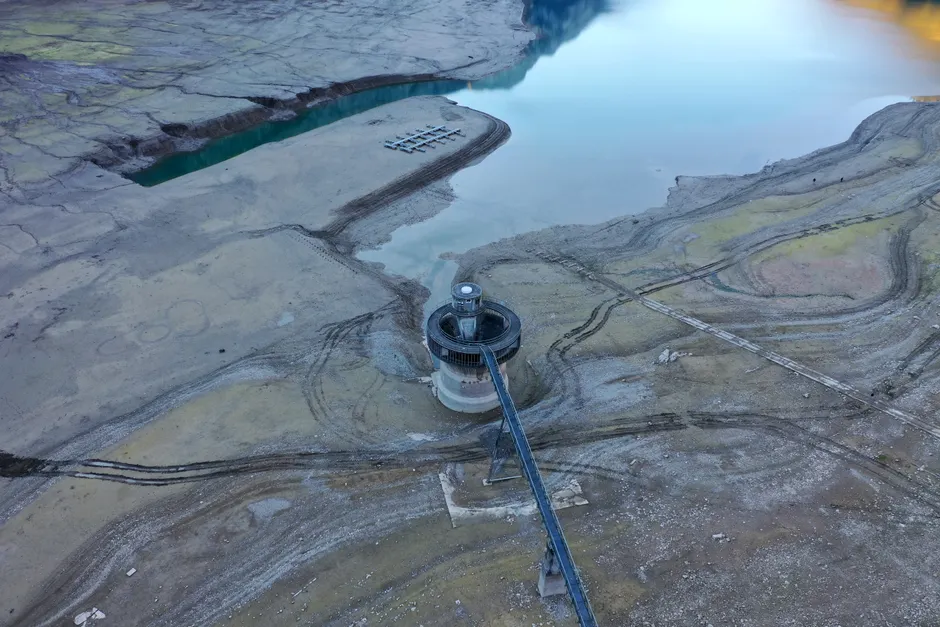
Reform UK deputy leader Richard Tice urged Britons to "enjoy" the summer's extreme heat at a press conference on 17 August 2026, joking that warmer weather could improve English wine and dismissing what he called the "doom and gloom" around climate change. "Climate change is real, let's enjoy the warm weather," Tice said, according to footage posted on Instagram (Instagram). His remarks came as wildfires destroyed homes in Stourbridge, drought threatened water supplies and food security, and farmers warned of one of the worst harvests on record (Financial Times).
Labour party chair Bridget Phillipson called on Tice to apologise to firefighters who battled wildfires during the heatwave. She told the Guardian that his joking about sparkling wine was "not funny" while firefighters were dealing with the real-world impact of climate change. "Wildfires are affecting people's lives, drought threatens our water supply and food security," Phillipson said in a social media post on 18 August (Facebook). The Mirror branded the remarks an insult to those affected by the extreme weather (Mirror).
Reform UK did not respond to a request for comment on Phillipson's call for an apology (Guardian).
Labour released a video pairing Tice's "enjoy it" remarks with footage of homes destroyed in the Stourbridge wildfire, sharpening the political contrast between Reform UK's stance and the lived consequences of the heatwave. The party's response signals an intent to frame Tice's comments as typical of a broader dismissal of climate seriousness on the political right.
That framing extends to the Conservatives. Shadow energy secretary Claire Coutinho gave a speech criticising the government's net zero push — the target to cut greenhouse gas emissions to near zero — arguing the UK should focus on making electricity cheap and "let consumer choice be king." Her intervention aligns with a broader right-of-centre argument that climate policy should take a back seat to affordability, a position Tice's remarks, however flippantly, also occupy.
The political row is unfolding against a backdrop of operational strain. Prime Minister Andy Burnham held a Cobra meeting — the government's emergency response committee — about the heatwave and drought that focused on disposable barbecues and did not mention climate breakdown. During a visit to Stourbridge, Burnham said the UK had to face up to the changing climate and needed more clean energy. Climate campaigners criticised him for saying little about the climate crisis more broadly and urged him to break his silence on it (Guardian; Guardian, 14 August). Phillipson defended Burnham's record, saying it was "not fair" to claim he had not spoken about the climate crisis.
Burnham's position is awkward. His Cobra meeting addressed the immediate mechanics of wildfire prevention without naming the underlying driver, and his subsequent Stourbridge visit supplied the climate framing that the earlier emergency meeting lacked. Green groups identified that gap. Phillipson's defence acknowledges the criticism without resolving it.
The row also precedes a significant policy decision. UK ministers were expected to announce in the coming weeks whether they would approve two new giant oil and gas fields in the North Sea, a choice that will intersect directly with the political temperature Tice has helped raise (Guardian).
Tice's remarks fit a pattern. In March 2026, he organised a 100-strong protest at Hill's farm in Lincolnshire against a solar farm development, an event broadcast by GB News (Guardian, March 2026). His stance on renewable energy infrastructure has been consistent: opposition grounded in land-use and visual-impact arguments, now complemented by a broader rhetorical minimisation of climate risk.
The broader context here is a political landscape in which climate policy is becoming a sharper dividing line. Reform UK's polling strength has already shifted the Conservative Party's calculations on net zero, and Coutinho's speech suggests the shadow cabinet is testing how far it can go. Tice's comments, however tone-deaf, are less an outlier than a data point in that realignment. The risk for Labour is that Burnham's own uneven messaging gives opponents material to blur the contrast the party is trying to draw.
For now, the immediate political fight is narrow. Labour wants Tice to apologise. Reform UK has not engaged. The Stourbridge footage does the work that argument alone cannot, and both sides know it.