Why Shell's CEO Says Oil Prices Have a Structural Floor — and What That Means for Your Money

The Real Message Buried in Six Words
At the WSJ Leadership Institute CEO Summit on June 10, Shell chief executive Wael Sawan made a statement that sounds simple but carries huge implications: "All the easy oil and gas has been found."
Reported by The Wall Street Journal, this was not a cautious forecast. It was a geological and economic argument: the next barrel of oil will be harder to reach, deeper underground, more expensive to develop, and more technically complex to extract. And once that changes, it stays changed. His follow-up claim — that oil prices will face upward pressure for the long term — takes on weight when read alongside this geological point. What he's suggesting is that even after geopolitical tensions fade, crude has a structural floor beneath it, not just a temporary premium.
Why a Geopolitical War Premium Is Different from a Supply Floor
Shell, like other major oil companies, has made real money from this year's oil price spike tied to the Middle East conflict. Higher prices mean higher profits on every barrel they pump — at least in the short run.
But Sawan's framing separates two different things. The conflict creates what's called a "risk premium" — the market temporarily pushes prices higher because supply disruption feels more likely. That premium disappears once the risk passes, like a fear trade in reverse. A structural supply constraint — if real — is different. It's not a temporary repricing; it's a permanent change to the cost of finding and pulling oil out of the ground. That difference matters enormously to anyone hedging energy costs, running a refinery, or deciding where to invest capital for years ahead.
What "Easy Oil" Actually Means
In the upstream oil business — that's the exploration and production side — "easy oil" has a specific technical definition. It means oil in conventional reservoirs that flow naturally, onshore or in shallow water, with light crude that needs minimal processing. Fields like Saudi Arabia's Ghawar or the old Permian Basin plays in Texas were the gold standard: oil flowed fast, extraction cost almost nothing per barrel, and you didn't need fancy engineering.
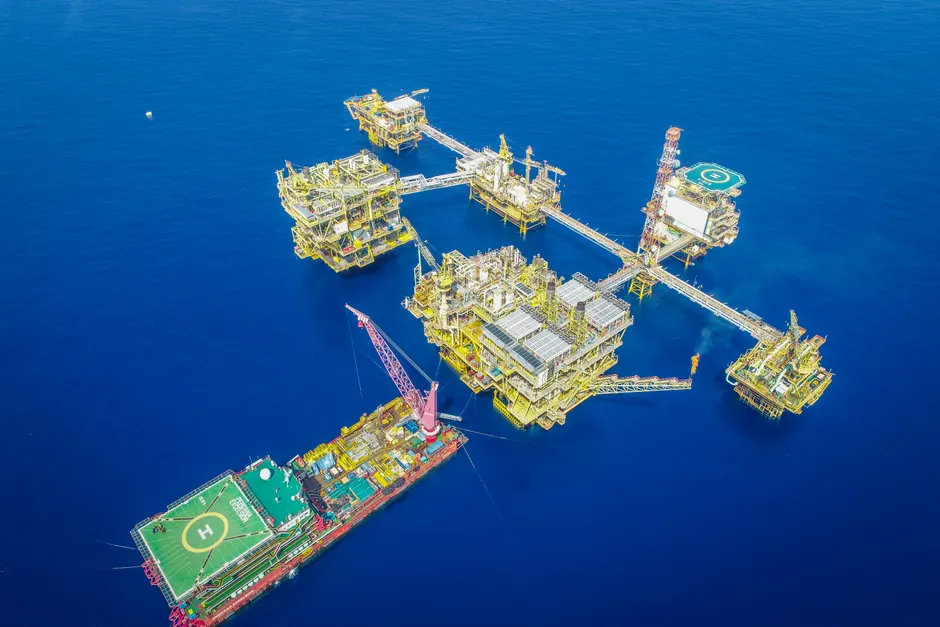
What's left to pump skews toward deepwater fields, tight rock that requires fracking to crack open, heavy oil that needs upgrading before it can be refined, or remote basins with no infrastructure nearby. Each of these costs more to develop, takes longer from discovery to the first drop of oil, and requires heavier capital investment per barrel you eventually recover.
The market saw this pattern before, in the mid-2000s, when "peak oil" was the thing everyone debated. The bearish case — that we were running out — seemed right at the time. But new technology, especially hydraulic fracturing and horizontal drilling in U.S. tight rock formations, rewrote the playbook. Between 2008 and 2019, U.S. shale oil alone added more than 7 million barrels per day of production capacity. That single shift offset declines in old fields worldwide, and the lesson the market took was: technology always saves the day.
The broader context here: Sawan is signaling caution against that same assumption. The Permian's best geology is thinning, and the productivity of new wells is already slowing, according to the data. Technology helped once, but it may not do so at the same scale again.
The Depletion Problem and the Investment Gap
Two other structural forces underpin Sawan's thesis, and they've been in plain sight for years.
The first is depletion. Giant legacy oil fields — the workhorses of global production — naturally decline at rates of roughly 4 to 5 percent per year. That means oil companies have to drill constantly just to keep output flat. The International Energy Agency and independent analysts have warned repeatedly that without sustained investment in new oil exploration and production, global capacity erodes dangerously over a decade.
Between 2020 and 2023, capital fled fossil fuel development because of ESG pressure — environmental, social, and governance investing that steers away from oil and gas. Since then, investment has ticked up again, but it remains structurally lower than some supply models say we'd need to meet even moderate demand growth. That gap matters.
The second is OPEC+ spare capacity. The group has long claimed it can tap several million additional barrels per day quickly if needed — essentially insurance against supply shocks. But that claim is hard to verify from outside, and if the spare capacity is lower or costlier to activate than officially stated, the market's safety net is thinner than prices currently assume.
Why Sawan Chose This Audience and Forum
It's worth pausing on where these remarks were made: a Wall Street Journal event for C-suite executives, not a commodity trading floor or energy analyst conference. The audience includes business leaders whose capital spending, supply chains, and energy costs face direct exposure to oil prices. The venue choice and the blunt framing signal something deliberate: an effort to shape how board-level executives across industries think about long-term capital allocation — not merely to manage Shell's own investor story.
For Shell itself, the structural argument serves a practical purpose. The company faces persistent investor pressure on its energy transition strategy and the pace of its shift away from fossil fuels. A CEO who can credibly argue that upstream oil and gas faces years of structural pricing tailwinds — not just a temporary boost — has a stronger case for maintaining or growing investment in exploration and production, and resisting calls to sell off oil and gas assets faster.
What This Means for Oil Futures and Beyond
If the market believes this structural supply argument, it shifts how oil futures are priced, particularly in contracts far in the future. Normally, oil futures show "contango" — the price for delivery next month is lower than the price for delivery a year from now, reflecting the assumption that supply stays abundant. If traders believe the long-run cost of producing oil is rising, that structure flattens or inverts. Longer-dated contracts would trade higher relative to near-term prices.
That repricing cascades. It raises the value of oil reserves still in the ground on oil company balance sheets. It changes the calculation for governments releasing strategic petroleum reserves as a policy tool. It raises the hurdle rate — the minimum return companies demand — for energy-intensive industries planning long-term investments. For pension funds and sovereign wealth funds that own oil exposure, it matters for how much commodity exposure they should hold and for how long.
It's important to note what Sawan's remarks do not address: the demand side. How fast electric vehicles take over the car market, what happens to industrial activity in China, and how efficient new buildings and factories become all remain uncertain. But on the supply side, his position is unmistakable: the world's oil endowment is finite, the reserves that are cheap and easy to pump are mostly depleted, and the cost of the next barrel will reflect that reality over time.