HoverAir's Versa Is a Pocket Camera That Flies — and a Test of the FCC's Foreign Drone Ban

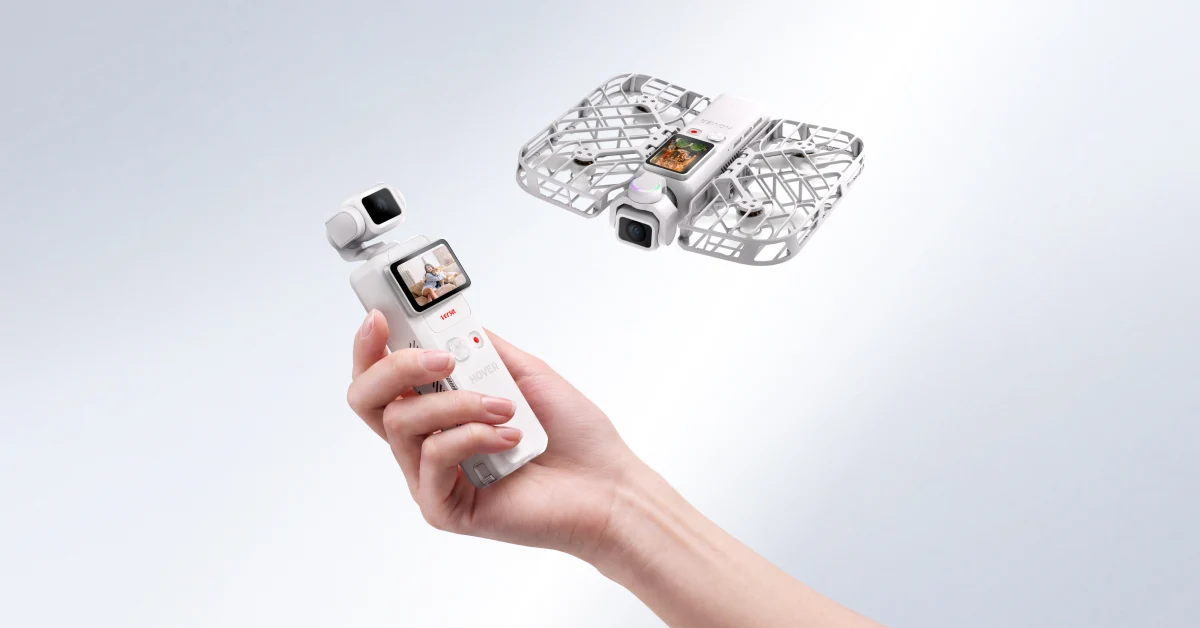
HoverAir, the consumer drone brand owned by Zero Zero Robotics, launched a crowdfunding campaign for its Versa pocket camera-drone hybrid on Indiegogo on August 18, with pricing starting at $499. The campaign, titled "HOVERAir VERSA: This Pocket Camera Can Fly," had attracted 369 backers and raised HK$2,240,240 as an Express campaign with 58 days remaining. The Versa is marketed as the world's first 2-in-1 pocket gimbal camera and drone, converting from handheld to flying mode by sliding down the cover, attaching the camera to the Flight Kit, and unfolding the wings. The Flight Kit adds 67g to the pocket camera body, which itself features a 3-axis gimbal (a motorized mount that keeps the camera steady) with electronic image stabilization, HDR, AI smart composition, 3D photos, and smart flight modes. (The Verge; TechRadar; Indiegogo)
What makes the launch notable is how it received FCC certification. The FCC approved the HoverAir Versa on August 9, according to public records. But HoverAir submitted its FCC paperwork only for the camera portion of the product, not the full drone assembly. The company told the FCC's certification agent truthfully that HoverAir has not been banned from getting cameras certified in the United States. (The Verge)
This works as a regulatory strategy because of how the FCC's equipment authorization process is structured. The FCC only certifies gadgets that contain a wireless radio, the component that transmits and receives signals. The Versa's propeller wings likely contain no radio of their own, since they physically connect to the camera body using copper contacts. The camera module carries the radio, and the camera module is what got certified. (The Verge)
The regulatory landscape HoverAir is navigating dates to December 22, 2025, when the FCC issued document DA-25-1086 and updated its Covered List to include all foreign-manufactured unmanned aircraft systems and foreign-produced UAS critical components. The action, widely dubbed the "DJI Ban," cited national security risks and covers drones, motors, batteries, and other critical parts. (FCC; Holland & Knight; Wiley; DroneLife; Electronic Design)
The ban prevents the FCC from automatically approving the radios of any foreign-made drone. Each company must now convince the FCC that its drone is either manufactured in the US or does not pose a national security threat. (The Verge)
HoverAir has direct experience with the ban's impact. The company's waterproof Aqua drone debuted on Indiegogo in 2025 but never reached US customers because of the FCC's foreign drone restrictions. The Aqua was one of the first casualties of the new Covered List policy. (The Verge; PCMag)
Whether the Versa's certification approach holds up under scrutiny is an open question. The FCC's foreign drone ban covers not only drones but also "UAS critical components," and the FCC has explicitly stated that cameras fall into that category. The agency's own FAQ identifies cameras as critical components subject to the Covered List restrictions. (The Verge; FCC FAQ)
HoverAir's global marketing director Anita Facundo told The Verge that the Flight Kit is an accessory extending the Versa's capabilities and that HoverAir is "in full compliance with applicable regulatory requirements for the full product configuration offered to US customers." The company is telling Indiegogo backers the product is good to go. (The Verge)
The tension between those two positions is the crux of the story. HoverAir certified a camera module with the FCC. It is selling that camera alongside a Flight Kit that turns it into a drone. The FCC's Covered List defines cameras as UAS critical components. If the Versa's camera is a UAS critical component produced in a foreign country, then certifying it as a standalone camera rather than as part of a drone system may be precisely the kind of categorization the Covered List was designed to prevent.
On the other hand, the FCC's equipment authorization process is structurally tied to radio emissions, not to product taxonomy. The agency certifies devices with radios. The Versa's wings have no radio. The camera has a radio. HoverAir certified the device that contains the radio, and the copper-contact connection between camera and wings means there is no separate radio in the flight assembly to certify. The regulatory architecture creates a gap between what the FCC technically reviews (radio emissions from a specific module) and what the Covered List seeks to restrict (foreign-made drone systems and their critical components).
HoverAir's approach exploits that gap, or at minimum tests its boundaries. The company has precedent for concern: the Aqua drone was blocked outright. The Versa takes a different path through the same regulatory terrain by disaggregating the product into components and certifying the one piece the FCC's process requires.
For hardware startups navigating US national security restrictions on foreign drones, the Versa launch is a live case study in regulatory engineering, the practice of designing a product's structure and certification path to work within the letter of regulations. The Indiegogo campaign's early traction, 369 backers and over HK$2.2 million pledged, suggests consumer demand exists for sub-$500 flying cameras from non-US manufacturers. Whether the FCC agrees that certifying the camera module satisfies the spirit of the Covered List, or whether the agency moves to close the gap between radio-emissions certification and system-level drone restrictions, will shape what foreign drone makers can sell in the US market going forward.