USS George Washington Arrives to Relieve the Abraham Lincoln After 250+ Days at Sea

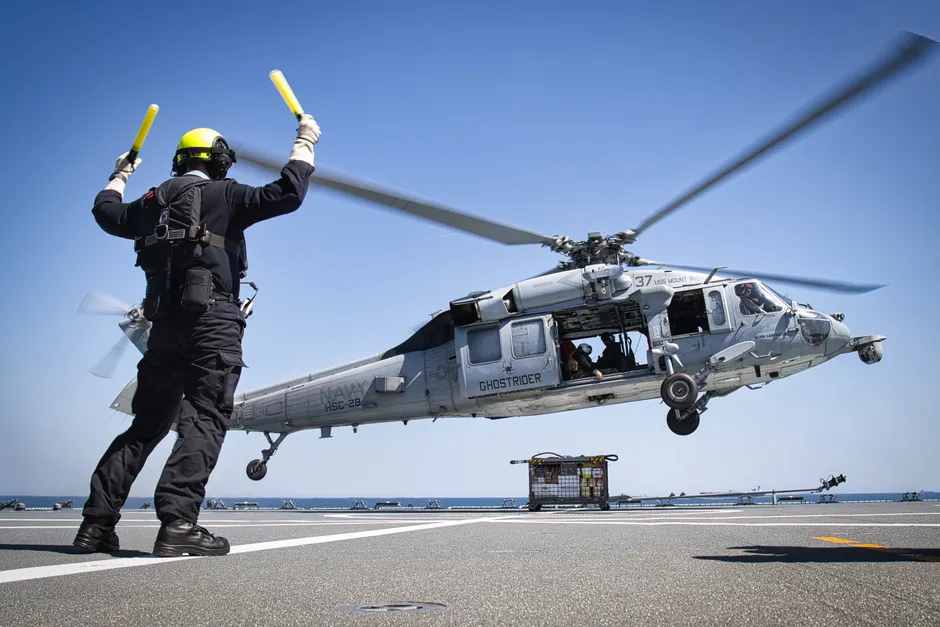
The USS George Washington (CVN 73) arrived in the US Central Command area of responsibility on August 19, 2026, positioning to relieve the USS Abraham Lincoln (CVN 72) from a deployment that has now exceeded 250 days at sea without a significant port visit or a scheduled return date for its 5,000 sailors. US Central Command announced the arrival on Thursday, posting an image of sailors working on the flight deck as the carrier transited the Arabian Sea on August 20. The George Washington Carrier Strike Group is operating in the region on a scheduled deployment, according to CENTCOM.
The Abraham Lincoln's current deployment follows a pattern of sustained high-tempo operations in the Middle East. The carrier previously returned to San Diego on December 20, 2024, after completing a five-month deployment that included combat operations across the 3rd, 5th, and 7th Fleet areas of responsibility, as recorded by Commander, Pacific Fleet. That earlier deployment had also been framed as part of broader US efforts to bolster military force posture and deter aggression in the Indo-Pacific and Middle East, per Naval Air Pacific's 2025 Aviation Playbook. The current deployment, however, has far outlasted that five-month precedent, pushing past 250 days supporting US operations against Iran.
A carrier strike group is a formation built around an aircraft carrier, accompanied by guided-missile cruisers and destroyers, designed to project power across vast distances. Maintaining one on station for eight-plus months without a port call places extraordinary strain on both the ship and its crew.
No date has been announced for the Abraham Lincoln's return to the United States. The carrier's extended time at sea has drawn scrutiny from multiple quarters. Reports published in the Navy Times and Stars and Stripes, drawing on accounts from crew members' families, described food and water shortages, disrupted mail services, plumbing problems, low morale, and worsening mental health conditions onboard. Democratic lawmakers have demanded answers from the Pentagon about the conditions aboard the carrier.
Admiral Brad Cooper of US Central Command visited the Abraham Lincoln over the weekend and released a statement addressing the concerns. Cooper said the carrier "currently has among the lowest number of cases related to mental health" of the Navy's 11 active aircraft carriers, while acknowledging "that doesn't mean all is perfect." His visit came as family accounts painted a grim picture of daily life for the crew.
The wife of one sailor told the Guardian that she noticed "less hope and fewer positive things" in her husband's messages as the deployment stretched on, and described him as "just exhausted." Another sailor's wife, speaking on condition of anonymity out of fear of retribution, recounted photographs her husband sent of increasingly sparse meals as supplies ran low. She described one meal as "a couple of pieces of bacon and three or four chicken wings" and said "I just don't think they're getting enough calories." These family accounts, reported by the Guardian on August 20, corroborate the broader pattern described in the Navy Times and Stars and Stripes reporting.
The George Washington's arrival in the CENTCOM theater marks the beginning of a relief process, but the timeline for an actual handover and the Abraham Lincoln's departure remains undisclosed. The Navy has indicated that the George Washington is slated to relieve the Abraham Lincoln following its Southern Seas deployment, per the Navy's official photo gallery listing, though that source carries no publication date. What is confirmed is that the George Washington is now in theater, transiting the Arabian Sea with flight deck operations underway.
The broader context here matters for understanding the strain on the Abraham Lincoln's crew and the operational dynamics driving the relief. A deployment exceeding 250 days without a significant port visit places exceptional demands on both materiel and personnel. Port visits serve as critical inflection points for resupply, maintenance, and crew welfare; their absence compounds logistical challenges in provisioning, waste management, and morale sustainment. The reported food and water shortages suggest that the carrier's supply chain, which relies on underway replenishment from logistics ships when port calls are unavailable, may have been stretched beyond its designed tolerances. Underway replenishment means transferring fuel, food, ammunition, and other supplies from support ships to the carrier while both vessels are moving through open water. Think of it as refueling your car on the highway without pulling over, but at the scale of a floating airbase.
The mental health dimension adds another layer. Admiral Cooper's statement that the Abraham Lincoln has "among the lowest number of cases related to mental health" among active carriers is notable, but it sits in tension with family reports of worsening psychological conditions. The discrepancy may reflect different measurement frameworks: formal medical cases documented through the carrier's medical department versus the lived experience reported by families through informal channels. Low documented case counts could indicate effective screening and support, or they could reflect underreporting in an environment where crew members may be reluctant to seek help during a high-profile deployment.
The involvement of Democratic lawmakers demanding answers from the Pentagon elevates the issue from an operational concern to a potential oversight matter. Congressional scrutiny of deployment conditions could pressure the Navy to accelerate the relief timeline, adjust force-posture requirements in the CENTCOM theater, or revisit policies governing deployment length and port-visit frequency for carrier strike groups.
What comes next hinges on the mechanics of the relief. Carrier strike group turnovers are complex operations involving the transfer of operational responsibilities, integration of air wing assets, and coordination with theater commanders. Until the Abraham Lincoln receives an actual departure date and course heading, the 5,000 sailors aboard remain in a sustained forward-deployment posture, reliant on underway replenishment and the resilience of their supply chain. The George Washington's presence in the Arabian Sea is the necessary first step. The relief itself is the operation everyone aboard the Lincoln is waiting for.