Fire in Swiss Alpine Town of Thusis Injures Eight, Leaves Five Missing

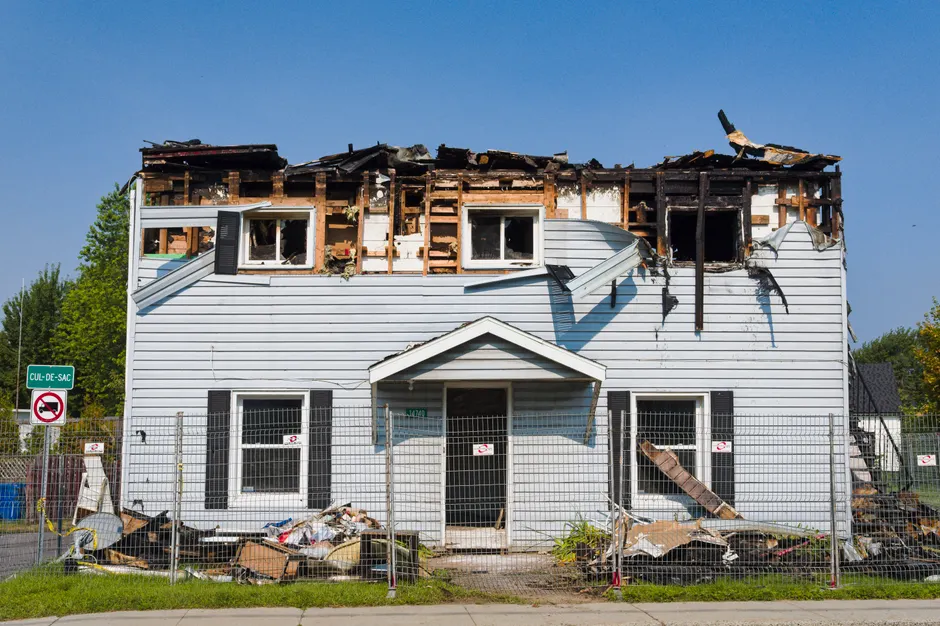
Eight people were injured and five remain missing after a fire destroyed a building housing a restaurant and apartments in the Swiss Alpine town of Thusis, according to BBC News. The blaze, which began on the second floor, triggered a large-scale emergency response in the early hours of Friday morning.
The Graubünden cantonal police said they received the emergency call just after local midnight, which corresponded to 22:00 GMT on Thursday. The cause of the fire remains under investigation, police confirmed.
Nearly 100 firefighters were deployed to the scene. The operation was complicated by the collapse of the building's stairwell, which cut off internal access routes and forced firefighters to adopt an external approach. A crane was used to open the roof of the burning structure, allowing crews to attack the fire from above and conduct search operations in the upper portions of the building.
Thusis sits in the Graubünden region, also known as Grisons, in eastern Switzerland. It is a small but strategically situated town at the northern entrance to several Alpine valleys, serving as a gateway between the lowlands and the deeper mountain communities of the canton. Graubünden is Switzerland's largest canton by area and a region where many residential and commercial buildings combine multiple occupancy types under a single roof, a common architectural pattern in historic Alpine towns.
The combination of a restaurant with residential apartments above it in a single structure is typical of the building stock in Graubünden's older settlements. These mixed-use buildings, often several centuries old with later modifications, present specific challenges for fire suppression: narrow streets can delay appliance access, internal staircases may be the sole means of vertical egress (the only way to get between floors), and traditional timber-framed construction can allow fire to spread rapidly between floors. The collapse of the stairwell in this case appears to have eliminated the primary internal route for both evacuation and firefighting, a scenario that emergency planners in Alpine communities have long identified as a critical risk factor.
The scale of the response, with approximately 100 firefighters mobilised for a town of Thusis's size, reflects both the severity of the blaze and the logistical demands of firefighting in a mountainous canton where mutual aid (fire brigades from neighbouring communities) may need to travel considerable distances over challenging terrain. Graubünden's dispersed settlement pattern means that multiple volunteer fire brigades from surrounding communities are often required to assemble a sufficient force, particularly for incidents involving structural collapse or large numbers of potential casualties.
The five people reported missing add a grave dimension to the incident. Search operations in buildings that have suffered partial structural failure carry significant risk for rescue personnel, and the window for locating survivors in a fire-damaged structure narrows rapidly. The use of a crane to breach the roof suggests that interior access was severely compromised throughout the building, limiting the ability of crews to conduct systematic room-by-room searches.
Cantonal police in Graubünden have not yet released further details regarding the identities of the injured or the missing, nor have they provided an estimated timeline for the completion of the investigation into the fire's origin. The building's mixed-use nature means that the fire affected both a commercial premises and residential occupants simultaneously, potentially complicating both the immediate rescue effort and any subsequent inquiry into building safety compliance.
The broader context here is the persistent tension between preserving Switzerland's historic Alpine building stock, much of which predates modern fire codes, and the practical limits of retrofitting these structures to contemporary safety standards. While the specific factors that led to the stairwell collapse in Thusis will not be known until the investigation concludes, the incident serves as a case study in the vulnerabilities inherent in mixed-occupancy buildings of traditional construction, particularly in communities where emergency response times are stretched by geography.
For now, the focus in Thusis remains on the search for the five missing individuals and the treatment of the eight injured. The full extent of the damage, both human and structural, will become clearer as the investigation progresses.