Fat Marmot Week: A Tournament Born of Climate Loss and Funding Cuts

On August 24, 2026, voting opens in the first-ever Fat Marmot Week, a bracket-style online tournament where the public votes for the yellow-bellied marmot deemed most ready for winter hibernation. The event runs through August 29 and is organized by marmot researchers at the Rocky Mountain Biological Laboratory (RMBL) in Gothic, Colorado. Its goal is to raise money to sustain one of the world's longest-running studies of wild mammals, at a moment when federal funding cuts and climate-driven population losses are both hitting the project.
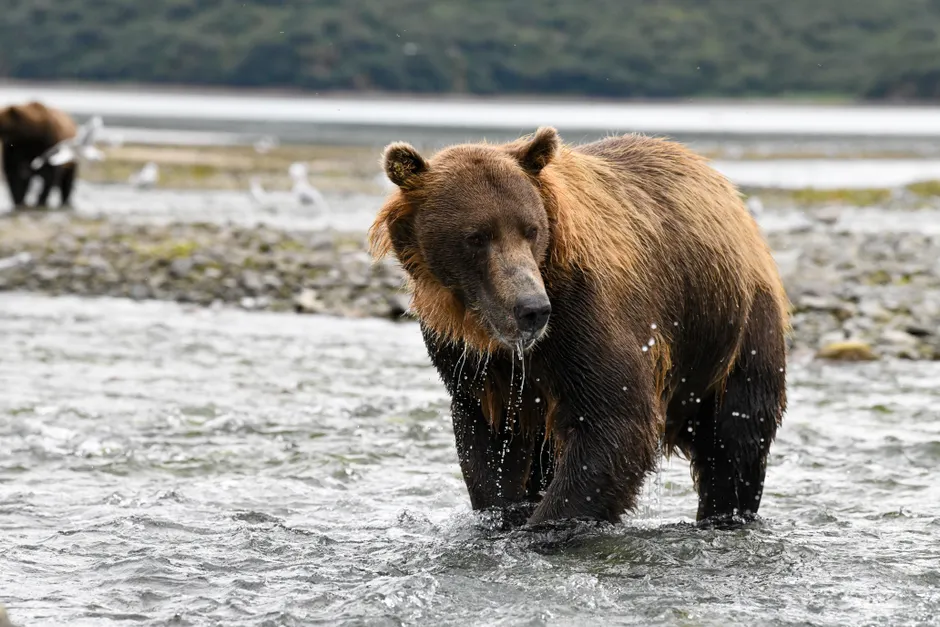
Fat Marmot Week is explicitly modeled on Fat Bear Week, the US National Park Service's popular competition in which viewers vote on Alaskan brown bears fattening for winter. The marmot version applies the same gamified, public-engagement template to a far smaller creature: a cat-sized, furry ground squirrel that lives in burrows across North America, Europe, and Asia. There are roughly 15 marmot species worldwide, groundhogs among them. Yellow-bellied marmots, the subjects of the RMBL study, are plentiful in the Rocky Mountains.
The timing is dictated by biology. Marmots roughly double their weight to as much as 13 lbs (6 kg) before hibernation, then lose all that bulk over half a year or more underground. During hibernation a marmot's body temperature drops from approximately that of a human to as low as 41 °F (5 °C). The tournament lets the public judge which animals have packed on the most mass, turning a biological necessity into a spectator event.
In the leadup to voting, researchers have been showcasing two marmot contestants each week on social media, building toward the August 24 opening of the bracket. RMBL's public events calendar lists the broader Fat Marmot Week 2026 programming as running from July 27 through August 29, hosted by the RMBL Marmot Project. The laboratory has also promoted "Marmot Tears IPA," a special-edition beer tied to the event, with a dedicated Fat Marmot Week website linked from the product page. The organizers include doctoral student Katie Adler and master's student Emily Renkey, both at UCLA, along with Augustin Birot and Michela Dumas, self-described "marmoteers" who conduct fieldwork near Crested Butte, Colorado.
The research this event supports faces a two-front crisis. At the Gothic study site, researchers had over 160 marmots but entered the season with only 60, with most deaths attributed to lack of snow cover. Snowpack acts as insulation for hibernating marmots; insufficient cover exposes them to lethal cold. This year's snowpack was the worst on record in the Upper Colorado River Basin, spanning Wyoming, Colorado, Utah, and New Mexico. A new study found that the human-caused climate crisis made that snow drought roughly 14 times more likely.
Compounding the ecological pressure, federal funding cuts have threatened the scientists' ability to continue the long-running research that the RMBL Marmot Project depends on. Fat Marmot Week is, in effect, a grassroots response to the withdrawal of institutional support, attempting to replace lost grant revenue with small-dollar public contributions channeled through novelty and engagement.
The broader context here is one of shifting accountability. When a multi-decade longitudinal study — a study that tracks the same population over many years to observe long-term changes — loses both federal backing and a significant share of its study population in the same year, the viability of the entire research program comes into question. Long-term mammal datasets are irreplaceable because they capture phenological shifts (the timing of seasonal biological events), demographic trends, and physiological changes that no short-term study can reconstruct after the fact. If the Gothic marmot population continues to decline at the rate observed this season, the statistical power of decades of prior data erodes, and the cohort comparisons that give longitudinal studies their value become increasingly tenuous.
The tournament format also reflects a wider trend in conservation biology toward public crowdfunding as a substitute for stable federal funding. Fat Bear Week showed that charismatic-megafauna voting can generate substantial public traffic and donations. Whether that model translates to a less iconic species, during a field season marked by sharp population attrition, is an open question. The researchers are, in effect, testing whether public attachment to an animal few people encounter can be manufactured through tournament mechanics and social media outreach quickly enough to offset budget shortfalls that are already affecting fieldwork.
RMBL's June 2026 Director's Letter announced a new RMBL Data Hub alongside the Fat Marmot Week mention, suggesting the laboratory is simultaneously pursuing infrastructure and outreach strategies to stabilize its research operations. The press releases page describes the event as a lighthearted, tournament-style showcase highlighting the transformation yellow-bellied marmots undergo each summer as they feed.
Voting opens August 24 at the dedicated Fat Marmot Week website.