Tesla Discontinues Solar Roof, Narrowing Its Solar Business to Conventional Panels
Tesla has discontinued its Solar Roof product, removing it from the company's website and redirecting the Solar Roof URL and related support pages to a generic solar landing page. Electrek first reported the disappearance on August 20, 2026, with TechCrunch confirming the discontinuation the following day TechCrunch.
The Solar Roof launched nearly a decade earlier, around October 2016. Tesla pitched it as a complete roofing system: glass solar tiles mixed with steel non-solar tiles, marketed as stronger than a traditional roof and backed by a 25-year warranty. The product page promised it would "continue to produce clean energy and protect the home for decades" Tesla. The core idea was simple and appealing — replace a homeowner's existing roof with a surface that generates solar electricity, rather than mounting conventional panels on top of it.
The gap between ambition and execution was wide. Tesla set a target of 1,000 Solar Roof installations per week. By 2022, the actual installation rate had reached only 20 to 40 per week TechCrunch. A 2023 Wood Mackenzie report found Tesla had missed its installation targets substantially, citing stiff competition. Tesla denied that report at the time Reuters.
Cost was a persistent obstacle. Homeowners reported receiving quotes of $200,000 for a Tesla Solar Roof installation. The product also attracted quality complaints: non-solar steel tiles were reported to warp, and roof underlayment (the waterproof layer beneath the tiles) was reported to melt. Separate reports indicated that Solar Roof systems underperformed, generating less electricity than Tesla claimed TechCrunch.
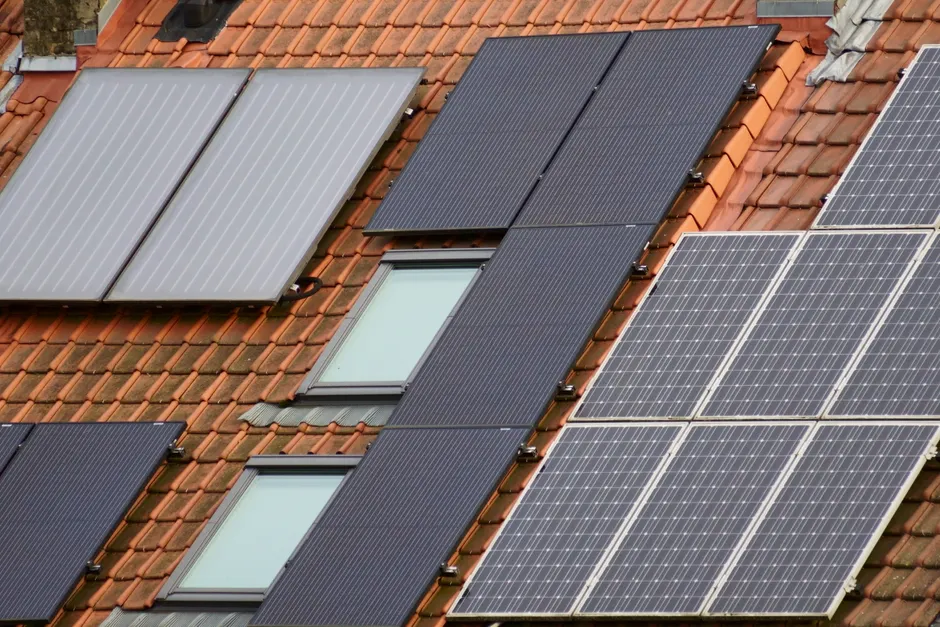
A likely technical factor behind the underperformance relates to heat. Solar cells lose roughly half a percent of their voltage for every degree Celsius the temperature rises. Tesla's Solar Roof placed the tiles much closer to the roof deck than conventional panel installations, which may have caused higher operating temperatures that reduced cell efficiency TechCrunch. Conventional rack-mounted panels benefit from air circulation beneath the array; the Solar Roof's integrated design appears to have given up that passive cooling.
Tesla's own support documentation reveals signs that the product's serviceability was limited even before discontinuation. The company's support page for removal and reinstallation states that the service is available for solar panels only and is not offered for the Solar Roof Tesla. A roof that cannot be partially dismounted and reinstalled without specialized intervention imposes real constraints: any roof repair beneath the array becomes a far more complex undertaking.
Two solar installers told TechCrunch that their companies were still offering the Tesla Solar Roof as of the report's publication, with one noting that availability would depend on the project timeline. That detail suggests Tesla is working through remaining inventory rather than recalling installed systems TechCrunch.
Tesla's broader solar ecosystem remains in place. The Tesla Solar Inverter continues to be marketed for both Solar Roof and solar panel systems, offering native integration with the Tesla ecosystem Tesla. Homeowners pairing a Powerwall with an eligible solar system can earn up to $4,050 per Powerwall through incentive programs, though Tesla stipulates that homeowners are responsible for submitting rebate applications themselves Tesla.
The discontinuation closes the book on a product that was always technically ambitious and commercially marginal. The Solar Roof asked homeowners to treat their roof as a solar asset, folding electricity generation into the building itself. The premise was sound. The execution ran into the problems that building-integrated photovoltaics — solar technology built directly into roofing materials rather than mounted as separate panels — have long faced: high manufacturing cost, difficult installation logistics, thermal management constraints, and a price point that priced out most of the market. The 25-year warranty on installed systems presumably remains in force for existing customers, though Tesla has not publicly addressed post-discontinuation service commitments.
The broader context here is that the discontinuation narrows Tesla's solar business to conventional panels. The building-integrated photovoltaic category does not die with Tesla's exit, but it loses its most visible proponent. For homeowners and installers, the practical takeaway is that conventional rack-mounted panel systems, with their lower cost, better thermal performance, and easier serviceability, remain the default. The Solar Roof's decade-long run showed that the integrated approach can be built; it could not be built cheaply enough, installed fast enough, or operated efficiently enough to reach the scale Tesla targeted.