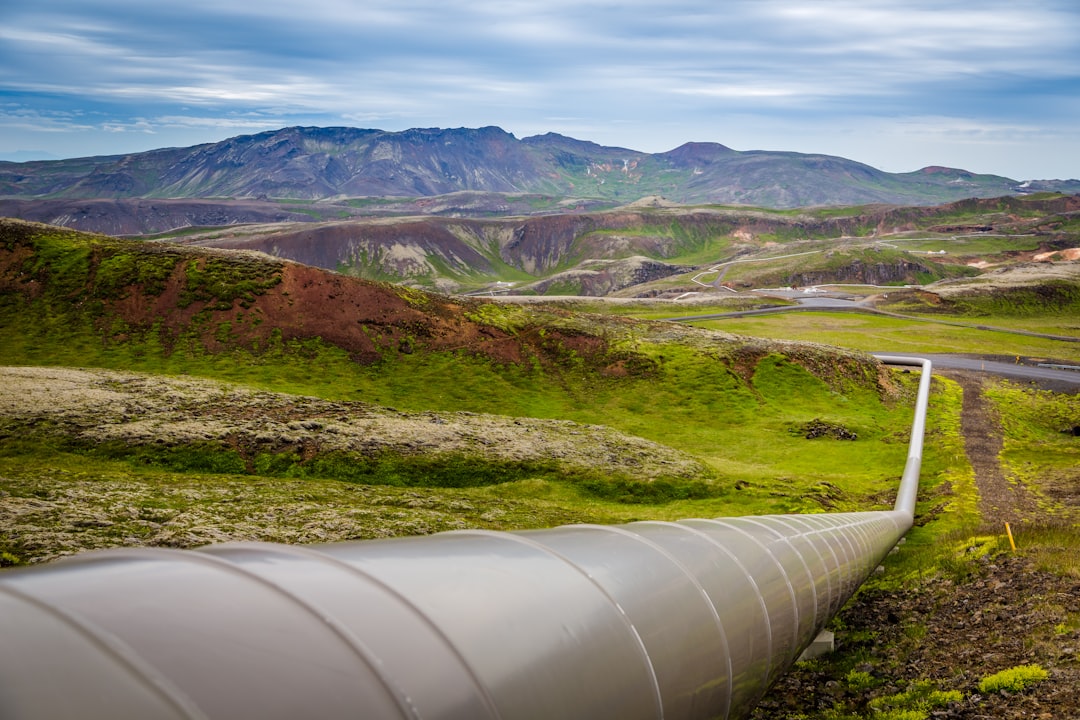
Why Natural Gas Prices Are Rising This Summer — Even as Production Floods the Market

Natural gas futures contracts have risen as summer heating demand kicks in, but the picture underneath is more interesting than a simple supply crunch. The Henry Hub front-month contract — the main U.S. benchmark — is responding to near-term heat, while the longer-term market is grappling with a much bigger problem: America is about to pump a lot more gas into the system.
The U.S. Energy Information Administration forecasts that natural gas production will grow 3.3% in 2026, and then another 2.5% in 2027. In concrete terms, that's roughly 3.9 billion cubic feet per day of new supply hitting the market in 2026 alone. To put that in perspective: the U.S. is currently producing around 103 to 105 billion cubic feet per day. Adding 3.9 billion cubic feet is like turning on the spigot at a major LNG export terminal every single day, for a year. That's a structural headwind for prices over time, even if summer weather is pushing the spot price up right now.
Why Futures Rise While Some Spot Prices Go Negative
This is where it gets counterintuitive. In recent weeks, some natural gas prices have actually gone negative at certain local delivery points. This sounds like a data error but it's not. Here's what's really happening: natural gas is produced in multiple regions across the country — the Permian Basin in Texas, Appalachia in the Northeast, the Gulf Coast. Associated gas (byproduct from oil drilling) keeps flowing from some of these fields regardless of price signals. But the physical pipelines that move gas around have limits. When production outpaces what the pipes can carry, prices at those supply-heavy locations drop — sometimes below zero — because it temporarily costs less to pay someone to take the gas than to shut in production.
The Henry Hub benchmark, by contrast, is named after an interconnection point near Erath, Louisiana, where gas from multiple sources flows together. When summer air conditioning demand pulls natural gas toward power plants in the South and Midwest, the Henry Hub price tightens relative to what's being paid at production-heavy locations upriver. The futures contract price rises in response to that heat-driven demand, even though spot prices may be negative a few hundred miles away.
This tension — negative prices in production zones, rising futures prices at the trading hub — is not a sign of confusion in the market. It's a sign that the market is telling two different stories: short-term scarcity near the power generators, and structural oversupply at the wellhead.
The Structural Story: Production Is Growing Faster Than We Know What to Do With
This is the harder question to grapple with, and the one that matters for where natural gas goes in late 2026 and through 2027. The growth the EIA is forecasting — 3.3% this year, another 2.5% next year — is substantial. But it won't all stay. Demand has to rise to absorb it, or prices will collapse in the outer curve (the futures contracts settling six months to two years out).
Where might new demand come from? LNG export terminals are expanding — they ship U.S. gas overseas. Data centers are consuming more power, and some of that is likely to be natural gas. Industrial manufacturing is returning to the U.S., which would boost gas consumption. The question is whether these sources add up to 3.9 billion cubic feet per day. If they don't, the market will have to ration supply the old-fashioned way: production will get curtailed because gas won't be worth pulling out of the ground at depressed prices.
How to Get Exposure: Contracts and Sizing
If you want to trade or hedge natural gas prices, CME Group offers Henry Hub Natural Gas futures contracts in two main sizes. The standard contract covers 10,000 MMBtu (a million British thermal units) per month. There's also a Micro contract, one-tenth the size, at 1,000 MMBtu. For commercial building operators, small utilities, or industrial users trying to lock in their supply costs without huge upfront margin requirements, the micro contract can be more practical. It lets you manage your exposure in smaller steps.
What's Worth Watching
Over the next few months, spot prices will dance to the weather forecast. Hotter-than-expected summers drive prompt contract prices higher; cooler summers bring them down. But keep an eye on something else: the basis — the gap between Henry Hub prices and what you see at Appalachian or Permian pricing points. If negative basis prices persist and widen, it signals that the pipeline network isn't keeping pace with the supply build. That would eventually trigger production shutdowns as producers decide it's not worth drilling for gas they can't sell. That's the market's self-correcting mechanism, and it tends to be brutal when it kicks in.
For now, the front-month contract reflects genuine summer demand. But the real tension is between that short-term tightness and the production overhang coming down the road.