Victoria Pledges Australia's First Free Public Dental Clinics
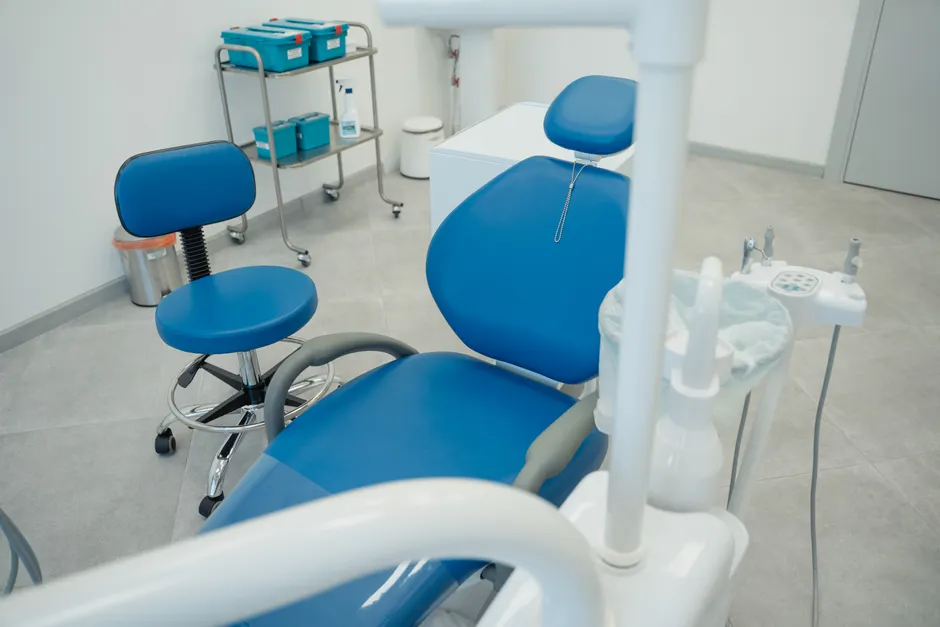
Victorian Labor, led by Premier Ben Carroll, has promised to deliver free dental care through a network of ten public dental clinics if re-elected — an Australia-first move announced on 22 August 2026. A re-elected Victorian Labor government would spend $230 million to open the clinics across the state, with the aim of having them operational by mid-2027 The Guardian.
The proposed clinics would provide free checkups and treatments including fillings, root canals, and extractions. Seven would be located in metropolitan Melbourne and three in regional Victoria, targeted at areas where service gaps exist. The clinics would operate from 9am to 9pm on weekdays and 9am to 5pm on weekends, functioning on a walk-in basis with priority given to the most urgent cases. Once fully operational, the government projects the clinics would treat more than 100,000 Victorians per year The Guardian.
Carroll described the plan as "structural cost-of-living support" and a national-first intervention by a state government. He said the clinics would focus on people without private health insurance who need care, framing the initiative as directly targeted at the uninsured population that falls through the gaps of Australia's hybrid public-private dental system The Guardian. On the Premier's official page, Carroll states his government "will deliver free dental services for all Victorians by opening free Public Dental Clinics across the state" Premier of Victoria.
Health minister Ingrid Stitt drew a direct parallel to the state's existing urgent care clinics, calling the dental plan the dental equivalent of that model. The urgent care clinics, which operate within Victoria's public health system, were established to relieve pressure on hospital emergency departments; the dental proposal follows the same logic of providing walk-in, publicly funded care in extended-hour settings The Guardian.
The announcement also fits within a broader election platform. Labor's platform promises families support with free school uniforms, free dental care, and free glasses (now expanded), alongside 45,000 additional specialist appointments Premier of Victoria. The dental pledge is the most expensive single line item disclosed so far in that package.
The opposition has moved quickly to challenge the announcement on delivery grounds. An opposition spokesperson cited Productivity Commission data showing the median waiting time for public dental care in Victoria is seven months, compared to one month in New South Wales The Guardian. That figure situates the pledge against an existing backlog that pre-dates the announcement, and raises questions about whether ten new clinics, even at the projected throughput of 100,000 patients annually, would materially reduce waiting times for the broader eligible population.
There is also a historical dimension. The Andrews Labor Government previously announced an investment of more than $207 million in public dental services in Victoria, per an announcement by the Minister for Health in August 2015 Premier of Victoria. The earlier investment predates the current Carroll government and was made under different fiscal and political conditions, but it establishes that state-level funding for public dental services is not new in Victoria. The $230 million pledged now is a modest increase over that earlier figure, though the scope, delivery model, and political context differ substantially.
The broader context here is that dental care in Australia has long occupied an awkward position in the public health system. Unlike hospital and medical care, which are covered by Medicare (Australia's public health insurance scheme), dental services are largely private. Public dental care is available only to eligible concession card holders — people on low incomes or government benefits — and children under specific programs. States bear responsibility for delivering public dental services, but funding is split between state and Commonwealth contributions, and eligibility is narrow. Anyone outside the concession system who lacks private health insurance with dental cover pays out of pocket, and cost is consistently cited in health survey data as a primary reason Australians defer or avoid dental treatment.
By pitching free clinics at the uninsured rather than only at existing concession-card holders, the Victorian proposal implicitly widens the eligibility aperture beyond the traditional public dental safety net. Carroll's language about "all Victorians" on the Premier's page is broader still, though the operational detail of prioritising those without private health insurance suggests a more targeted implementation in practice. The gap between the rhetorical frame and the delivery specification is worth watching as the policy moves from announcement to design.
The political calculation is straightforward. Cost-of-living pressure remains the dominant electoral issue across Australia, and a tangible, free-at-point-of-use service is a more concrete offering than tax credits or rebate schemes. The walk-in, extended-hours model mirrors the urgent care clinic precedent that Victoria has already implemented, which gives the proposal a proof-of-concept credential that a wholly new service architecture would lack.
What remains untested is whether ten clinics can scale to meet demand from a newly eligible uninsured population, whether the workforce exists to staff 12-hour weekday and weekend operations across ten sites, and whether the Commonwealth will engage on the funding architecture or leave this entirely as a state initiative. The seven-month waiting time cited by the opposition is a baseline metric that will be closely watched if the clinics come online.