Multiple Fatalities in Police Vehicle Collision on the A66 in North Yorkshire
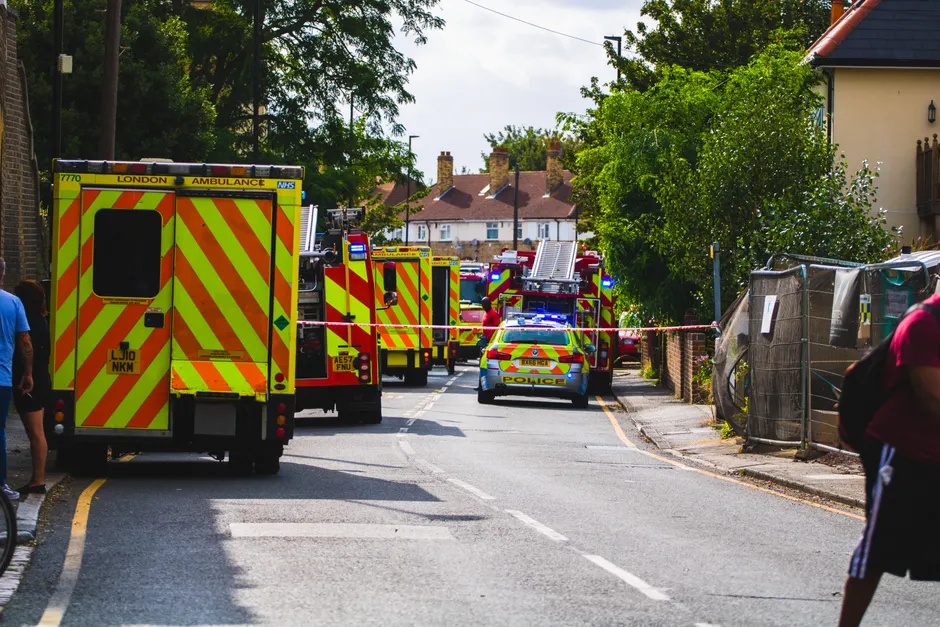
Multiple people died in a collision involving a police vehicle on the A66 in South Bank, North Yorkshire, in the early hours of Saturday 22 August 2026. The crash occurred at approximately 3:39 a.m. and involved a police vehicle and a Volkswagen Passat (The Guardian).
A Cleveland police spokesperson confirmed the collision and said it resulted in multiple fatalities. Police had not yet confirmed the number of fatalities as of the report (The Guardian).
The North East Ambulance Service was called to the two-vehicle crash and sent 14 units, including ambulance crews, a specialist paramedic, a hazardous area response team, and a doctor from the Great North Air Ambulance service (The Guardian).
The A66 remained closed in both directions between Normanby Road and Church Lane in Eston following the crash. Anna Turley, MP for the Redcar constituency where the crash happened, expressed sadness over the fatal collision on the A66 (The Guardian).
The broader context here matters for anyone who follows emergency-response procedures and coordination between agencies in the North East. The scale of the ambulance response — 14 units across multiple specialist teams — is what you would expect for a mass-casualty or multi-fatality incident. Sending a hazardous area response team alongside a doctor from the Great North Air Ambulance service signals that responders treated the scene as one needing both advanced medical care and scene-safety management. That is standard procedure when a police vehicle is involved in a crash and the circumstances are not yet clear.
When a police vehicle is one of the colliding parties, the investigative process changes. Independent oversight becomes a factor, because the force whose vehicle was involved should not investigate itself without external scrutiny. Cleveland Police is the confirming authority, and the crash site in South Bank falls within their jurisdiction. However, standard practice for police-involved road traffic fatalities in England and Wales typically involves referral to the Independent Office for Police Conduct (IOPC) — a watchdog that investigates serious incidents involving police — or a directed investigation by another force, to maintain public confidence in the process.
The closure of the A66 between Normanby Road and Church Lane in Eston affects a key east-west route. The A66 is a major trunk road connecting the M6 at Penrith to the A1(M) at Scotch Corner and continuing through to Middlesbrough and the Tees Estuary. A full closure in both directions will have knock-on effects for freight, commuter traffic, and local access throughout the weekend. How long the closure lasts depends on the complexity of the scene examination, which in multi-fatality collisions involving emergency vehicles tends to be extensive, incorporating forensic collision investigation, vehicle data recovery, and scene mapping.
The fact that police have not yet confirmed the number of fatalities is not unusual at this stage. In collisions involving multiple agencies and specialist response teams, confirmation of the death toll typically follows formal identification procedures and notification of next of kin, which can take hours or longer depending on the condition of those involved and the complexity of the scene. The delay between the incident at 3:39 a.m. and any confirmed fatality count reflects the operational requirement to ensure accuracy before public disclosure.
Anna Turley's public expression of sadness aligns with the expected response from a local MP when a serious incident occurs within their constituency. Her engagement also signals that the incident will likely attract political attention at the constituency level, particularly regarding road safety on the A66, emergency response coordination, and the circumstances under which the police vehicle was being operated at the time of the collision.
Looking ahead, the key operational questions are: what was the nature of the police vehicle's deployment at 3:39 a.m. on a Saturday morning, whether it was engaged in a pursuit or responding to an incident, and whether blue lights or sirens were in use at the time of the collision. These factors will shape both the IOPC investigation and any subsequent coronial inquest — the formal court process that examines the cause of unexpected deaths. For now, the confirmed facts are limited: multiple fatalities, a two-vehicle collision involving a police vehicle and a Volkswagen Passat, a substantial emergency response, and a road closure that continues to disrupt one of the region's principal routes.


