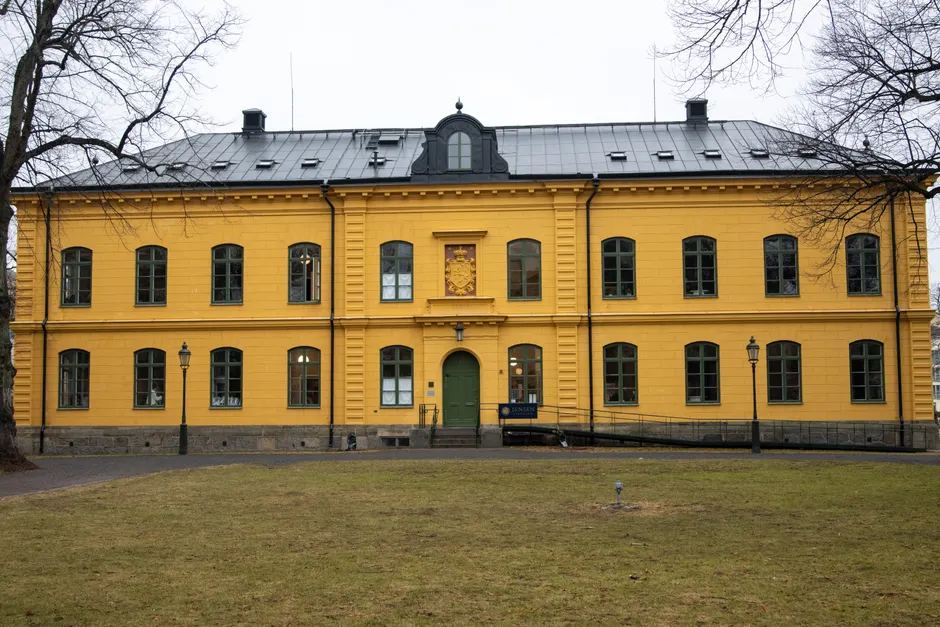
Sword Attack at a Swedish School Leaves One Dead, Two Injured

An 18-year-old man armed with a sword attacked students at the Brinell School in Fagersta, Sweden, on a Friday afternoon, killing a 17-year-old girl and injuring two boys before being taken into custody. Police fired shots after being called to the scene but did not say whether the alleged attacker was hit before being detained BBC.
Police are treating the case as murder and attempted murder BBC. The suspect, who has not been named, was described by Swedish police as an 18-year-old man. Sweden's public broadcaster SVT reported that the suspect was wearing a helmet during the attack. Local media reported that he was a former student at the school. Investigators carried out two house searches in connection with the suspect BBC.
The region around Fagersta entered a state of emergency on Friday, which had ended by Saturday BBC. A state of emergency is a legal tool that gives authorities expanded powers to respond to an acute, localized threat — in this case, lifted within a day, signaling that the immediate danger was contained. Brinell School, located 170km (105 miles) north-west of Stockholm, has just under 500 students on its roster, according to SVT.
Swedish police were also investigating online networks in connection with the sword attack Reuters. That inquiry raises the possibility that the attack was not an isolated impulse. Whether the online activity involved direct planning, radicalization (the process by which someone comes to adopt extreme views), or broader ideological affiliation has not been disclosed.
Swedish Prime Minister Ulf Kristersson described the attack as a "serious incident" and said "we do not know what lies behind the act" in a post on X. Sweden's King Carl XVI Gustaf said he received news of the attack "with dismay and sadness" BBC. On Saturday morning, Kristersson and opposition leader Magdalena Andersson visited Brinell School, where flower tributes had been laid BBC.
The broader context here is one of rapid institutional response. The police intervention, the emergency declaration, and the immediate mobilization of national leadership all point to the gravity of the event. With the immediate physical danger contained, the case now moves into its investigative phase, where the focus shifts from tactical response to establishing motive and identifying any broader network involvement.
For law enforcement and security analysts, the trajectory of this investigation will hinge on what the online network probe yields. The suspect's digital footprint will be scrutinized for communications, content consumption, and any coordination with external actors. The lack of a stated motive leaves the threat assessment open-ended. The coming weeks will reveal whether this was a lone grievance amplified by online communities or a case with deeper organizational ties.