DRC Ebola Outbreak: Over 5,200 Cases as Response Infrastructure Outpaces Transmission
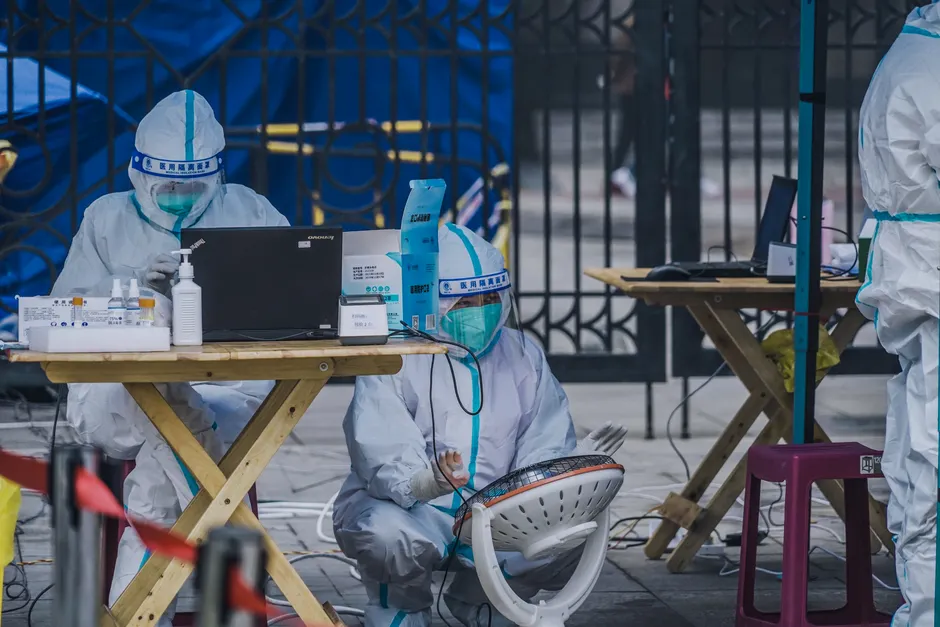
The Democratic Republic of the Congo has recorded over 5,200 confirmed Ebola cases and 2,516 deaths as of 20 August 2026, making this the country's fastest-growing outbreak and its 17th Ebola epidemic (WHO AFRO; ECDC; CDC). The outbreak, confirmed in the DRC and Uganda in May 2026, has expanded to a sixth province in the DRC, with Ituri province remaining the epicentre and accounting for approximately 85% of cases and 79% of deaths (WHO AFRO; WHO).
The trajectory has been steep. The DRC surpassed 1,000 confirmed cases within 40 days of response activation (CDC). Reuters reported on 5 August that the epidemic was on track to surpass 4,000 cases that week and had been described as the fastest-spreading outbreak on record in the country (Reuters). During the week of 19 to 26 July, 800 additional confirmed cases and more than 400 new deaths were reported (MSF). By 23 June, the case count stood at 1,094 confirmed cases and 277 deaths in the DRC, along with 20 cases and two deaths in Uganda (ReliefWeb).
One of the most alarming operational indicators is the proportion of community deaths, those occurring outside Ebola treatment centres. Over the past six weeks, community deaths accounted for roughly 60% of the 260 weekly fatalities recorded. This figure points to transmission chains that remain undetected until it is too late for isolation, contact tracing (the process of finding and monitoring everyone who has been near an infected person), or post-exposure interventions to contain spread from the deceased.
WHO Director-General Dr Tedros Adhanom Ghebreyesus said the outbreak could be brought under control only through scaled-up action led by national, provincial and local leaders and affected communities. Dr Mohamed Janabi, WHO Regional Director for Africa, said the outbreak had reached a defining moment and that incremental gains would not be enough (WHO AFRO).
The response has built substantial infrastructure, though it has not kept pace with transmission. Laboratory capacity expanded from a single testing site to 19 laboratories capable of processing more than 3,000 samples per day. Treatment capacity grew from fewer than 10 beds to over 1,300. More than 900 health facilities received infection prevention and control support. Community engagement activities reached over 2.5 million people. Contact follow-up improved from 9% during the first week of the outbreak to 84% as of 18 August (WHO AFRO).
The response also included clinical trials of potential treatments, evaluation of candidate vaccines, and deployment of the first emergency-listed molecular diagnostic test for Bundibugyo virus disease. The presence of the Bundibugyo ebolavirus species, rather than the more commonly seen Zaire ebolavirus, adds diagnostic and therapeutic complexity, as existing tools and clinical experience are weighted toward Zaire-associated outbreaks. In other words, this is a less-studied strain of Ebola, and the medical toolkit built over prior outbreaks is not tailored to it.
Operational challenges have been severe and structural. The response has faced insecurity and recurrent conflict, population displacement, attacks on health facilities, community reluctance, and difficult access. These are not peripheral friction points; they directly determine whether contact tracing can function, whether treatment centres can operate safely, and whether communities will report cases or conduct safe and dignified burials. The 60% community-death rate is, in part, a downstream consequence of these conditions.
The broader context here is that the scaling curve of this outbreak, from roughly 1,100 cases in late June to over 5,200 by late August, is the kind of exponential growth phase that public health systems are designed to interrupt before it reaches this magnitude. The laboratory and treatment buildout is real, the contact-tracing improvement from 9% to 84% is meaningful, and the diagnostic and vaccine research pipeline is active. None of that has been sufficient to bend the epidemiological curve. When Dr Janabi says incremental gains will not be enough, the case data is the evidence behind that statement.
The 84% contact follow-up rate, while a major improvement from single digits, still leaves 16% of contacts untraced in an outbreak this large. At a scale of 5,200-plus cases, each with potentially dozens of contacts, that residual gap is a substantial pool of unmonitored potential transmission. Closing it requires the community trust, security conditions, and access that the WHO leadership explicitly identified as prerequisites.
The outbreak is not contained. It is growing, it has crossed provincial borders, and it has done so despite a response apparatus that has been scaled at a pace that would, under more favourable operational conditions, be considered rapid. The gap between capacity built and outcomes achieved is the central tension here, and it is one that technology, infrastructure, and clinical tools alone cannot resolve.


