How a 20-Year-Old Mixing Desk Revealed Its Hidden PC Inside
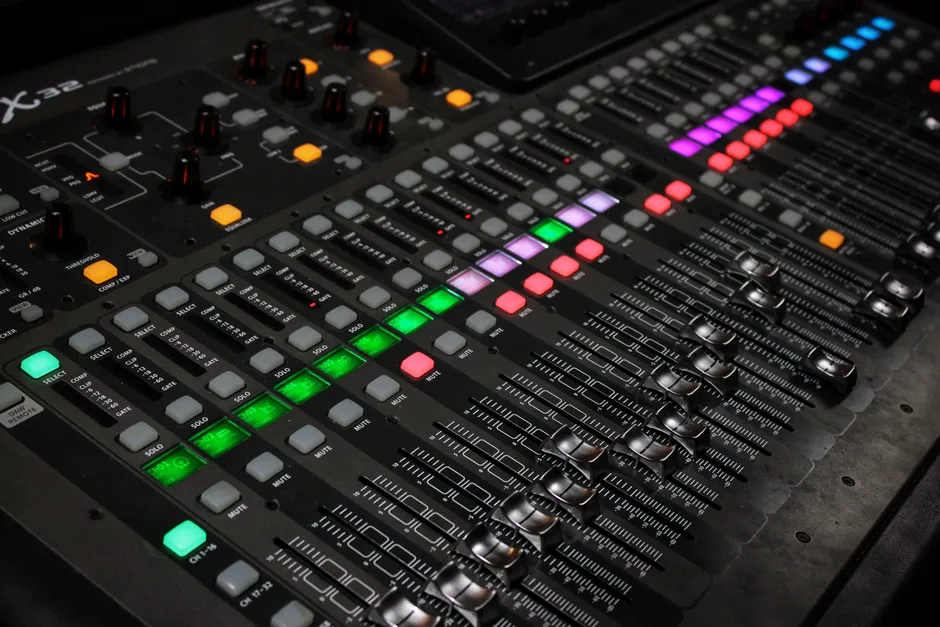
How a 20-Year-Old Mixing Desk Revealed Its Hidden PC Inside
A hobbyist has documented booting DOS on a Behringer DDX3216 digital mixing console by replacing its firmware with a custom x86 BIOS. The DDX3216 is an early-2000s 32-channel desk, long out of production, that turned out to have far more computing power than its purpose-built mixer interface suggested.
The desk itself is well-specified for its era. It offers 24-bit audio conversion in both directions, SMPTE timecode support, and expansion slots that accept ADAT and TDIF digital audio formats alongside AES-EBU—all standard studio connectors. Word-clock synchronization is built in, as is MIDI Time Code in both directions, making it viable as a studio sync hub even today.
The discovery: the internal processor is an x86-compatible chip—the same instruction set that powers conventional PCs—running inside a chassis with no external indication of this fact. By swapping in a modified BIOS, the builder exposed a boot environment that looks like a basic PC. DOS loaded and ran.
This is not unusual in isolation. Embedded x86 chips were common in prosumer audio equipment throughout that decade. Manufacturers favored familiar chipsets because drivers and support tools already existed, and because functions like timecode sync and multi-channel digital I/O could be built using off-the-shelf PC peripheral components rather than custom silicon. The DDX3216 also served as a DAW controller for software such as Bitwig Studio—a role that requires a structured communication layer between the desk and a computer, running on hardware capable of executing general-purpose x86 instructions.
The straightforward value of actually running DOS on a mixing desk is negligible. But this misses what reverse-engineering work like this produces. When someone documents the boot sequence of an embedded system and publishes it, they create a detailed hardware map that enables downstream possibilities: custom firmware, reconfigured I/O routing, integration with modern production software the original maker never planned for, and long-term survival of equipment that would otherwise become obsolete as factory support vanishes.
The broader context here matters. The DDX3216's combination of digital I/O—ADAT, TDIF, AES-EBU, word-clock, and timecode—forms a complete synchronization and format-conversion setup for studios built in the early 2000s. A unit that can be reflashed with community-created firmware will have a longer working lifespan than one locked into a vendor's discontinued update cycle. For anyone still using this desk, that is a tangible, meaningful advantage.
The document published does not include a complete replacement firmware or production-ready BIOS image—this is a proof of concept, not a finished product. But the existence of detailed, reproducible documentation is what matters. Hardware this old rarely receives this kind of technical attention unless someone decides to give it.


