Bathla Group Collapses: What a $3 Billion Developer Failure Means for Australia's Housing Market
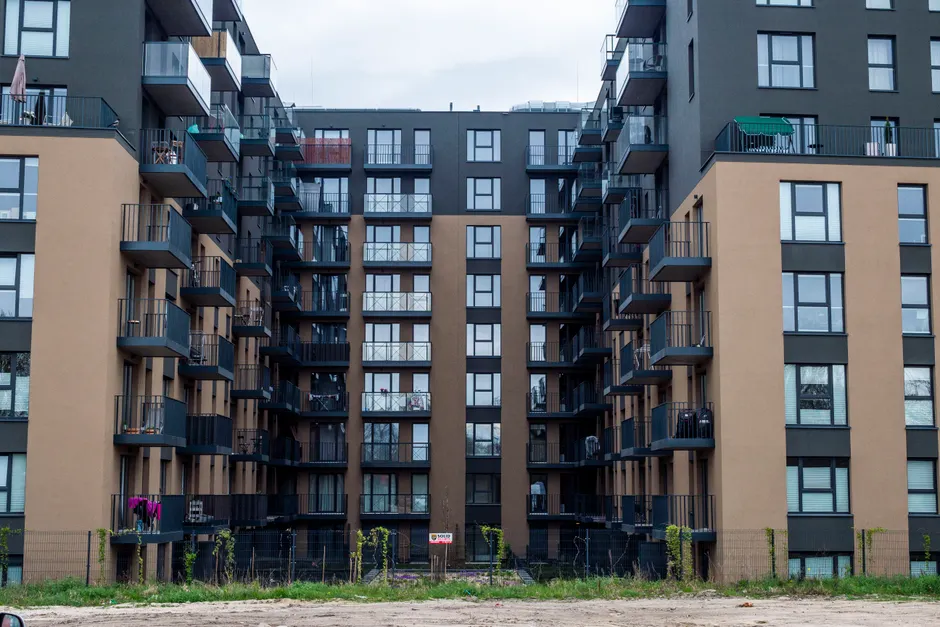
Sydney property developer Bathla Group has entered voluntary administration under more than $3 billion in debts, leaving roughly 1,000 homes and $1.5 billion worth of projects in limbo. Teneo was appointed administrator on August 25, 2026, according to documents filed with ASIC, covering the group's main corporate entity Universal Property Group and Raj & Jai Construction, along with related entities (ABC News; The Guardian).
Founder and managing director Bhart Bhushan said on Tuesday that he had "elected" to place the group into voluntary administration, describing the move as an orderly restructure of the business (The Australian). Under Australian insolvency law, voluntary administration is a process where a company's directors appoint an external administrator after determining the company is insolvent, or likely to become so. The goal is to give the business breathing room to either restructure its debts, come to an arrangement with creditors, or wind down in an orderly fashion, as outlined in ASIC's guide for creditors (ASIC).
Bathla Group attributed its collapse to a "perfect storm" of economic pressures (Yahoo Finance). The company cited a significant softening in sales, impacts from changes in the federal government's May budget, falling confidence in key markets, and significant increases in construction costs that the company absorbed rather than passing through to buyers (The Guardian; News.com.au).
The family-owned company was established in New South Wales in 1997 and expanded over nearly three decades into regional NSW, South Australia, and most recently Victoria (The Guardian). Administrators from Teneo said their immediate priority was to "stabilise the Group's operations" and work with lenders (ABC News).
Bathla Group's collapse is not an isolated event. In the 2025/26 financial year, 1,522 construction firms collapsed in New South Wales alone, a cohort that includes Bathla Group, Beechwood Homes, Novati Constructions, and Built Lifestyles in 2026 (The Guardian). That figure reflects the severity of the sector-wide pressure now bearing down on residential developers and builders across the state.
The convergence of factors Bathla Group identified is worth examining closely. Construction cost inflation has been a persistent headwind for Australian builders since pandemic-era supply chain disruptions, and companies that locked in fixed-price contracts have been particularly exposed. Think of it like a restaurant that agrees to sell meals at a set price for two years, only to see food costs double: either it absorbs the loss or raises prices and loses customers. The federal budget changes referenced by the company, combined with softening sales and declining buyer confidence, suggest that demand-side weakness is now compounding the cost-side pressures that have already pushed numerous firms to insolvency. For a developer of Bathla Group's scale, carrying $3 billion in debts across multiple states, the margin for absorbing further shocks was evidently exhausted.
The human dimension is immediate. Roughly 1,000 home buyers face uncertainty about whether their projects will be completed, and the administrators' ability to stabilise operations and negotiate with lenders will determine whether those contracts are honoured, transferred to another builder, or terminated with losses. Voluntary administration can lead to a deed of company arrangement, a binding agreement between the company and its creditors that preserves some or all of the business. But it can also pave the way for liquidation, where the company's assets are sold off and the business ceases to operate, if no viable restructuring path emerges. The first meeting of creditors, which ASIC's framework requires be convened within a short window after appointment, will be an early signal of which trajectory is likely.
For the broader construction sector, Bathla Group's filing adds another data point to a pattern of failures that has eroded counterparty confidence across the residential development pipeline. Lenders, subcontractors, and prospective home buyers are all recalibrating risk assessments in real time. Whether Teneo can engineer an orderly restructure or the group's assets are ultimately broken up, the outcome will be watched closely by stakeholders well beyond Bathla Group's customer base.