Google's Motion Assist Brings Motion Sickness Relief to Android 17
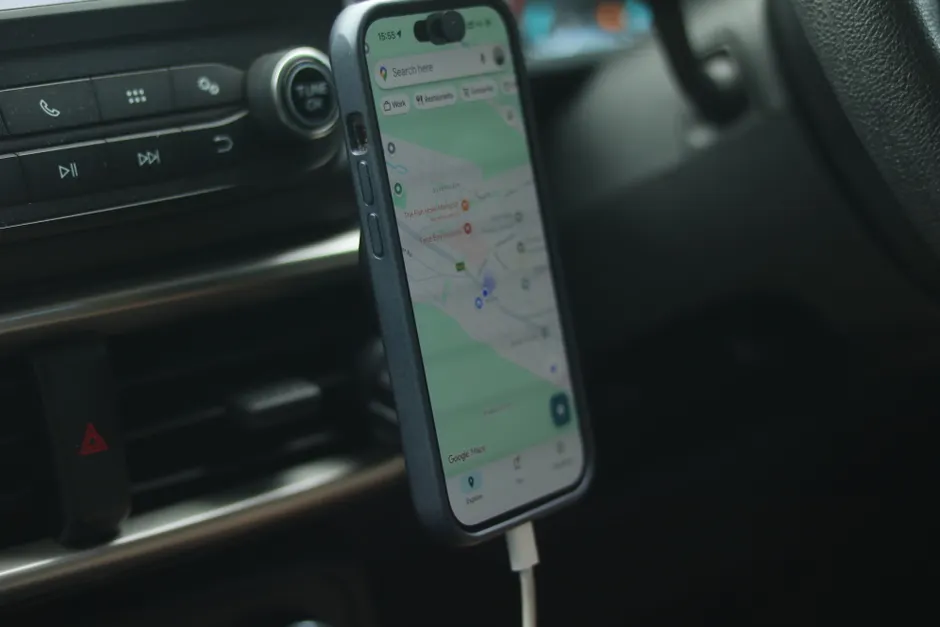
Google is rolling out an Android 17 feature called Motion Assist that reduces or eliminates motion sickness when using a phone inside a moving vehicle. The feature is deploying in phases, with some Pixel devices receiving it first. The Verge
Motion Assist works by using a phone's built-in accelerometer and gyroscope — the same sensors that detect tilt and movement — to place animated dots around the edges of the screen. These dots move in sync with the vehicle's motion, giving your brain a visual reference that matches what your inner ear is sensing. The principle behind this is sensory-conflict theory, which has guided motion sickness research for decades: nausea happens when your eyes report one motion signal and your inner ear reports another. By aligning the two, the visual cues reduce the mismatch.
Google lets users adjust how visible the motion indicators are and choose from a variety of shapes and colors, which gives people room to tune the overlay so it is noticeable without getting in the way of what they are reading or watching. Motion Assist can be set to activate automatically when the device detects a moving vehicle, or toggled manually through a Quick Settings tile. The feature lives in Google Settings under "Your Profile and All Services." The Verge
The approach closely mirrors Apple's Motion Cues feature, which Apple first introduced in 2024. Both systems place peripheral visual indicators synchronized to vehicle motion around the edges of the screen. The convergence is notable because it suggests the peripheral-cue technique has cleared whatever internal validation bar both companies set, moving from research curiosity to shipped platform feature on both major mobile operating systems within roughly two years.
Motion Assist arrives as part of Android 17, which was expected to launch in June 2026. ExtremeTech The broader release includes several other consumer-facing additions: an app locking privacy feature, a visual redesign described as having a Liquid Glass-esque aesthetic, gesture controls, floating app windows, and deeper Gemini AI integration. TechRadar TechRepublic
Motion Assist had been anticipated as a potential reveal at Google's pre-I/O Android event earlier in the year. TechRadar The phased rollout now under way puts it in users' hands as a shipping feature rather than a roadmap item.
The broader context here is that motion sickness from screen use in vehicles has grown alongside mobile data networks and streaming video. A passenger reading or watching content on a phone in a car is, from a sensory standpoint, asking the brain to reconcile a stationary visual field with a body that is accelerating, decelerating, and turning. The phone itself does not cause the conflict, but it narrows the visual field enough to eliminate the peripheral motion cues that would otherwise anchor the brain. Motion Assist and Apple's Motion Cues both address this by artificially restoring those cues.
The customization options matter more than they might seem at first glance. A fixed overlay of dots at full opacity would be unacceptable to a user trying to read a dense article or watch a video, which is precisely the scenario that triggers the nausea in the first place. Letting users dial down opacity, pick less distracting shapes, and choose colors that blend with their typical content environment is the difference between a feature people leave on and one they disable after one try. The automatic activation via vehicle detection is the other critical design choice, since the onset of motion sickness is gradual enough that a user may not think to toggle a setting until they are already feeling symptoms.
For developers, the feature is essentially transparent. Motion Assist operates as a system-level overlay and does not require app-level integration or API calls. Apps do not need to opt in, and there is no indication that the motion indicators interact with touch targets or rendering pipelines in ways that would require defensive coding. The overlay sits on top of the content layer and tracks sensor data independently.
In this author's view, the arrival of peripheral-cue motion sickness mitigation as a standard platform feature on both iOS and Android is a quiet but meaningful quality-of-life improvement. The underlying research has been around for years, but shipping it at the OS level, with sensor integration, automatic activation, and user-tunable presentation, is what makes it practical rather than theoretical. My own kids spent enough car rides over the years staring at screens, and the backseat nausea complaints were a reliable feature of any trip over forty minutes. A system-level fix for that is the kind of unglamorous, genuinely useful work that platform teams do best when they are paying attention to how people actually use their devices.


