Mauritania Pursues Tourism Revival Amid Persistent Regional Instability
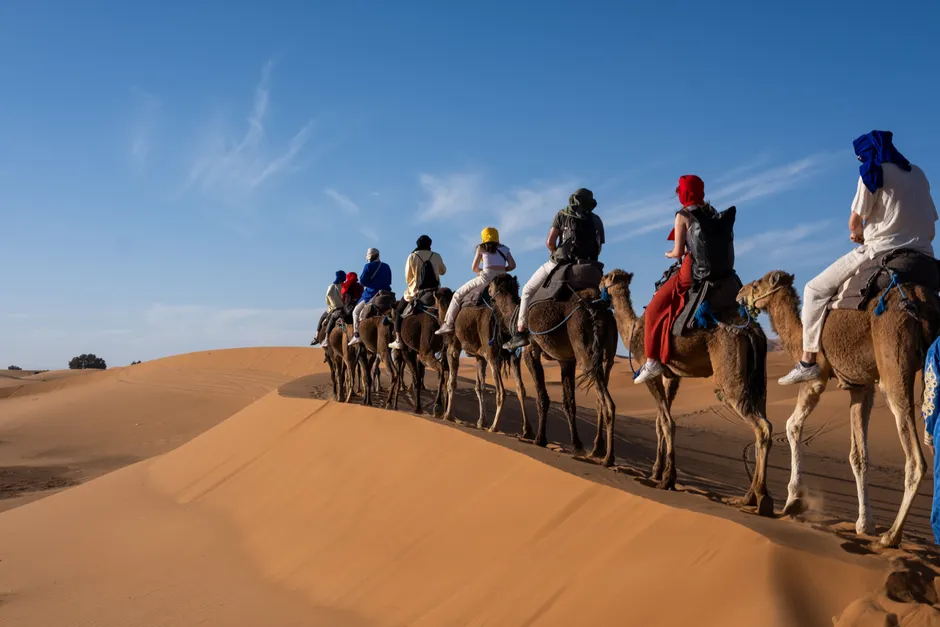
Mauritania is working to rebuild a tourism sector that collapsed when jihadist groups launched attacks across the country in the mid-2000s. Over the past decade, the government has largely succeeded in suppressing these insurgencies through intelligence work, military operations, and community engagement—making Mauritania one of the few stable countries in the Sahel region. Officials are now banking on that stability to attract foreign visitors back to the Saharan landscapes and historical trade routes that once defined the country's tourism appeal. But this revival effort faces headwinds, both from its own borders and from a regional security landscape that remains volatile.
JNIM—Jama'at Nusrat al-Islam wal-Muslimin, the al-Qaeda affiliate operating across the Sahel—has been expanding its territorial reach through Mali, Burkina Faso, and Niger, according to Reuters reporting. The group's push eastward puts direct pressure on Mauritania's eastern borderlands, where the Sahara provides cover and a natural corridor for movement. Mauritania shares a long, porous frontier with Mali, and that border is increasingly the frontline of the country's security calculus.
The Mali Problem
Mali's internal crisis compounds the picture. Since expelling French forces, Mali's military leadership has turned to Russian security contractors—the Wagner Group, rebranded as Africa Corps—to conduct counterinsurgency operations. Malian refugees now sheltering in Mauritania have said they will not return home while Russian forces remain, according to France 24 reporting from April 2026. With no credible timeline for a Russian withdrawal, Mauritania faces an indefinite influx of displaced people—a humanitarian commitment and ongoing fiscal drain.
For Mauritanian security planners, the Mali-Russia dynamic matters in a deeper way. Wagner and Africa Corps operations have not delivered the counterinsurgency results Mali's junta promised. During the Russian deployment, JNIM has expanded and, in some areas, strengthened. That trajectory suggests continued spillover pressure on Mauritania's border is likely.
There is also a historical dimension worth considering. Reuters reported in 2016 that AQIM, al-Qaeda's North African branch, had developed informal plans for a possible truce with Mauritania. Whether such an understanding has carried forward to shape how jihadist groups treat Mauritania today is not publicly known. The relative security inside Mauritania since the mid-2000s stands out in a region where insurgency is endemic—unusual enough to raise the question of whether an implicit arrangement exists.
Economics and Domestic Constraints
Mauritania's tourism plans cannot be separated from its economic urgency. The country held a national election recently in which nearly 2 million people voted, with economic concerns and regional security dominating voter priorities. A revived tourism sector would address both: generating foreign currency and projecting stability. But rebuilding cannot rest on security assurances alone. The country needs sustained investment in roads, hotels, and travel infrastructure—and personnel trained to serve visitors.
Domestic crime adds a practical complication. The U.S. Overseas Security Advisory Council has documented government reports of rising violent crime in Mauritania, including murder, assault, robbery, kidnapping, and carjacking. These are not insurgency-scale threats, but they shape the on-the-ground visitor experience and influence travel advisories from Western governments—which in turn affect tourist flows.
Mauritania's strategic case for tourism revival is rational. In a subregion where most countries are either at war or rebuilding after conflict, Mauritania's stability is a genuine competitive advantage. The Saharan terrain that once attracted niche adventure travelers remains unchanged. The real test is whether the government can preserve the security conditions that make the tourism pitch credible while managing pressures from a Malian crisis beyond its control. Those two factors will decide whether this effort becomes a real economic gain or a footnote in the country's history.