A Tornado Tears Through Southern France: What Happened in Pomas and Why It Matters

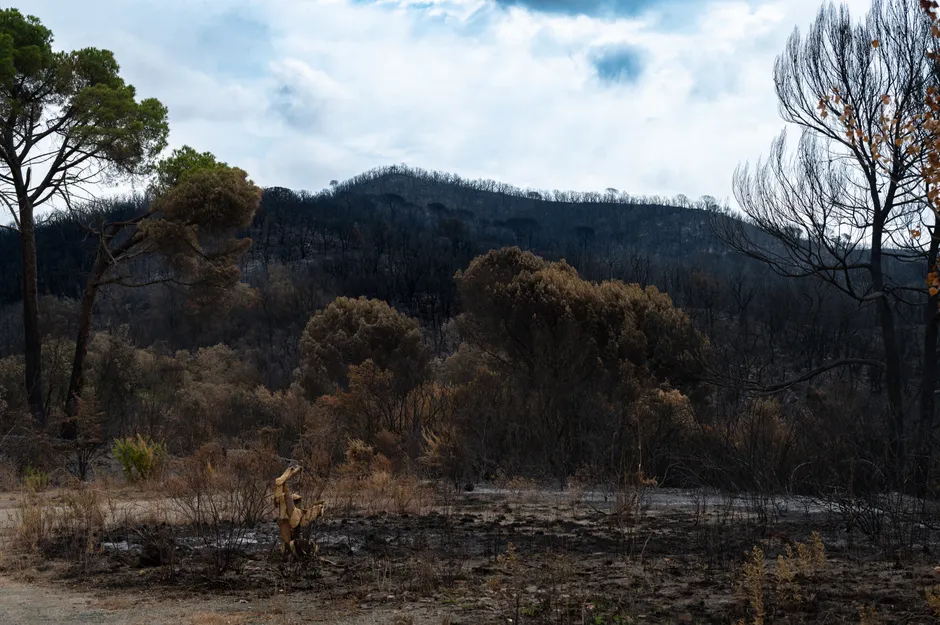
A violent tornado struck the village of Pomas in southwestern France's Aude department on 24 August 2026 at roughly 7 pm local time, injuring 41 people — 15 of them seriously — and causing extensive destruction across the commune, according to the latest reporting from Sud Ouest.
The tornado tore off roofs, collapsed walls, and triggered widespread power cuts. A command centre was established as emergency services mobilised to assess damage and search for potential victims. Initial reports from Sud Ouest counted 26 injuries and noted that two people were being searched for under debris. Subsequent reporting revised the injury toll upward to 41, with 15 classified as serious.
The scale of structural damage is considerable. Le Monde reported that approximately three hundred homes were damaged or destroyed, a figure corroborated by the BBC. Reuters and BBC reporting confirmed that the tornado injured 39 people and destroyed or damaged homes across the Aude region. The slight variance between the Sud Ouest tally of 41 and the Reuters/BBC count of 39 reflects how quickly casualty numbers can shift in the immediate aftermath of a fast-moving disaster.
As of 7 am on Tuesday 25 August, 1,600 households across the Aude department remained without electricity, according to Le Monde — more than twelve hours after the tornado hit.
Météo-France, the national weather service, maintained its highest-level alert for the Aude department (code 11) on its vigilance page, indicating that dangerous meteorological phenomena of exceptional intensity are expected and that the population should exercise maximum caution. The agency uses a four-level, colour-coded warning system, and the current designation for Aude corresponds to the top tier. (A separate Météo-France bulletin for La Réunion, an overseas department in the Indian Ocean dated 23 August, showed no particular vigilance for waves-submersion or strong winds; it is unrelated to the Aude event.)
The broader context here is the relative rarity of high-intensity tornadoes in metropolitan France, particularly in the Languedoc corridor that includes Aude. Southern France does see severe convective storms — weather events driven by warm, unstable air rising rapidly — during late summer, when Mediterranean warmth and atmospheric instability can combine to generate powerful updrafts. Think of an updraft as a fast-rising column of air, similar to a hot-air balloon gaining altitude quickly: the faster and stronger the upward pull, the more likely a storm can begin rotating. But tornadoes of the destructive magnitude seen in Pomas remain infrequent.
The structural damage pattern, including torn-off roofs and collapsed masonry walls, is consistent with a high-intensity vortex making direct contact with a densely built area. The casualty figures and the extent of residential destruction suggest wind speeds strong enough to turn debris into dangerous projectiles, though no formal EF-scale or T-scale assessment — the standard rating systems for tornado intensity — has yet been cited in available reporting.
The discrepancy between the Reuters/BBC injury count of 39 and the Sud Ouest count of 41 is worth noting for what it reveals about how disaster reporting works. Regional outlets with direct access to local emergency services often report revised figures first, while international wire services operating on slightly delayed news cycles may carry earlier snapshots. In fast-moving events with active search operations, casualty figures should be treated as provisional rather than definitive.
What comes next will hinge on several factors: the completion of structural damage assessments across Pomas and neighbouring communes, the restoration of electrical infrastructure to the 1,600 affected households, and any further Météo-France updates to its vigilance level for the department. The establishment of a command centre signals that emergency coordination is still in its operational rather than recovery phase.