Pacific Fusion Breaks Ground on $1 Billion Fusion Demo Facility in Albuquerque
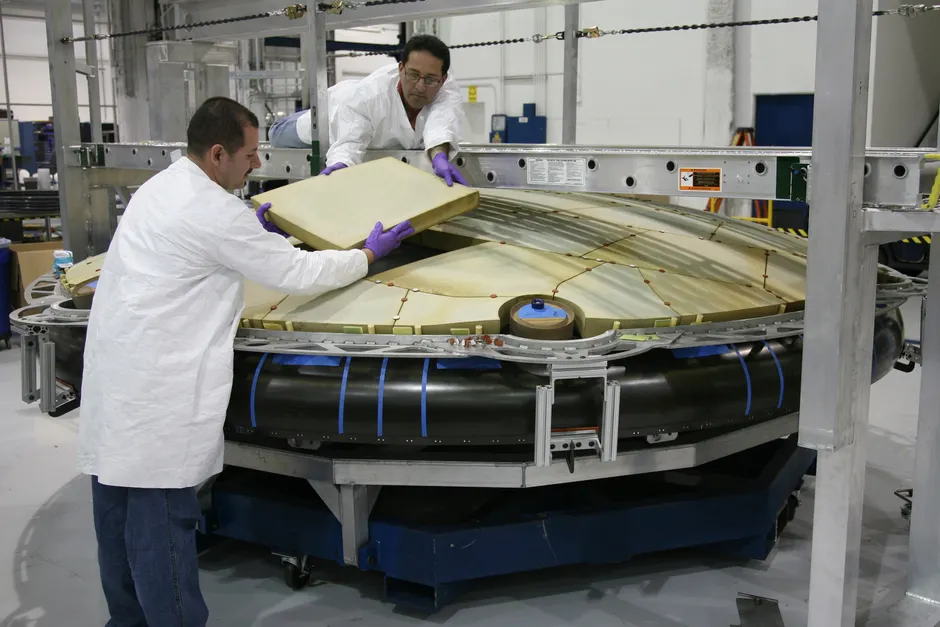
Pacific Fusion has broken ground on a demonstration facility in Albuquerque, New Mexico, designed to achieve net facility gain — generating as much energy as it consumes — by 2030, with a commercial power plant targeted for the mid-2030s. The $1 billion Research and Manufacturing campus, located in the Mesa del Sol area, will host the company's first demonstration system and also conduct national security-related experiments involving high-yield fusion. (TechCrunch)
Founded in 2023, Pacific Fusion is one of the younger entrants in the private fusion field but ranks among the best-funded, having raised over $1 billion in a milestone-based Series A round. The company is led by co-founder and COO Carrie von Muench and co-founder and CTO Keith LeChien. (TechCrunch)
The company's approach is pulsed magnetic fusion. Intense, tightly coordinated pulses of electricity create a magnetic field around a fuel target roughly the size of a pencil eraser, compressing it until the fuel atoms fuse. Each pulse of the demonstration system will generate on the order of 100 megajoules, about ten times the output of the National Ignition Facility. (TechCrunch)
The pulses are generated by 156 pulser modules. Each module contains 32 circular stages made up of 10 bricks; each brick comprises two capacitors that store power and one switch that releases it. Earlier in 2026, Pacific Fusion tested a one-third-scale version of a pulser module that released 440 gigawatts of peak power in 80 nanoseconds, validating the architecture at a fraction of full scale. (TechCrunch)
The gap between this demonstration and a working commercial plant is large. The Albuquerque facility will fire a handful of shots per day. A full-size power plant will need to complete one shot per second. The commercial-scale reactor will also need to generate roughly five times more energy per shot than the demonstration system. (TechCrunch)
Two scaling challenges stand out. The first is energy output: moving from 100-megajoule pulses to the roughly 500 megajoules a commercial reactor would require. The second is repetition rate: jumping from a few shots daily to one per second, sustained indefinitely, places severe demands on capacitor longevity, switch lifetime, thermal management, and target injection. The one-third-scale pulser test in early 2026 confirmed peak power delivery and sub-100-nanosecond timing, but that test was a single shot. Sustained operation at one hertz — one shot every second, continuously — with component lifetimes measured in years is a fundamentally different engineering challenge.
The dual mission of the campus is worth noting. A facility pursuing both commercial energy generation and national security experiments involving high-yield fusion sits at a familiar intersection. The National Ignition Facility itself serves both scientific and weapons stewardship purposes, and historically the most capable pulsed-power machines in the United States — Sandia's Z machine chief among them — have operated under similar dual mandates. For a private startup to build infrastructure spanning both missions is uncommon, and the degree to which classified work and commercial development share the same pulser hardware, diagnostics, and personnel will be worth tracking. New Mexico's existing concentration of national laboratories and weapons complex infrastructure makes the Albuquerque location a logical fit for that overlap.
The funding structure also merits attention. A milestone-based Series A of over $1 billion means capital releases are tied to technical achievements, not calendar dates. This aligns investor exposure with engineering risk, but it also means that any delay in hitting a milestone — whether net gain, repetition rate, or component lifetime — directly affects cash runway. Pacific Fusion will need to show not just that individual shots work, but that they work repeatably, affordably, and at a cadence approaching commercial viability before the next tranche of funding unlocks.
Pacific Fusion's timeline — net facility gain by 2030, commercial power in the mid-2030s — is aggressive but not without precedent in its ambition. Commonwealth Fusion Systems aims for a similar demonstration this decade; ITER, the multinationally funded tokamak under construction in France, targets first plasma and eventual operation producing ten times more energy than it consumes on overlapping timelines. The difference is approach. Pulsed magnetic compression avoids the massive steady-state magnetic confinement infrastructure of tokamaks and the precision optics burden of laser inertial confinement, trading instead for the engineering challenges of high-repetition-rate pulsed power. Whether that trade pays off will become clearer as the Albuquerque machine comes online and shot data accumulates.
What the campus enables is straightforward: a purpose-built site where Pacific Fusion can integrate 156 full-scale pulser modules, fire at energy levels an order of magnitude beyond NIF, and generate the empirical data needed to confront the repetition-rate and scaling questions that separate a physics demonstration from a power plant. The answers arrive one shot at a time.