Jamaica's Beach Access Battle: When Law and Development Collide
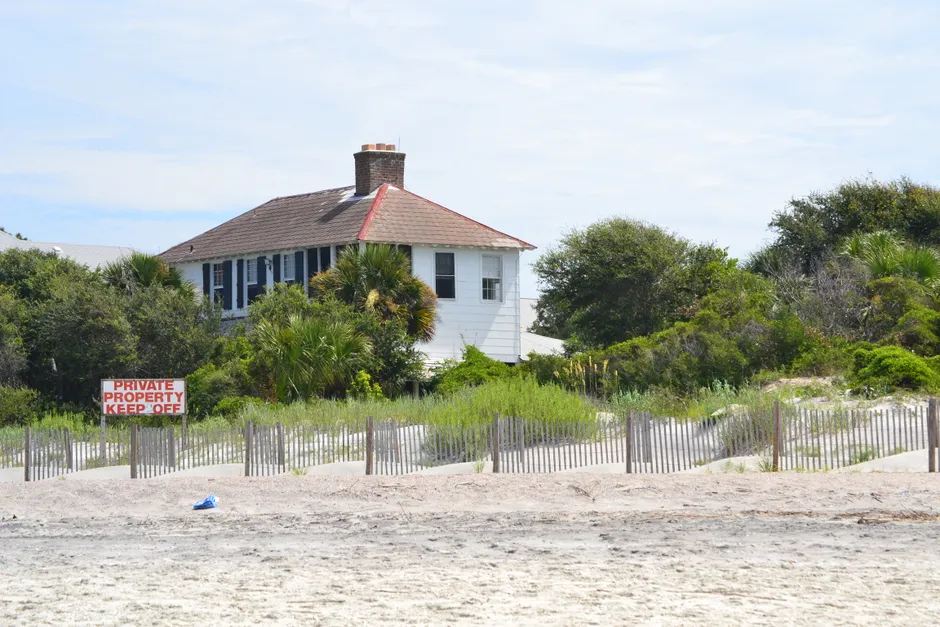
Jamaica's beaches are legally public, but not in practice — and a sharpening court fight is forcing the island to reckon with the gap between what the law says and what happens on the ground.
Under Jamaican law, the foreshore — the strip of land between the high- and low-water marks — cannot be privately owned in a way that blocks public access. As Jamaica Gleaner commentary reported in October 2023, no beach in Jamaica is entirely private, regardless of who owns the land above the tide line. This principle is anchored in the Beach Control Act, the statutory framework that governs beach and sea access across the island.
In reality, though, hoteliers, resort operators, and private landowners have restricted or discouraged access to stretches that should remain open. Enforcement has been patchy. Physical infrastructure — access roads, signage, parking, public restrooms — needed to make the legal right usable is often missing or unmaintained.
The Policy Bridge
The Beach Access and Management Policy, known as BAMP, was meant to address this gap. Developed under the Ministry of Economic Growth and Job Creation, BAMP aims not just to restate the legal entitlement but to operationalize it: through planning controls, facility standards, and management frameworks that would actually increase public beach use and improve the quality of beaches available to Jamaicans.
BAMP sits within Vision 2030 Jamaica, the country's long-term national development plan. Vision 2030 ties sustainable tourism and environmental protection to economic resilience — a framework that should align beach access with broader growth goals. The problem is that these objectives do not always move in lockstep when individual projects reach approval.
A second layer of government policy complicates matters: Jamaica's divestment programme. Under this initiative, the government is selling off state assets partly to raise revenue. When government-owned coastal land or facilities enter the divestment pipeline, the public-access mandate in BAMP and the Beach Control Act meets a different incentive — maximizing the sale price, which typically means limiting other claims on the property. The tension is real.
Where the Legal Fight Is Headed
The court disputes emerging now are not about whether the Beach Control Act applies — it clearly does — but about how it is enforced in practice. The key questions are: who has to prove that access was restricted, and what remedies do citizens have when a beach is effectively closed off by fencing, development, or removal of access roads?
These are not abstract procedural matters. An access right that exists on paper but requires expensive litigation to enforce is, for most Jamaicans, effectively nonexistent. This gap between legal theory and practical reality is familiar across the Caribbean, where tourism-driven development cycles repeatedly test the durability of public-interest protections that were written into law before modern resort infrastructure was even imagined.
How courts interpret the Beach Control Act — what counts as an unlawful restriction, and what proof is required — will reverberate beyond any single coastal site. A narrow reading could allow well-resourced developers to engineer exclusion without formally violating the statute.
What complicates the picture is that BAMP itself is a policy framework, not yet enacted law. In court, that means it carries weight as guidance rather than binding authority. The Beach Control Act, by contrast, dates from an earlier era when enforcement machinery and the scale of coastal development were both far smaller. Neither instrument is fully calibrated for the current moment, where private resort development and government asset sales are reshaping the coast at speed.
The underlying question for Jamaica is whether its existing legal and policy tools can withstand sustained economic pressure — and whether the revenue logic driving the divestment programme will, over time, erode the political will to enforce them.


