Britain and Japan Deepen Tech and Energy Ties With £18 Billion Investment Push

UK Prime Minister Keir Starmer and Japanese Prime Minister Sanae Takaichi met at Downing Street on 14 June 2026 to finalise an investment and technology cooperation package expected to generate more than £18 billion in economic gains and tens of thousands of new jobs across both countries, according to UK government statements.
This figure builds on earlier momentum. In May 2023, leading Japanese businesses had already committed a record £17.7 billion in UK investments across life sciences, infrastructure, and other sectors. The 2026 package extends and deepens that wave of capital rather than replacing it.
The centrepiece is the UK-Japan Frontier Technology Partnership, a bilateral framework designed to create lasting two-way investment and research flows in advanced sectors. Rather than a one-off capital commitment, it establishes the institutional structures for firms from both countries to co-invest, collaborate on R&D, and share market access in areas where both economies have genuine competitive strength — semiconductors, artificial intelligence, quantum computing, and advanced materials are the natural focal points, though the official framing covers the broader "frontier technology" category.
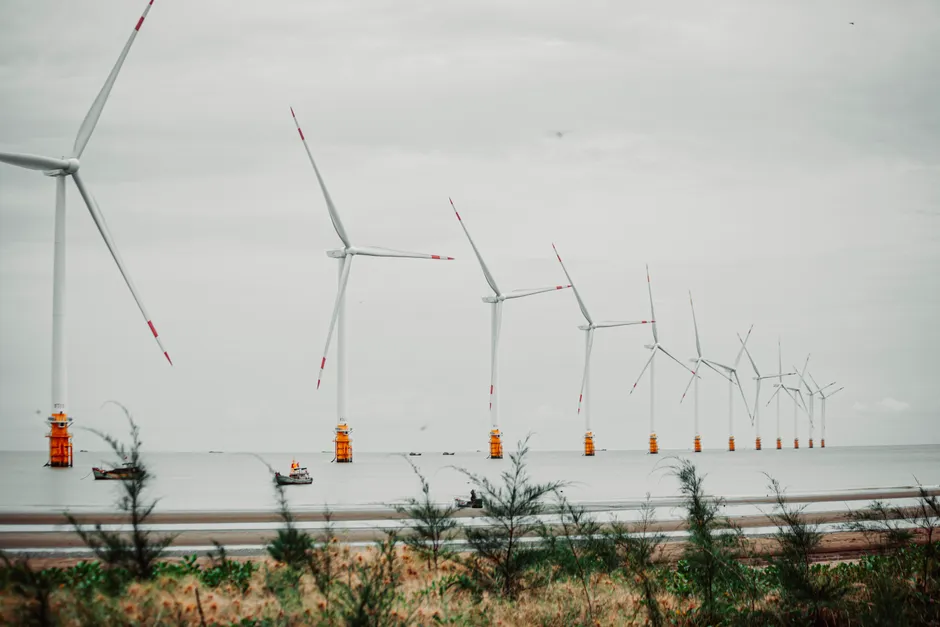
Energy cooperation features prominently in the agreement. The two countries plan to collaborate on offshore wind development and next-generation reactor technology, according to Nikkei Asia. This pairing has real industrial logic: the UK operates some of the world's largest offshore wind capacity and is developing small modular reactors (SMRs) — compact nuclear designs that can be factory-built and deployed flexibly — alongside other advanced reactor concepts. Japan, rebuilding its nuclear sector cautiously after the Fukushima incident, is simultaneously scaling offshore wind in its coastal waters. Shared research on next-generation reactor designs could accelerate the pace at which both countries bring new nuclear technology to the market and develop supply chains to support it.
The bilateral relationship extends well beyond this single summit. Japan has become one of Britain's most consequential economic partners since Brexit. The UK-Japan Comprehensive Economic Partnership Agreement (CEPA), which entered force in January 2021, gave London a way to maintain preferential trade access after leaving the EU. Japanese firms have long been among the most active foreign investors in Britain — in automotive manufacturing, financial services, and pharmaceuticals, substantial operations carry Japanese ownership. The 2023 investment commitment, announced during then-Prime Minister Fumio Kishida's visit to the UK for the G7, signalled that CEPA was translating into actual capital deployment.
Takaichi's visit occurs as both governments face overlapping pressures. Japan has been strengthening security partnerships with NATO allies, including the UK under the Hiroshima Accord framework, while managing its Indo-Pacific strategy. For Britain, major investment summits with non-EU partners carry domestic political importance: they provide concrete evidence that post-Brexit trade relationships are delivering economic results. An £18 billion commitment paired with a formal technology partnership is precisely the kind of visible deliverable both governments need.
The real test lies in implementation. Government-backed R&D frameworks succeed only when the commercial structures beneath them attract genuine capital. The 2023 commitments from Japanese firms were detailed and publicly named; the question now is how the 2026 partnership structures its targets — whether as binding pledges, letters of intent, or joint-programme funding — will shape how quickly bilateral technology integration actually unfolds. The implementing agreements have not yet been fully released, but the framework's publication on 14 June suggests formal governance is in place.
Energy cooperation may ultimately prove the more consequential thread. Offshore wind supply chains are global and fiercely competitive. A bilateral research and investment axis between two of the world's leading maritime economies could influence procurement standards and component specifications in ways that ripple far beyond the two countries themselves.