Inside the London Settlement Sales Clash: What the Arrests Reveal About Law and Free Speech

Fifteen people were arrested on 14 June 2026 as pro-Israel and pro-Palestinian demonstrators faced off outside the 'Great Israeli Real Estate Event' at Edgware United Synagogue in London, according to Sky News and Jewish News. The Metropolitan Police deployed a significant operation to manage the converging crowds.
The event itself had been contentious for weeks. Over 100 UK lawmakers called on the government to cancel it, arguing that the exhibition functioned as a marketplace for property built in Israeli settlements in the West Bank. The legal status of these settlements remains hotly disputed: the UN Security Council, International Court of Justice, and most Western governments—including the UK—treat their construction as a breach of the Fourth Geneva Convention, an international agreement that protects civilians in occupied territory. The Guardian reported on those parliamentary calls on 13 June, the day before the event.
Legal challenges had also mounted. Three organizations—the International Centre for Justice for Palestinians, the English Law Students Campaign, and the Palestinian and International Law Council—jointly wrote to the Home Secretary on 9 June, urging the event be blocked. Their argument: advertising and selling settlement properties constitutes participation in activity prohibited under international humanitarian law. The Home Secretary did not act.
That decision—or refusal to decide—has become the core of the political row. Opponents contended that a commercial event marketing settlement real estate in London crossed from protected speech into active facilitation of conduct banned under international law. Supporters countered that private commerce cannot be lawfully suppressed by government order without clear statutory basis, and that restraint was itself the constitutionally sound course.
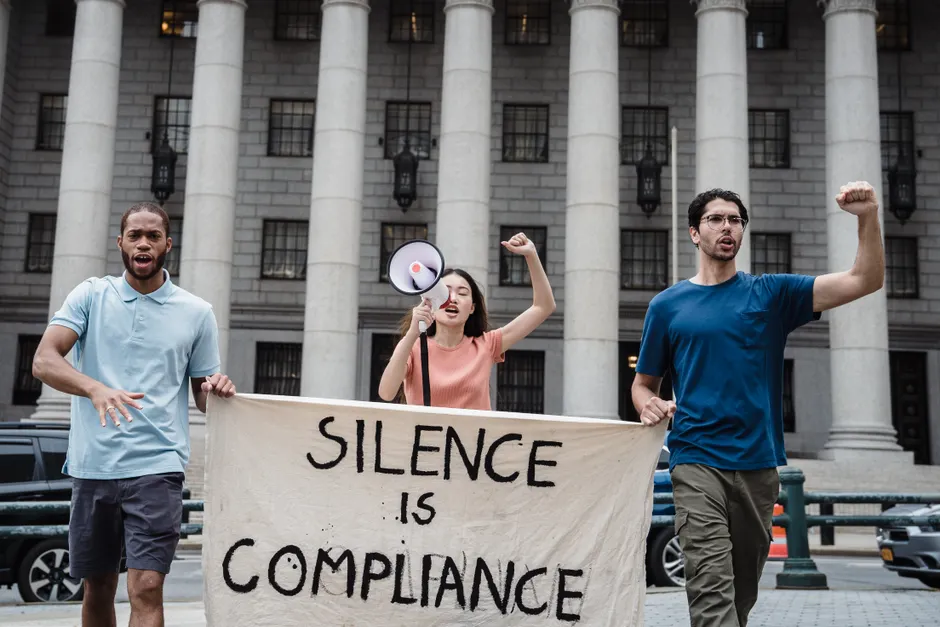
The scene outside the synagogue on 14 June reflected the depth of that split. Al Jazeera reported that pro-Palestinian protesters called the event an advertisement for illegal land sales, while pro-Israel demonstrators defended it. The synagogue location added another layer: critics said it wrongly conflated Israeli government policy with Jewish community institutions, while supporters argued the venue was a legitimate choice and that protest outside risked crossing into intimidation of a Jewish space.
The wider context matters here. Israeli settlements in the West Bank occupy land captured during the 1967 Six-Day War. Successive Israeli governments have expanded them; successive international courts have ruled them inconsistent with international law. The UK officially treats them as illegal. What emerged from Saturday's event is the gap between that diplomatic stance and what domestic law actually requires—or permits—when settlement-linked commerce occurs on British soil. This tension is not unique to Britain; similar debates have surfaced in the United States, France, and Germany around boycotts, divestment campaigns, and the bounds of free commercial activity tied to contested territory.
For the 100-plus MPs who signed the cancellation letter, the government's inaction will likely become a weapon in the next parliamentary session. The Home Secretary now faces pressure to clarify whether existing law—possibly including trade sanctions frameworks or public order statutes—could restrict future events of this kind, or whether new legislation would be needed. The 15 arrests have shifted some immediate political focus to the protests themselves, handing both sides ammunition: those who warned that the event risked disorder, and those who worry that heavy policing of lawful demonstration raises its own civil liberties concerns.
The episode has not settled the underlying question. The event occurred, the arrests were documented, and the legal and parliamentary arguments it sparked are now part of the record. What happens next—whether Parliament acts, whether courts are asked to rule, whether future events face different treatment—remains unsettled.