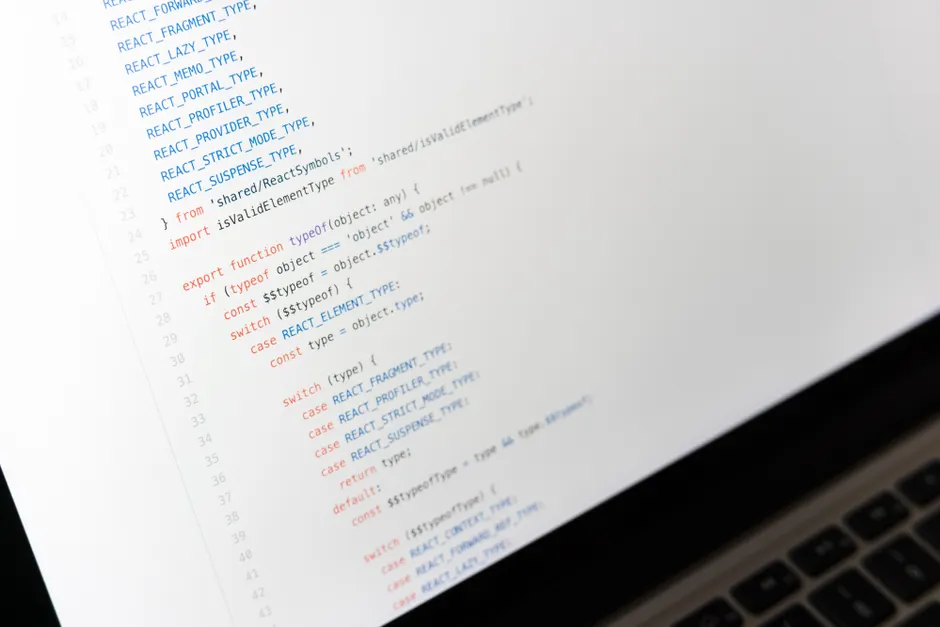
A Developer Rewrote X11 From Scratch in Rust. Here's Why That Matters

A developer called joske has released yserver, a new X11 server written from the ground up in Rust, designed to run real desktop environments and applications on Linux.
What makes this notable is what it does not do. It is not an updated version of Xorg, the X server that has run Linux desktops for decades. It is not a wrapper layered on top of Wayland, the newer display server that many distributions are moving toward. Instead, yserver is a completely fresh implementation of the X11 protocol — the set of rules that allows applications to talk to a display server — but written in Rust instead of C.
That language choice matters. Rust has built-in protections against entire categories of bugs that plague older C code: memory corruption, buffer overflows, and use-after-free errors. Xorg, which originated in 1984, has been repeatedly patched over the years to fix security holes caused by these very problems. A modern rewrite in a safer language eliminates that class of vulnerability at the compiler level.
Why X11 still exists
X11 is old — designed in 1984 for a computing world that looks nothing like today's desktops. Yet it stubbornly persists. Wayland, the intended successor, is cleaner and more elegant on paper. But it does not yet handle every use case: some older software toolkits have never been ported, certain window managers remain X11-only, and remote desktop setups still depend on X11's network transparency. For those users, a clean, modern reimplementation of X11 without the decades of legacy baggage could be useful.
The BSD support documentation published on 2026-06-08 suggests the project aims beyond Linux. BSD systems — FreeBSD, OpenBSD, and NetBSD — have historically centered on Xorg as their primary display server, while Wayland adoption in those communities lags far behind. A Rust-based X11 server that runs on BSD would address a real gap in those operating systems, where the maintenance burden falls on smaller developer teams.
The hard part
Building an X server from scratch is a large undertaking. The X11 protocol is wide and deep: beyond the core protocol sit many extensions — RANDR (monitor configuration), RENDER (graphics), XInput2 (mouse and keyboard), GLX and DRI (for GPU acceleration) — that sit beneath virtually every graphical application built with GTK or Qt. The available documentation does not specify how much of this extension landscape yserver currently covers. The project appears to be in active early development, not yet ready for production use.
This matters if you are thinking about whether yserver could actually replace Xorg on your system. It cannot yet, not until it handles the full breadth of what applications expect.
Why Rust makes sense here
An X server runs with elevated privileges — it has direct access to hardware — and it processes requests from arbitrary applications, including ones you may not fully trust. That combination historically creates a large attack surface. Rust's memory safety means the compiler catches a huge class of bugs before they ever become exploitable vulnerabilities. This same reasoning has driven projects like the Linux kernel's Rust subsystem, the Servo layout engine, and several security-focused network services to move away from C in recent years.
Whether yserver becomes something that Linux and BSD users actually install and depend on will come down to practical questions: how far the extension support reaches, and how well it handles the GPU acceleration path that modern graphics-heavy applications need. Those are the difficult, unglamorous parts of any X11 implementation.
The project is worth following if you maintain display servers, work on Linux or BSD desktop infrastructure, or care about the long-term future of X11 — especially on BSD systems where the alternatives are thin on the ground.