How the FBI Built a Fake Courthouse to Train for Real Cyber Attacks
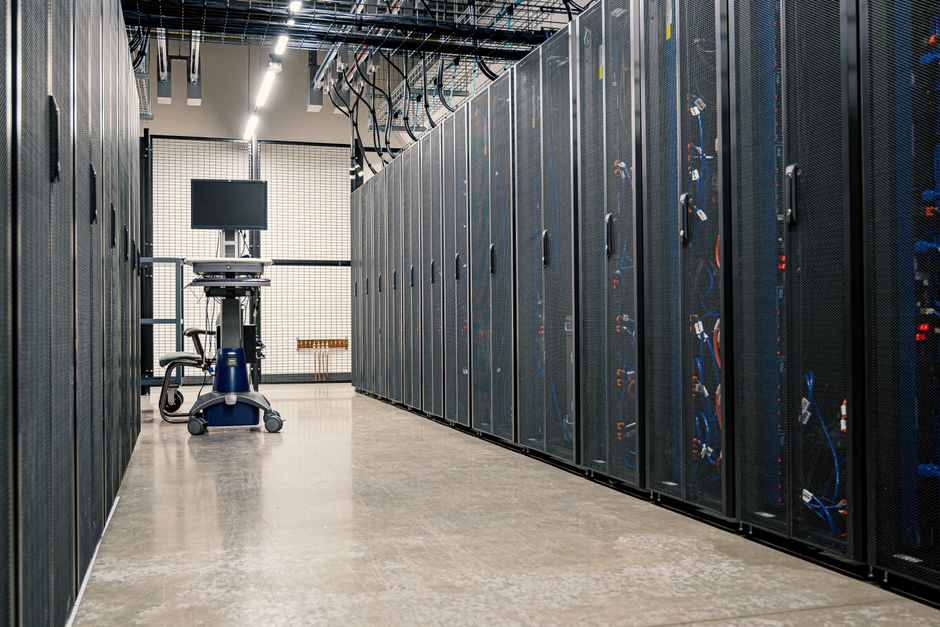
The FBI has opened a 22,000-square-foot training facility called the Kinetic Cyber Range at Redstone Arsenal in Huntsville, Alabama, designed to simulate environments where digital attacks collide with physical infrastructure, according to the FBI.
The facility's defining feature sets it apart from almost every other cybersecurity training center in the country. Rather than banks of computers in a standard lab, the Kinetic Cyber Range contains a functioning courthouse, a hotel, and a gas station — physical replicas of real buildings. The logic is straightforward: cyber incidents do not happen in isolation. They happen inside buildings, across control systems that run physical equipment, and in the kinds of mixed environments that FBI agents actually walk into after a breach.
What "Kinetic Cyber" Means
"Kinetic cyber" refers to digital attacks that produce real-world, physical consequences. A hacker might manipulate industrial controls, disable safety systems, or compromise the building management network that controls air conditioning or access doors. This is not a new concept in the military or intelligence world — they have used this framing for years — but the FBI's adoption of it as a facility name signals where the bureau sees its investigative future: not purely in network forensics, but in the overlap between IT systems and the physical infrastructure that depends on them.
Most cybersecurity training ranges are simulations that live entirely on a computer network. The Kinetic Cyber Range does something different: it embeds the network training inside an actual physical space agents can walk through. A courthouse is not just a stage set. It has specific access control systems, public-facing areas, and legal evidence-handling requirements that a virtual environment cannot replicate with full realism. When agents train in an actual building, they practice compound skills at once: network investigation, evidence preservation, and managing an active crime scene.
Why Huntsville
Redstone Arsenal is not a new location for the FBI. The bureau has maintained a presence there for more than 50 years, and more than 1,300 FBI personnel currently work on the installation. The Kinetic Cyber Range sits alongside the FBI's Hazardous Devices School — the bureau's main training facility for bomb technicians — which has operated there for decades. That proximity is intentional. Redstone is a federal military installation with the land, security infrastructure, and interagency relationships required to run large-scale, controlled training operations in a way that rented commercial office space simply cannot provide.
The facility's origins trace to a June 2021 groundbreaking, when the FBI announced an Innovation Center at Redstone Arsenal that would include the kinetic cyber range, a virtual reality classroom, and multi-purpose training spaces. What was announced five years ago is now operational, as of the FBI's June 2026 reporting.
What This Changes for Investigators
For cybersecurity professionals and federal investigators, the practical question is what this kind of facility produces that conventional training does not. The answer lies in building procedural skill at the intersection of digital investigation and physical scene management. When an agent responds to a ransomware attack at a courthouse, the skills required include network triage and evidence recovery — but also decisions about physical access, managing witnesses and bystanders, and preserving evidence in spaces not designed for incident response. A facility that replicates the physical space lets trainees develop those overlapping skills together, rather than learning network forensics in one course and physical scene management in another.
Most federal cybersecurity training — exercises run by CISA, National Cybersecurity Training and Education Center programs, and Pentagon cyber ranges — has traditionally kept physical and digital training separate. A facility that intentionally merges them reflects a shift in how the FBI and other agencies understand how attacks on critical infrastructure actually happen.
The obvious limitation is how much of this facility the public actually sees. The FBI has not published the training curriculum, how often agents rotate through the program, or whether state, local, or allied agencies can use the facility. Those details matter for understanding whether this is training available to a broad community of first responders or confined mainly to FBI personnel. A state law enforcement agency responding to a ransomware attack at a city hospital would benefit from similar training, but without access to it, the facility's impact stays narrower.
That limitation aside, the Kinetic Cyber Range is a tangible, expensive commitment to training in the kinds of environments where high-stakes incidents actually occur. The physical replicas serve a real purpose: they close the gap between a network diagram on a screen and what investigators encounter when they walk into a building after a breach. That gap is where investigations succeed or fail.