Bill Gates Proposes a Robot Tax and 'Human Reserved' Jobs to Manage AI's Impact on Labor
Bill Gates published a long-form essay on August 26, 2026, titled "A Turbulent AI Era and Critical Choices to Make" on his Gates Notes website, laying out two specific policy proposals to mitigate AI's impact on labor: a tax on robots and AI tokens, and a category of "Human Reserved" jobs from which AI would be barred. Gates Notes
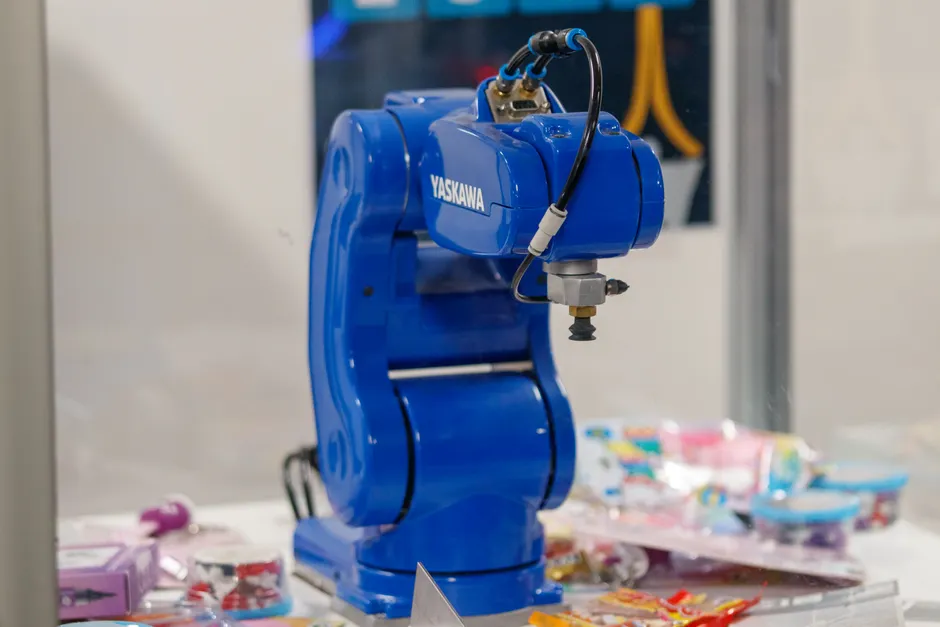
The robot tax proposal targets what Gates sees as a built-in bias in current tax systems. When a company buys a robot, it can typically write off the purchase as a business expense right away. But hiring a human employee triggers payroll taxes. That difference, Gates argues, effectively rewards employers for choosing machines over people. A tax on robots and AI tokens would both slow that shift and raise money for retraining programs and a stronger social safety net. In a separate interview with Axios published the same day, Gates extended the proposal to explicitly include a tax on AI tokens, not just physical robots. Axios
Gates first floated a robot tax in a 2017 interview with Quartz, suggesting the revenue could finance roles like caring for the elderly or working with children in schools. The idea was rejected within months by a senior European Union official. The current essay revives and broadens that nearly decade-old concept, now extended to cover inference-level AI usage through token taxation.
The second pillar of Gates's essay is the "Human Reserved" designation. Certain jobs would be off-limits to AI deployment, particularly roles whose automation would displace large numbers of workers who cannot easily transition to new employment, and tasks involving emotionally charged human interaction, such as delivering a terminal diagnosis to a patient. Gates wrote that the Human Reserved domain would evolve over time, with some jobs set aside now and AI phased in slowly over years or decades, while a baseline of positions would be permanently preserved. He specified that sectors like education and mental health care should remain "a mix" of humans and AI rather than being fully automated. TechCrunch The Telegraph
Gates also addressed the debate over AI development speed. He voiced support for the "Pacing The Frontier" open letter, an appeal by AI employees for an industry-wide slowdown, while expressing skepticism that such a slowdown would be sustainable in practice. He did not detail what mechanisms might enforce a pause or why he doubted its durability, leaving that as a stated position rather than a developed argument.
The essay strikes a dual register. Gates expressed excitement about AI's potential to accelerate progress in science and healthcare, consistent with his public comments over the past several years, including a 2025 appearance on Reid Hoffman's "Possible" podcast where he discussed AI as an accelerator for material science, biology, medicine, education, and energy. At the same time, he worried aloud about labor displacement and said governments are not responding adequately to AI's impact on jobs. The Guardian
The proposals arrive amid an active policy conversation about AI and employment that has so far produced more discussion than legislation. The robot tax concept has circulated in academic and policy circles since at least Gates's 2017 remarks, and has gained limited traction with lawmakers in any jurisdiction. Extending it to AI tokens, a unit of inference consumption rather than a physical machine, is newer and raises questions about how token-level taxation would be measured and enforced across API-based and open-weight deployment models.
Gates did not specify tax rates, enforcement mechanisms, or which governmental bodies should implement either proposal. The essay reads as a framework for debate rather than a policy blueprint. Its weight derives from Gates's standing as a long-standing voice on technology's social consequences, not from the technical specificity of the mechanisms themselves.
What gives the essay more bite than a standard opinion piece is the convergence of its two proposals. A robot-and-token tax addresses the economic incentive structure driving automation, while Human Reserved designations address the scope of what can be automated at all. Together they sketch a labor transition strategy that is neither laissez-faire nor prohibitionist, but managed and phased.
The broader context here is that Gates has occupied a unusual position in tech policy for decades. He is neither an academic theorist nor a sitting regulator, yet his proposals carry enough weight to shape public conversation. The fact that he has now married an economic mechanism (taxation) with a boundary-setting one (reserved roles) gives policymakers something more concrete to react to than a general call for caution. Whether governments pick up either idea is, as Gates himself might put it, an open question.


