Nigeria Launches Rescue Operation for Hundreds Kidnapped from a Mosque
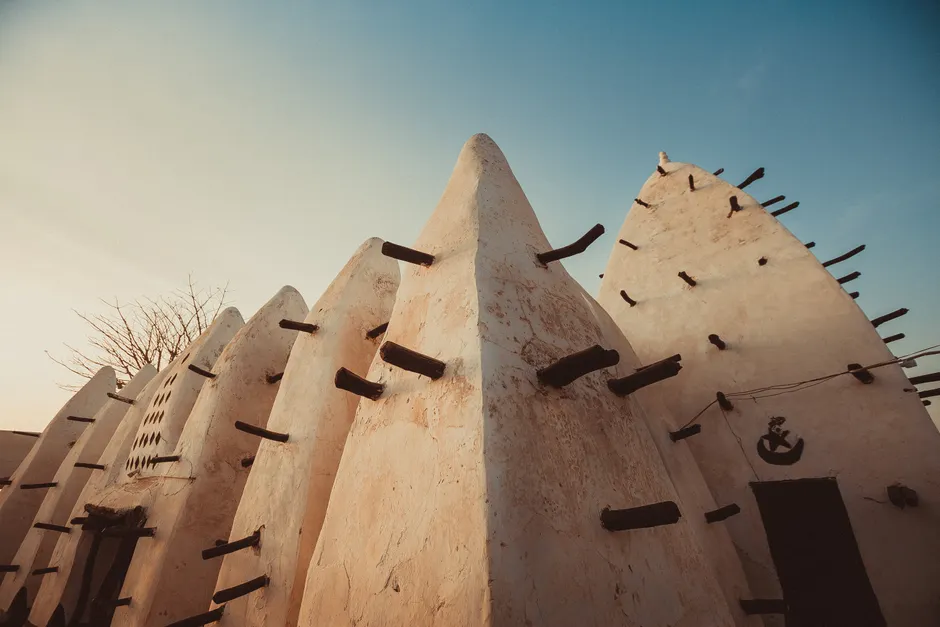
President Bola Tinubu has ordered a coordinated rescue mission to recover an estimated 600 worshippers seized during Friday prayers at a mosque in Dekera village, in north-central Niger State. Nigerian military and security services began the operation on Wednesday, 26 August 2026. Al Jazeera
Tinubu announced the directive on social media late on Tuesday, 25 August, instructing the Armed Forces, the Nigeria Police Force, the Department of State Services, and all relevant intelligence agencies to carry out the rescue. He demanded regular briefings from the country's security chiefs until every abductee is returned. The presidency condemned the attack as a "cowardly attack on defenceless Nigerians" and pledged that those responsible would face justice. Al Jazeera
The abduction took place on Friday during prayers at the mosque in Dekera. Police initially confirmed on Saturday, 22 August, that more than 60 worshippers had been kidnapped, according to Reuters. That number later expanded dramatically: residents reported that an armed group posted a video showing roughly 600 women, children, and older people in captivity. Reuters Reuters
The kidnappers' video surfaced on Sunday and circulated widely on Facebook and WhatsApp. It showed crying children and a gunman speaking Hausa, instructing families to identify their relatives. News agencies could not verify the exact date or location where the video was filmed, and no version of it was found posted before Sunday. Al Jazeera
An official from the district where the attacks took place told Reuters that 30 people were killed and buried on Sunday. Abubakar Umar, head of the Dekera community, said at least 2,000 people fled into neighbouring Benin after the attacks. Al Jazeera
DW reported that jihadis linked to the Lakurawa group carried out the attack and abduction during Friday prayers. The broader region around northwest Nigeria, alongside neighbouring Niger, Chad, and Benin, has increasingly become the site of Boko Haram and ISIL attacks. The northwest has long served as a transit zone for arms and gunmen crossing through West Africa. DW Al Jazeera
Abuja-based security expert Kabir Adamu told Reuters that it was not yet possible to attribute responsibility for the mass abductions to a specific group, but he expected the gunmen who released the video to reach out and demand a ransom — a payment for the release of captives. He noted that the kidnapping took place in broad daylight, which he said showed how ineffective security operations in Nigeria have been. Reuters separately reported that the mass kidnapping of worshippers exposed security failings in the country. Al Jazeera Reuters
Amnesty International urged Nigerian authorities to secure the release of the worshippers, warning of the growing threat posed by mass abductions in northern Nigeria. The organisation's intervention reflects a pattern: mass kidnappings for ransom have been on the rise across northern Nigeria since the start of 2026. Al Jazeera
The issue carries particular political weight. Nigeria is approaching a presidential election scheduled for January 2027, and security is expected to be a major campaign issue. The abduction of hundreds of worshippers during Friday prayers, the circulation of hostage video on social platforms, and the displacement of thousands into a neighbouring country together constitute a pressure test for Tinubu's security apparatus at a moment when electoral stakes are already high. Al Jazeera
The broader context here is the regional security picture. If the involvement of the Lakurawa group is confirmed, it would point to the expanding operational footprint of jihadist networks beyond their traditional strongholds in the Lake Chad basin. The cross-border displacement of 2,000 people into Benin shows how insecurity in Nigeria's middle belt radiates outward, destabilising neighbouring states. The kidnappers' use of social media to distribute hostage footage and issue demands to families mirrors tactics employed by groups elsewhere in the Sahel — the semi-arid region stretching across Africa from the Atlantic coast to the Red Sea — suggesting a degree of operational sophistication that Nigerian security forces have struggled to counter.
The discrepancy between the initial police figure of over 60 abductees and the later estimate of approximately 600 is notable. It may reflect information emerging gradually from a remote area with limited communications infrastructure, or it may indicate that police initially understated the scale. Either way, the gap between early official reporting and the figure now driving a presidential-level rescue operation illustrates the challenges of obtaining reliable data from affected zones.
The coordination of multiple agencies under a single presidential directive is standard in principle but difficult in practice in Nigeria's fragmented security architecture, where overlapping jurisdictions and resource constraints have historically hampered rapid response. Think of it as several emergency services sharing responsibility for the same emergency but each with its own chain of command and budget. Tinubu's demand for regular briefings until all abductees are returned sets a public benchmark against which the government's performance will be measured, both by domestic audiences and by international partners that have invested in Nigeria's counterterrorism capacity.
What remains uncertain is whether the rescue operation can be conducted before the kidnappers move their captives deeper into forested areas that have historically served as safe havens for armed groups across the region. The longer the hostages remain in captivity, the greater the leverage the kidnappers gain, particularly if ransom negotiations begin. Adamu's assessment that a ransom demand is likely signals the trajectory that many previous mass abduction cases in northern Nigeria have followed.


