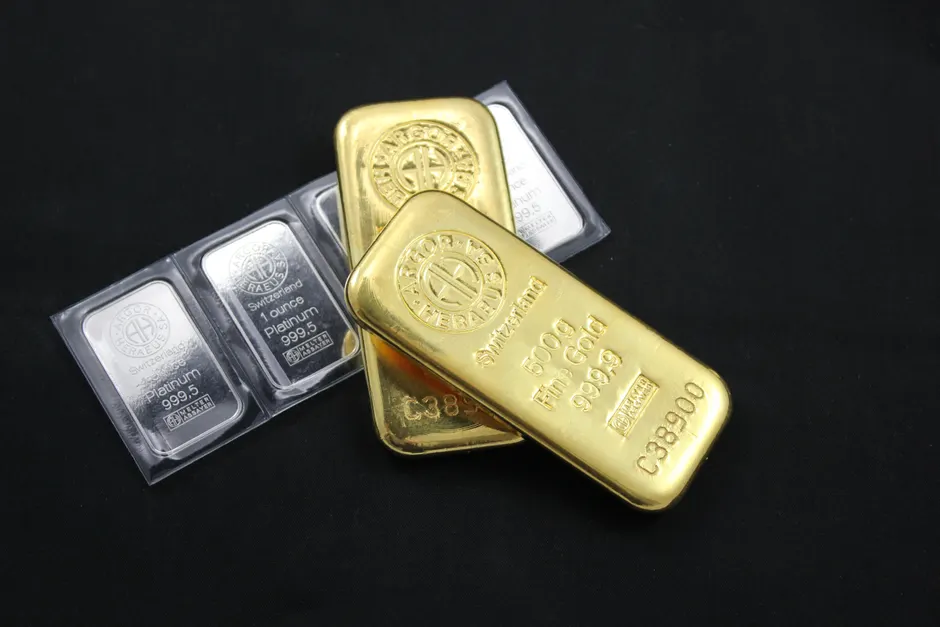
Harmony Gold's Record FY26: Revenue Hits ZAR 100 Billion as Gold Price Surges

Harmony Gold posted record results for fiscal 2026, with revenue climbing 34% to ZAR 100 billion and headline earnings per share (HEPS) jumping 87% to ZAR 43.63. Two forces drove the surge: a sharply higher average gold price and the reversal of a previous impairment charge.
A quick note on terms: HEPS is a South African profitability measure that strips out certain one-off items to give a cleaner read on ongoing earnings. An impairment reversal adds back a writedown previously taken against an asset's value — it is a non-cash accounting item, though South African practice includes it in headline earnings. We will return to why that distinction matters.
According to Harmony's FY26 trading statement, dated 21 August 2026, the average gold price received was R2,069,710 per kilogram (US$3,811 per ounce), up 35.3% from R1,529,358/kg (US$2,620/oz) in FY25. Harmony Gold FY26 Trading Statement. Morningstar separately reported that Harmony expected full-year earnings to rise on the impairment reversal and higher gold prices boosting revenue. Morningstar.
The FY26 result caps a year of steadily climbing gold prices. Harmony's H1FY26 interim results, dated 11 March 2026, reported the average gold price received (including hedge) rose 36% to R1,909,849/kg (US$3,421/oz) from R1,405,020/kg (US$2,437/oz) in the prior comparable period, while group revenue rose 20%. The H1FY26 trading statement dated 9 March 2026 put the US-dollar gold price increase at 40% to US$3,421/oz. The gap between that interim figure and the full-year US$3,811/oz implies a second-half average of roughly US$4,200/oz, pointing to accelerating prices in the back half of the fiscal year.
For context, the prior fiscal year was already strong. Harmony's FY25 trading statement, dated 25 August 2025, reported a 27% increase in the average gold price to R1,529,358/kg (US$2,620/oz) from R1,201,653/kg (US$1,999/oz). Full-year results released 28 August 2025 showed HEPS up 26% to 2,337 SA cents (129 US cents).
The trajectory from FY25 to FY26 is therefore one of compounding price strength. Gold received moved from US$1,999/oz in FY24 to US$2,620/oz in FY25 to US$3,811/oz in FY26 — a roughly 91% cumulative increase over two years. Revenue growth at 34% to ZAR 100 billion in FY26 outpaced the H1 revenue increase of 20%, consistent with the steeper second-half gold price. The 87% jump in HEPS to ZAR 43.63, against a 35.3% gold price increase, reflects operating leverage working in Harmony's favor, augmented by the impairment reversal flagged in the trading statement.
A few things stand out for anyone tracking South African gold miners. First, the rand-denominated price increase (35.3%) came in below the US-dollar increase implied by the H1 figures, suggesting rand strength against the dollar during parts of FY26 partially dampened the local-currency gold price. A stronger rand is a structural headwind for rand-reporting gold producers, since costs are largely rand-denominated while the gold price is set in dollars. Second, the impairment reversal is a non-cash item that inflates headline earnings under IFRS, though it is treated as part of headline earnings per South African practice. Stripping it out would still leave a substantial earnings increase driven by operating leverage to the gold price, but the exact split between operating performance and the reversal is not disclosed in the trading statement.
Third, the hedge book bears watching. The H1FY26 gold price was reported "including hedge," meaning Harmony's forward sales and option programmes partially muted the realized price relative to the spot gold price. As spot gold rose through the second half, any legacy hedges struck at lower prices would have continued to drag on realized prices, though the full-year US$3,811/oz figure suggests either hedge losses narrowed or the hedge book was relatively small by H2.
The broader context here is about sustainability. The key question for FY27 is whether Harmony can hold or expand margins at these gold price levels, or whether cost inflation in South African deep-level mining — wage settlements, electricity tariffs, shaft-sustaining capital — will erode the benefit. The ZAR 100 billion revenue figure and 87% HEPS increase provide a high base. Sustaining HEPS at or near ZAR 43.63 in FY27 would require either stable-to-higher gold prices or meaningful cost discipline. Neither is guaranteed, and the trading statement does not provide forward guidance on production volumes or all-in sustaining costs (AISC), which is the industry standard measure capturing total production costs including capital expenditure.
The verified facts do not include guidance on FY27 production, costs, or dividend policy. Harmony's FY25 results disclosed a final dividend, but no comparable FY26 capital return figure appears in the trading statement. That will be a focal point when full FY26 results are published.