Trump's AI Images of George Washington and a Presidency Under Pressure
In late August 2026, Donald Trump posted a series of AI-generated images on Truth Social showing himself alongside George Washington — in a completed White House ballroom, on horseback, and at a table studying a map. The posts arrived as Trump, 80, struggled to end his war with Iran and as his approval ratings fell to the lowest point of his second term.
A Reuters/Ipsos poll published August 17, 2026 put Trump's approval rating at 33%, the lowest of his presidency. The Guardian reported on August 27 that Trump was concurrently unable to bring the Iran conflict to a close, leaving him with diminished support on two fronts: a protracted military engagement abroad and domestic discontent at home.
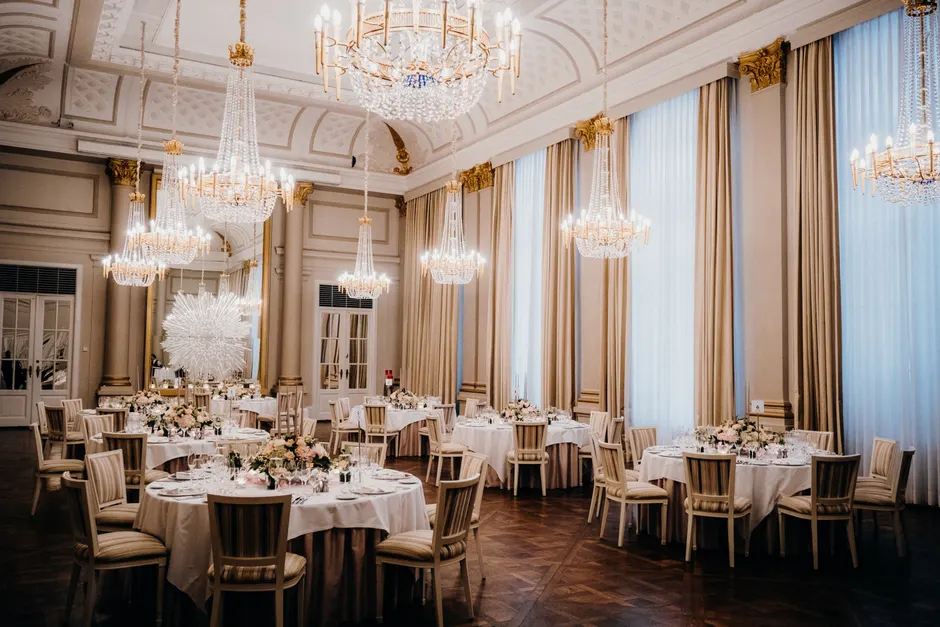
Earlier in August, Trump posted an AI image of himself and Washington standing side by side in a ballroom within a completed White House. A minute later, he posted three more AI images of the pair in the same setting. In one, Trump appears holding a piece of paper and pointing at the ceiling, as if reviewing construction. The following day, he posted an AI image of the two seated at a table, each holding quills over what appears to be a map. Three minutes later, he shared an image of the pair on horseback — Washington on a white horse, Trump on a black horse. Neither image carried a caption. On Sunday, August 23, Trump posted a video showing Washington and Trump walking through the ballroom, taking turns pointing at the ceiling as though appraising the work. (The Guardian)
Asked whether Trump believed he had actually met with Washington, a White House spokesperson did not directly answer. Instead, the spokesperson said Truth Social is "the most powerful and popular social media platform in the world" and serves as Trump's "authentic voice." (The Guardian)
Trump has openly stated he wants the White House ballroom to serve as a "legacy project" during his second term. The AI images place him alongside the nation's first president in that space, visually linking his renovation ambitions to the founding era.
Angelo Carusone, president and CEO of Media Matters, said part of the reason Trump posts such images is a sentiment that he is "on par with or better than George Washington" and that AI "lets him project his imagination." (The Guardian)
The Washington images are the latest in a longer pattern. In April 2026, Trump posted an AI image of himself as a Jesus-like figure on Truth Social, later saying it was meant to portray him as a doctor amid his escalating feud with the Pope. (Reuters) A year earlier, he shared an AI image of himself as the pope on a Friday night; the White House subsequently reposted it on its official X account. Trump later told reporters the pope image was posted as a joke. (Associated Press; Reuters) The administration has also used AI-generated imagery to craft a new official portrait of Trump. (Associated Press) By January 2026, the administration was routinely sharing cartoonlike AI visuals and memes to promote its messaging. (Associated Press)
The broader context here is a presidency that has folded generative AI — software that creates images, video, or text from prompts — into its communications apparatus with unusual deliberation. Where prior administrations relied on staged photography, official portraits, and press releases, the Trump White House has adopted AI-generated imagery as a recurring tool of political messaging, distributed not only through Trump's personal account but also through official government channels. The Washington series extends that toolkit into the realm of historical self-mythologizing. By placing himself alongside the founding president in scenes of construction, deliberation, and shared horsemanship, Trump uses AI to stage a visual argument about legacy and stature that conventional photography could not produce.
The timing adds a political dimension. An approval rating of 33% places Trump in territory historically associated with presidents facing severe public disaffection. The Iran war, unresolved, compounds the pressure. The AI images do not address either challenge directly, but they project a narrative of presidential grandeur and historical consequence at a moment when voters appear to be withdrawing both. Whether this messaging strategy can arrest that decline, or whether it deepens the disconnect between the White House's self-presentation and public sentiment, is the question the coming weeks will test.


