Samsung's Galaxy S26 FE: Same Phone, Higher Price, Smarter Software

Samsung has announced the Galaxy S26 FE, a phone that keeps the same physical specifications as last year's model while raising the starting price by $50 to $699.99. The 128GB/8GB RAM base model now costs what the 256GB version did a generation ago. Samsung attributes the increase to the global RAM shortage that the industry has widely nicknamed "RAMageddon" (The Verge).
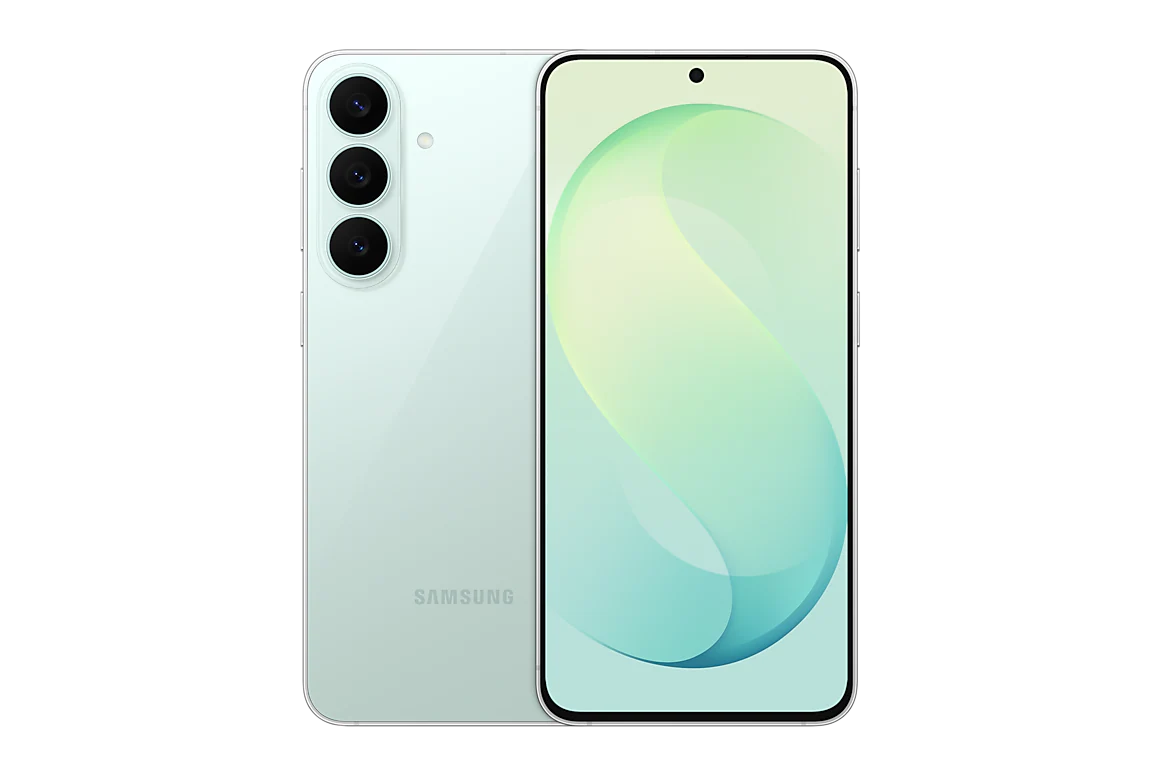
The S26 FE carries over the S25 FE's 6.7-inch OLED display, 4,900mAh battery, and triple rear camera array. The only real hardware change under the hood is a chipset upgrade to Samsung's Exynos 2500. The front-facing 12-megapixel selfie camera widens slightly, from an 80-degree to an 85-degree field of view. None of these changes alter the device's size, weight, or core capabilities in any meaningful way compared to the previous generation (The Verge).
Visually, Samsung has brought the FE closer to the look of the mainline S26 family. The S26 FE gets glossier finishes and a raised camera island that matches the S26 Plus and other models in the series. It ships in three colors: graphite, blueberry, and pistachio (The Verge).
The pricing math is where the S26 FE gets interesting. At $699.99 for 128GB and $799.99 for 256GB, the FE sits directly below the S26 Plus, which launched at $1,099.99 and was available for $899.99 at the time of reporting. The gap between the two devices has narrowed. The FE shares the same size, weight, battery capacity, and wired charging speeds as the Plus. They differ mainly in screen resolution and a slightly slower 15W wireless charging rate. For a buyer who does not need the highest display sharpness, the FE covers most of the Plus experience at a $200 discount against current street pricing (The Verge).
Where Samsung has put real effort is in software. The S26 FE inherits several AI-driven features from the broader Galaxy S26 series, which Samsung unveiled in February 2026 as "The Most Intuitive Galaxy AI Phone Yet" (Samsung US Newsroom). Samsung's Canadian announcement for that series emphasized engineering for AI performance, power efficiency, and thermal management (Samsung Canada Newsroom), framing that matters here because the FE relies on the Exynos 2500 chip to run these AI tasks directly on the device rather than in the cloud.
My FanCam is a new AI video-editing tool that automatically crops footage to track a specific subject. Audio Eraser, which reduces background noise in video, now works beyond locally recorded clips to support third-party apps including YouTube and Netflix. The camera app adds a super steady Horizontal Lock recording option. Individually, none of these are transformative. Together, they show Samsung pushing AI-assisted media features down from the flagship tier into the FE's price band (The Verge).
Two additional AI features focus on proactive assistance. Now Brief, the summary widget, now supports AI-enabled custom cards for tracking weather, health metrics, or online content. Now Nudge, ported from Samsung's Z Flip 8 and Fold 8 foldables, reads what is on your screen and suggests contextual actions like creating calendar events or saving Google Maps locations. The catch is that Now Nudge requires users to type on Samsung Keyboard, meaning the feature works only with Samsung's own keyboard app rather than system-wide. That is a familiar platform-lock-in move. Anyone who uses Google's Gboard will need to weigh whether contextual suggestions are worth switching keyboards (The Verge).
Samsung's Smart Switch data transfer app, which moves contacts, photos, videos, messages, apps, and settings from Android or iOS devices, received updates in One UI 9 to make switching phones more seamless (Samsung Global Newsroom). That matters for the FE specifically, since the device's value proposition depends on pulling buyers up from mid-range Android hardware or, less commonly, from iPhones.
The broader context here is that the FE line has always existed to capture buyers who want flagship-adjacent features without paying flagship prices. When the S25 FE launched in September 2025, Samsung marketed it as "The Gateway to Galaxy AI Flagship Essentials" (Samsung US Newsroom). The S26 FE carries that same positioning forward, but at a higher entry point, with a narrower gap to the S26 Plus, and with a component-supply shock rather than a feature upgrade as the primary driver of the price increase.
The $50 difference is not catastrophic for an individual buyer. What it signals is that the RAM shortage is now reaching consumer-facing pricing in a category where profit margins are already thin. The FE is not the device that will absorb that cost silently. Other manufacturers pricing mid-premium hardware in late 2026 will face the same arithmetic, and the S26 FE may be an early data point rather than an outlier.
In this author's view, what the S26 FE does well is consolidate Samsung's AI software stack into a sub-$700 device that looks and feels nearly identical to a phone costing $200 more. What it does less well is justify a price increase on a device that is, by Samsung's own spec sheet, essentially the S25 FE with a new chip and a wider selfie lens. Buyers will need to decide whether the AI feature set and the Exynos 2500 are worth the premium, or whether a discounted S26 Plus at $899.99 makes more sense for $200 more.