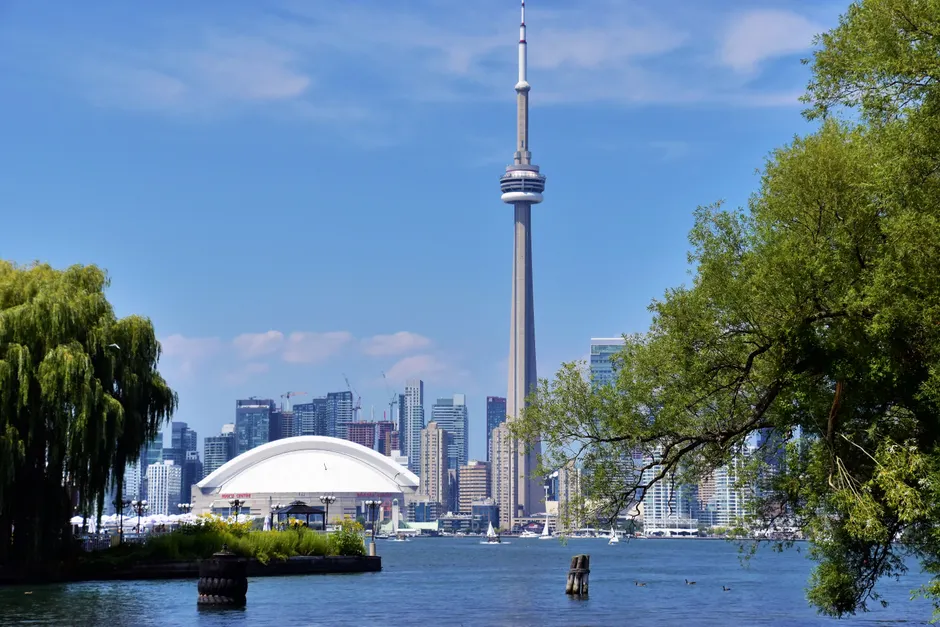
Trump Renames Lake Ontario as Lake America, Escalating Symbolic Pressure on Canada

On August 27, 2026, President Donald Trump signed an executive order directing the federal government to rename Lake Ontario as Lake America. The order, formally titled "Honoring the American History of the Great Lakes and Renaming Lake Ontario as Lake America," updates the Department of the Interior's naming conventions and was posted on the White House presidential actions page (White House).
The renaming came in the middle of an escalating trade war with Canada. In the days before the order, Trump had publicly accused Canada of taking advantage of the United States for decades (Reuters). On August 25, two days before signing, Trump said openly that he was considering renaming the lake (Reuters). The roughly 48-hour leap from floated idea to signed order fits a pattern this administration has already established with geographic renamings.
An administration official defended the move on geographic grounds, noting that most of the lake's water volume sits on the U.S. side and that its deepest point lies within American territory (The Guardian). Lake Ontario is one of five Great Lakes straddling the U.S.-Canada border and is managed under a web of bilateral treaties and agreements between the two countries.
This is not the first renaming under Trump. On January 20, 2025, his first day back in office, he signed an order renaming the Gulf of Mexico as the Gulf of America (The Guardian). The U.S. House of Representatives later codified that renaming with a bill that passed 211-206 (AP News). The House vote showed that the Gulf renaming had support among Republican lawmakers, not just the executive branch, which could hint at a similar legislative path for the Lake Ontario order.
Trump has also said that after renaming the Gulf and the Lake, the United States might rename the Atlantic and/or Pacific oceans (The Guardian). No executive action has followed on the oceans. But the remark frames the Lake Ontario renaming as part of a larger ambition rather than a standalone gesture.
The U.S.-Canada relationship rests on layered treaty obligations that a name change does not directly disturb but inevitably colors. Both countries are NATO members with mutual defense duties under the North Atlantic Treaty, the Ogdensburg Agreement, and other treaties (The Guardian). The Ogdensburg Agreement, signed in 1940, created the Permanent Joint Board on Defense and is a cornerstone of continental defense cooperation between the two nations. A renaming order does not alter these treaty structures. It does inject symbolic friction into a relationship already strained by trade tensions.
The broader context here is the use of geographic naming as an instrument of nationalist signaling during an economic conflict. The Interior Department's naming conventions are not simply cartographic trivia; they govern what appears on federal maps, documents, and communications, which in turn shapes the official American vocabulary for shared geographic features. When the United States unilaterally renames a binational body of water, it asserts a kind of linguistic sovereignty that Canada cannot easily match through reciprocal action without escalating the dispute further.
For those tracking U.S.-Canada relations, the Lake Ontario order signals that the administration intends to keep pressure on Ottawa across multiple domains at once. The trade war provides the economic leverage; the renaming provides the symbolic theater. Trump's suggestion that the oceans could be next, while backed by no formal action, indicates that the administration views geographic renaming as a reusable political tool rather than a one-time gesture. The speed with which the Lake Ontario idea moved from public comment to signed order suggests that future renaming proposals could follow a similarly compressed timeline.
Whether Canada responds diplomatically, through countermeasures in the trade dispute, or by pursuing its own naming actions will shape how this escalates or absorbs into the existing friction. The Gulf of America precedent took months to move from executive order to House vote. The Lake Ontario order is at day one.