How the USAID Suspension Is Reshaping Ghana's Health System — and What Comes Next
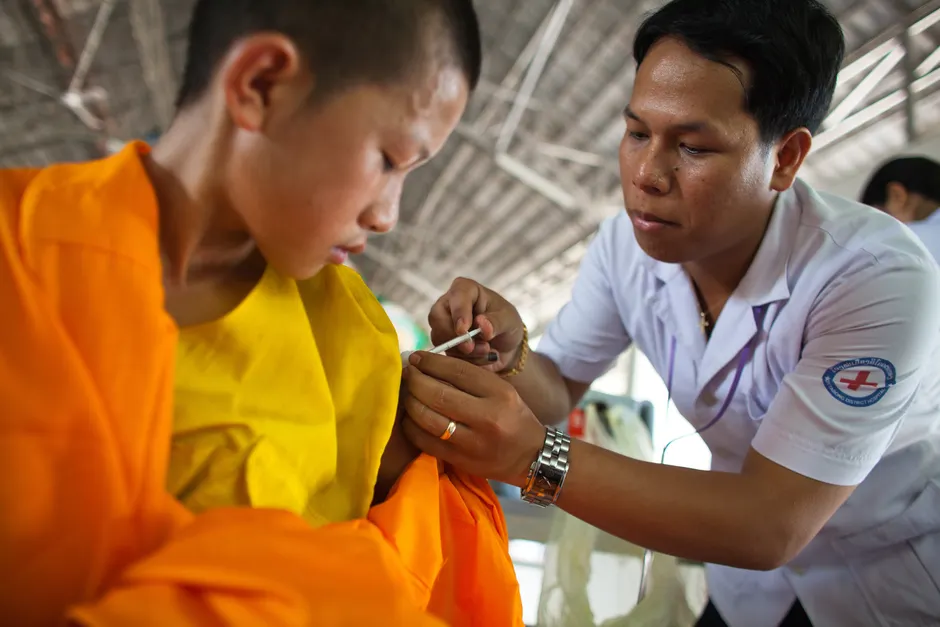
The suspension of USAID programmes has left Ghana facing an estimated $156 million funding gap across affected programmes, with a projected $78.2 million shortfall in health alone, threatening gains in child immunisation that the country has built over more than a decade Al Jazeera.
Ghana was among the first countries in Africa to introduce the RTS,S malaria vaccine into its routine immunisation programme. In Ghana, Kenya and Malawi, the vaccine was associated with a 13 percent reduction in mortality among children eligible for vaccination, averting roughly one in eight deaths Al Jazeera. The health funding affected by the USAID cuts supported programmes spanning malaria prevention, maternal and child health, nutrition, family planning and HIV services.
On the ground, the disruption is already visible. A study examining donor withdrawal in northern Ghana found that 75 percent of districts surveyed reported vaccine delays or irregular supplies. The same study identified constraints affecting cold-chain equipment — the refrigeration and transport systems that keep vaccines at the right temperature — along with delivery kits and transport fuel Al Jazeera. Ghana's state broadcaster GTV Ghana separately reported a $78 million loss in health funding following the USAID closure, affecting access to medicines and essential healthcare services GTV Ghana.
The $78.2 million health shortfall figure reported by Al Jazeera is not attributed to a specific named agency such as Ghana Health Service, the Ministry of Health, WHO, UNICEF, Gavi or USAID; it is presented as an estimate.
The scale of the potential human cost extends beyond Ghana. A study in The Lancet suggests that cuts to USAID could result in the death of 14 million people over the next five years PBS NewsHour. The U.S. official charged with shutting down USAID notified Congress in April of a plan to use $2 billion of global health money for "closeout" costs — the expenses involved in winding down programmes New York Times.
The withdrawal fits a longer trajectory. Between 2015 and 2020, development partner funding for Ghana's health sector decreased to just 6.3 percent of total health financing WHO. A UNICEF evaluation report on vaccination coverage in Ghana found that donor funding for immunization peaked in 1990 and has since declined except where poliomyelitis eradication efforts are ongoing UNICEF Evaluation. UNICEF's Ghana Annual Report 2024 noted the agency was working towards establishing sustainable financing mechanisms to allow Ghana to maintain immunization coverage as it transitions out of Gavi support UNICEF.
Ghana has taken some domestic steps to offset the shortfall. In guidance published on 3 November 2025, the World Health Organization reported that Ghana lifted the cap on the excise tax earmarked for its national health insurance agency, resulting in a 60 percent budget increase WHO. The WHO guidance was issued to address drastic global health financing cuts more broadly.
Globally, immunisation coverage has shown modest progress despite the headwinds. According to a WHO and UNICEF report, the number of zero-dose children — those who have not received any vaccinations — fell by nearly 750,000 in the past year, though dropout numbers remained high and stagnant WHO/UNICEF. UNICEF's Annual Report 2024 stated that announced and anticipated funding cuts are limiting its ability to reach millions of children in need UNICEF, and the agency has warned that funding cuts could force 6 million more children out of school in Ghana in the coming years UNICEF.
The U.S. reorientation of global health assistance is taking shape in policy documents. The America First Global Health Strategy report, published by the U.S. State Department and dated 31 March 2026, is intended to guide the next round of health foreign assistance implementation starting in April 2026 U.S. State Department. A subsequent State Department release on the Lenacapavir partnership referenced immunizations, health systems resilience and major reductions in force at the Centers for Disease Control and Prevention U.S. State Department. In July 2026, the U.S. Departments of State and Health and Human Services jointly issued a release framing reduced reliance on mercury-containing vaccines, where alternatives exist, as a "pro-vaccine and pro-accountability position" U.S. State Department.
Within Ghana, health officials are weighing structural responses. Nana Owusu Ensaw, municipal director of health for Akuapim North, said Ghana should use the funding shock to rethink how it pays for healthcare. John Yabani, medical director of Banahene Specialist Hospital, said private providers were prepared to play a larger role in Ghana's healthcare sector Al Jazeera.
The broader context here is that the excise tax reform is a meaningful domestic revenue measure, but the gap between a 60 percent budget increase for the national health insurance fund and a $78.2 million health financing shortfall illustrates the order-of-magnitude challenge. Ghana's historical reliance on donor financing for immunization, dating back to peak contributions in 1990, means that the transition to self-funded vaccine procurement was always going to be difficult; the abruptness of the USAID suspension has compressed that timeline dramatically. The cold-chain and supply-chain disruptions already documented in northern Ghana, where three-quarters of districts report irregular vaccine availability, suggest that even where domestic financing can be mobilised, the operational infrastructure partially sustained by donor logistics may not transfer seamlessly.
The deeper question is whether Ghana's domestic reforms can outpace the rate at which donor-funded programme attrition degrades service delivery. The RTS,S mortality data, with one in eight child deaths averted among eligible recipients, quantifies what is at stake if coverage falters.