A 'Confluence of Errors': How a Belgian Tourist Died in Tasmania's Winter Wilderness
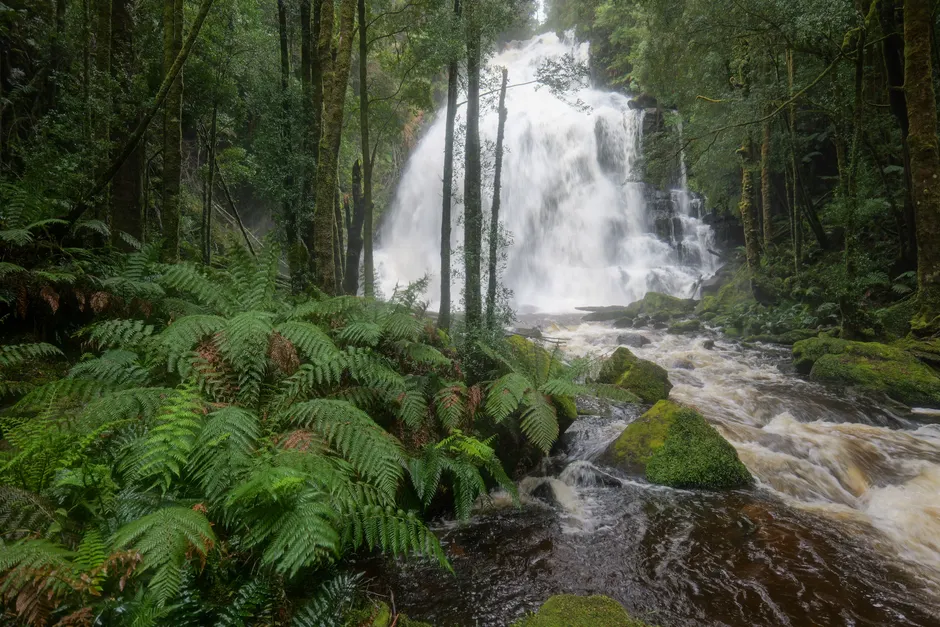
Tasmanian coroner Madeleine Wilson has ruled that Belgian tourist Celine Cremer died between 17 and 21 June 2023 as the result of an accident, following a coronial inquest (a formal investigation conducted by a coroner to determine how a person died) into the 31-year-old's disappearance in Tasmania's remote north-west.
Wilson attributed Cremer's death to a "confluence of errors" — a series of compounding mistakes that built on one another in near-freezing winter conditions. Cremer set off on a walk at Philosopher Falls on 17 June 2023 and was reported missing almost ten days later. She had visited the Philosopher Falls lookout before taking a walking track towards Magnet Dam, where the path was not well defined. She wandered off the track and became lost.
The timing was unforgiving. The deviation occurred late in the day, four days before the winter solstice (the shortest day of the year in the Southern Hemisphere), when afternoon light was already fading. Wilson found it likely Cremer became lost around 3:49 pm and subsequently grew disoriented without her phone, mistakenly changing direction. Overnight temperatures near Philosopher Falls at the time were close to freezing, and Cremer had insufficient clothing, including nothing waterproof.
A critical loss compounded the situation. Cremer lost her mobile phone — her only form of communication — late in the afternoon on the day she set out. Phone reception in the area was intermittent. The phone was not recovered until December 2025, when a volunteer search party found it. Data extracted from the device showed Cremer took several photos and videos between 2:21 pm and 2:42 pm and used Google Maps several times afterwards, with the last input recorded at 4:18 pm. Wilson said Cremer's final resting place was in the Arthur River and that it was possible she slipped and fell or tried unsuccessfully to cross the river (The Guardian).
Extensive initial police search efforts found no trace of Cremer. Private searches organised by her friends and family discovered her remains near a river in January 2026. On 27 February 2026, Tasmania Police confirmed that the human remains found in the Tasmanian wilderness were those of the missing Belgian tourist (ABC News). The gap between Cremer's disappearance in June 2023 and the recovery of her remains roughly 30 months later illustrates how difficult search operations are in dense Tasmanian wilderness terrain, particularly during winter.
In the aftermath, Tasmania Police committed to a review into the use of private search groups in missing persons investigations, including consideration of formal protocols. The review reflects a tension that surfaced throughout the case: official police searches failed to locate Cremer or her phone, while privately organised efforts eventually found both. The question of how authorities should integrate, coordinate with, or manage volunteer search parties in remote-area missing persons cases now sits with that review process.
Wilson's findings paint a picture of cascading misjudgments rather than a single catastrophic decision. Departing on a bushwalk in near-solstice conditions without waterproof gear, on a poorly defined track, late enough in the day that daylight was already contracting, and relying on a single mobile phone in an area with intermittent reception: each factor alone was survivable. Together, they proved lethal. The inquest did not attribute fault to any individual or institution beyond Cremer's own preparation decisions, but the case raises familiar questions about the accessibility of remote Tasmanian tracks to international visitors who may underestimate the severity of local winter conditions and the consequences of minimal equipment.
The broader context here is the recurring pattern of tourist fatalities in Tasmanian wilderness areas, where tracks that appear manageable in distance can become dangerous when weather deteriorates, daylight shortens, or navigation fails. Philosopher Falls is not among Tasmania's most remote or technically demanding locations, which makes the outcome starker: the margin for error on even relatively accessible tracks can be vanishingly thin in winter. For agencies managing land access, search protocols, and visitor safety information, Wilson's findings and the subsequent police review into private search integration may inform how future missing persons responses are structured in practice.