Pakistan and Kuwait Sign New Defence Pact: What It Covers and Where It Fits
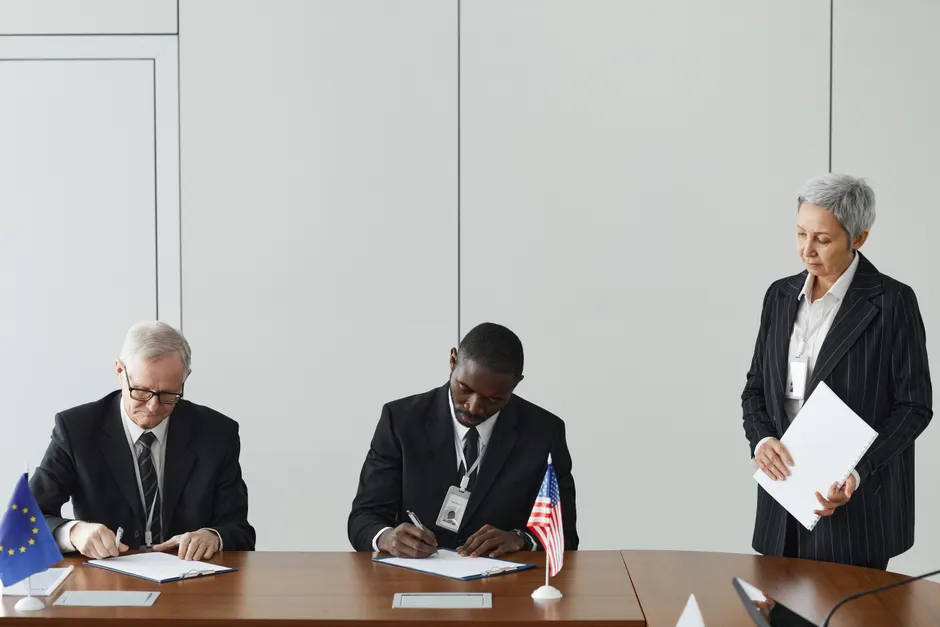
On August 28, 2026, Pakistan and Kuwait signed a new defence agreement in Rawalpindi, with Pakistan's Ministry of Defence calling it a significant upgrade to a military cooperation framework first set up in 2023 Al Jazeera.
Pakistan's Defence Minister Khawaja Asif and Kuwaiti Defence Minister Sheikh Abdullah Ali Abdullah Al-Salem Al-Sabah signed the "Protocol Agreement-2026" at a ceremony in Rawalpindi. The groundwork was laid a day earlier, on August 27, when Sheikh Abdullah met Pakistan's Chief of Defence Forces Asim Munir at General Headquarters in Rawalpindi for preparatory discussions.
Under the agreement, Pakistan's armed forces will train Kuwait's military, help build its defence capacity, and assist with border management. The partnership covers training, logistics (the movement and supply of military resources), intelligence sharing, and joint exercises. An annual joint military committee will oversee all of it. Umer Karim, an associate fellow at the King Faisal Centre for Research and Islamic Studies in Riyadh, noted that the agreement gives Pakistan a specific role in securing Kuwait's border with Iraq, tying the protocol to concrete operational tasks rather than just symbolic cooperation.
The Protocol Agreement-2026 builds on an underlying Pakistan-Kuwait Defence Cooperation Agreement signed on June 11, 2023, at Kuwait's Ministry of Defense. Kuwait formally ratified that agreement in July 2026, a step Pakistan's Deputy Prime Minister and Foreign Minister publicly welcomed at a press briefing on July 30, 2026. Kuwait's official government news, reporting on the ratification, stated that the defence agreement reaffirms the right to self-defence under Article 51 of the UN Charter and does not target any third party.
The defence relationship between the two countries is not new. Pakistan's bilateral defence ties with Kuwait date to the late 1960s, and Pakistan's Ministry of Foreign Affairs describes those relations as "on the rise." The two nations also commemorated the 60th anniversary of their diplomatic relations with a jointly unveiled logo at an official event, reflecting the breadth of the partnership beyond the military domain.
What sets the Protocol Agreement-2026 apart from Pakistan's other recent Gulf defence arrangements is its scope. Defence analyst and former two-star Pakistani general Zahid Mahmood observed that the Kuwait deal contains no clause resembling the collective-defence commitment found in either the Mecca Pact or the Strategic Mutual Defence Agreement (SMDA) Pakistan signed with Saudi Arabia in September 2025. The Mecca Pact is a trilateral collective-security agreement among Pakistan, Saudi Arabia, and Turkiye. The SMDA with Riyadh involves mutual defence obligations, meaning each side commits to defending the other if attacked. The Kuwait protocol, Mahmood indicated, remains a capacity-building and cooperation instrument rather than a mutual defence treaty.
The broader context here is that this distinction matters for how the agreement fits into Pakistan's overall regional posture. During the 1990-91 Gulf War, Pakistan deployed a large military contingent to Saudi Arabia, positioning forces defensively around Mecca and Madinah following Iraq's invasion of Kuwait in 1990. That deployment illustrated Pakistan's longstanding willingness to project military force in the Gulf in defence of allied territory. The current agreements formalize and institutionalize patterns of cooperation that were previously arranged on an ad hoc basis or triggered by crisis.
Pakistan is deliberately weaving a network of bilateral and multilateral defence arrangements across the Middle East. The SMDA with Saudi Arabia, the trilateral Mecca Pact with Riyadh and Ankara, and now the Protocol Agreement-2026 with Kuwait each serve different functions within that architecture. The Saudi and trilateral agreements carry collective-defence weight; the Kuwait protocol does not, but it puts Pakistan's military expertise to work in training, border security, and capacity-building in a country that shares a sensitive border with Iraq.
For Kuwait, the agreement channels Pakistani military experience into border management at a time when Gulf states are diversifying their security partnerships beyond traditional reliance on Western allies. For Pakistan, it deepens ties with a Gulf state that has been a consistent economic and diplomatic partner, while extending Islamabad's defence footprint across the region without taking on the obligations that a mutual-defence pact would require.
The annual joint military committee will serve as the implementing mechanism, overseeing the training rotations, intelligence-sharing protocols, and joint exercises that the agreement envisions. How quickly these provisions translate into operational activity will depend on subsequent technical arrangements between the two militaries.