Settlers and Soldiers Tighten Their Grip on a West Bank Village

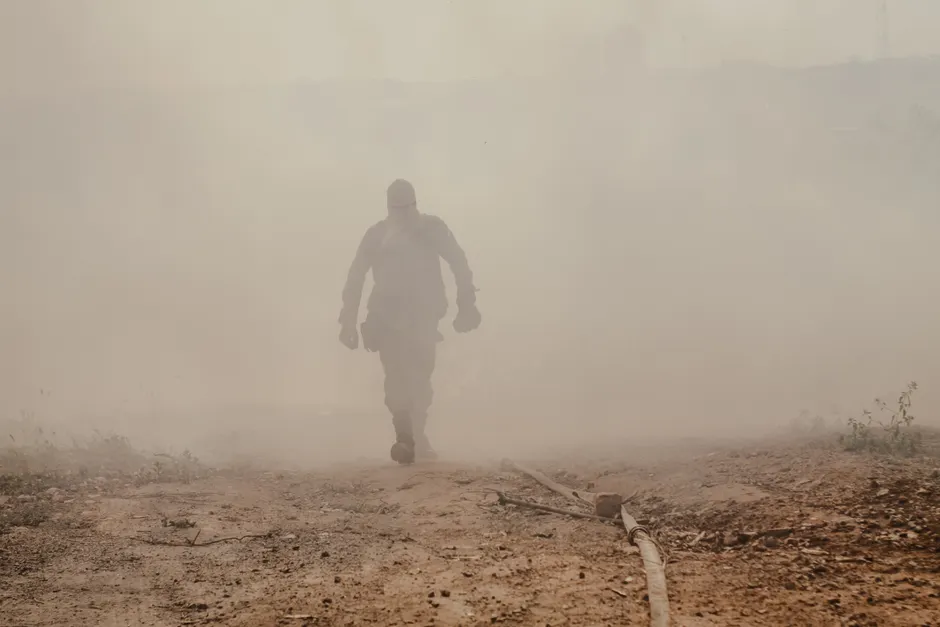
Israeli settlers, backed by Israeli forces, surrounded a Palestinian home in the village of Qusra, south of Nablus in the occupied West Bank, on 29 August 2026, trapping at least four Palestinians inside while settlers set fire to nearby Palestinian land. The incident was first reported by Al Jazeera journalists on the ground. Coordination was under way the same day to allow ambulances to reach the area and evacuate one injured person. Al Jazeera
The 29 August siege is the latest step in a campaign of settler violence against Qusra that has intensified over the past month. In July 2026, settlers set fire to a mosque in the village after a deadly clash on 26 July that also saw settlers torch West Bank mosques, according to Reuters. Reuters
Since 9 August 2026, settlers have besieged three Palestinian homes in the Ras al-Ain area of Qusra, cutting off water, electricity, and other essential supplies to the families inside. Al Jazeera reported on 13 August that the siege, then in its fourth day, had trapped three Palestinian families. CNN independently confirmed that those families were unable to obtain supplies for days. The besieged homes include one owned by a Palestinian-American, according to AP. Al Jazeera; AP
On 12 August 2026, Israeli troops clashed with Jewish settlers who had set up an unauthorized outpost in the area — a rare confrontation between the military and settlers. Reuters noted the clash precisely because such direct friction between Israeli forces and settlers is uncommon. Reuters
Despite that episode, the military has since tightened, not loosened, its grip on the village. Israeli forces declared the Qusra area a closed military zone — a designation that bars entry and exit without military permission — and installed a gate at the main entrance. On 26 August, the military erected three new roadblocks encircling the top of the Ras al-Ain hill, physically disconnecting homes there from the area below. The mayor of Qusra reported that Israeli troops have been telling families to leave their houses and have used some homes as barracks. Al Jazeera; BBC
Loui Abu Raideh, a Palestinian resident trapped in his home in Qusra, told Al Jazeera that residents cannot move freely in and out of their houses and that no one is permitted to bring them food or visit. Residents must coordinate with the mayor of Qusra to obtain food and supplies, with approval taking three to four days. Al Jazeera
The pattern of attacks on homes, farmland, and places of worship in Qusra fits within a broader escalation across the West Bank. WAFA, the Palestinian news agency, documented settlers setting fire to Palestinian land in Qusra as far back as June 2024. In the surrounding Nablus region, settlers have repeatedly targeted agricultural livelihoods, including the destruction of 50 olive trees in Deir Sharaf, west of Nablus, according to WAFA citing official Ghassan Daghlas. More recently, Israeli colonists set fire to a home in the Al-Dhubbat neighborhood of Beit Furik on 26 July 2026, and attempted to burn part of a Palestinian home in the village of Duma, south of Nablus, on 11 April 2026. Agricultural land in al-Mughayyir, northeast of Ramallah, was torched on 18 May 2026. WAFA; WAFA; WAFA
Settler attacks on Palestinian homes, businesses, and farmland across the West Bank, backed by the Israeli military, have increased in both intensity and frequency since Israel launched its military campaign in Gaza in October 2023, according to Al Jazeera's reporting. The Qusra siege shows the mechanics of that escalation: settler outposts established near Palestinian homes, followed by the cutting of utilities, the declaration of closed military zones, and the conversion of residential properties for military use.
The broader context here is a steady convergence between settler activity and military infrastructure in Area C of the West Bank — the 60 percent of the territory under full Israeli security and administrative control per the Oslo II framework, the 1995 agreement that divided the West Bank into zones of varying Palestinian and Israeli authority. The sequence in Qusra, from the 9 August siege of three homes through the 26 August roadblocks to the 29 August encirclement, shows settler pressure on Palestinian civilians being consolidated through formal military measures: closed zone declarations, gates, roadblocks, and the commandeering of homes. The rare 12 August clash between troops and settlers over the outpost does not alter that trajectory; the military's subsequent actions expanded restrictions on Palestinians, not on settlers. For the residents of Ras al-Ain, the result is a siege that now spans three weeks, with food access contingent on a multi-day coordination process and medical evacuation still pending.