At TechBBQ 2026, Europe's AI Conversation Turns to Who Controls the Systems
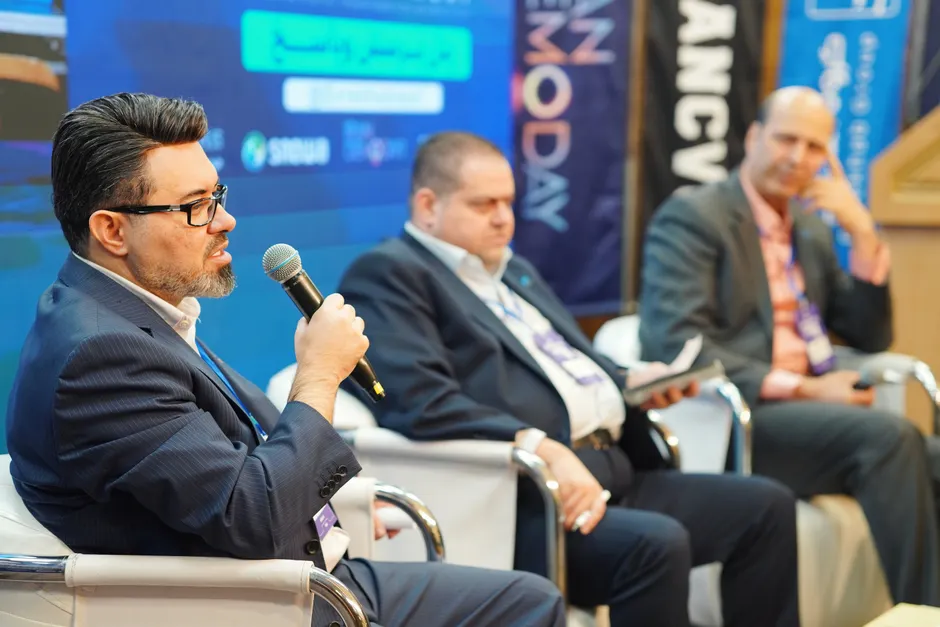
TechBBQ, one of the Nordic region's largest annual startup and innovation conferences, wrapped up its 2026 edition in Copenhagen on August 27. This year's theme, "Emerging from Agency," directed the program toward a question that has moved from the margins to the center of the AI conversation: who decides what AI is allowed to do, whose data feeds it, and what sovereignty means when the infrastructure running AI models sits outside national borders.
Ellen de Brever, an angel investor and head of partnerships at the Novo Nordisk Foundation Cellerator, framed the shift at the conference. The conversation, she said, has moved from what AI can do to what people are willing to let it do. TechCrunch
A concrete development earlier in the year gave that framing urgency. Anthropic's AI models Mythos and Fable became unavailable to users outside Europe in 2026, a restriction that raised questions about relying on US-based model providers and the feasibility of European AI autonomy. TechCrunch
Signal President Meredith Whittaker, on a panel about whether privacy and AI can coexist, spoke against integrating AI assistants and agents into operating systems. She cited ChatGPT's integration with iMessage as a specific concern. The AI era, she said, is creating a "data collection apparatus," and there remains a large market need for privacy, including because of sovereignty concerns. TechCrunch
Emad Mostaque, co-founder of Stability AI and Intelligent Internet, pressed the sovereignty argument on a separate panel. "Sovereignty is the ability to resist power being exerted over you," he said, adding that "the person that controls the AI controls the country." TechCrunch
Mia Negru, advocacy and engagement director for the nonprofit Life With Artificials, also participated in the conference's discussions, though the specifics of her remarks were not detailed in the available reporting. TechCrunch
TechBBQ's official 2026 theme page states that human agency must sit at the operational core of both innovation and society, where judgment becomes leverage. TechBBQ The conference was scheduled for August 26-27, 2026 in Copenhagen. TechBBQ
The broader context here is that the concerns on display at TechBBQ are not unique to the Nordic ecosystem, but they surface there with particular clarity. Europe has spent the past several years building a regulatory framework around AI, and the conversation at the founder-and-investor level is now catching up to what that framework means in practice. If models can be geofenced — restricted by geography — if AI agents embedded in operating systems can read private messages, and if the computing infrastructure that runs AI inference (the process of a model generating output from input) is concentrated in a handful of jurisdictions, then who exercises operational control over AI systems becomes a question of political leverage, not just technical architecture.
Whittaker's critique of AI agents integrated into operating systems touches a live tension. When an AI assistant is built into an operating system or a default messaging app, the line between a helpful tool and a form of ambient surveillance narrows. The iMessage integration she cited is one instance of a wider pattern: platform providers placing AI agents at the interface layer, where they have privileged access to user data. For a privacy-focused organization like Signal, this is a structural concern, because it shifts the trust model from "the user chooses to share" to "the platform mediates access by default."
Mostaque's framing of sovereignty as resistance to power, and his claim that controlling AI equates to controlling a country, is maximalist. It collapses several layers of infrastructure, governance, and economic dependency into a single statement. But it resonates with a European audience that has already watched one major model provider restrict access to its products by geography. The Anthropic restriction on Mythos and Fable outside Europe is, depending on perspective, either a business decision or an illustration of how fragile it is to depend on external providers for critical AI capability.
De Brever's observation that the conversation has shifted from capability to willingness captures something useful. The technical community has spent the past several years benchmarking what models can do. The harder question, and the one that now dominates policy and investment discussions, is what societies will permit, what guardrails they will enforce, and whether the infrastructure to enforce them exists outside the jurisdictions where the models are built and hosted.
The Nordic startup ecosystem, with its combination of technical ambition and institutional investment in responsible innovation, is a useful bellwether for how these tensions resolve. TechBBQ 2026 did not resolve them. It clarified that they are now the central conversation.