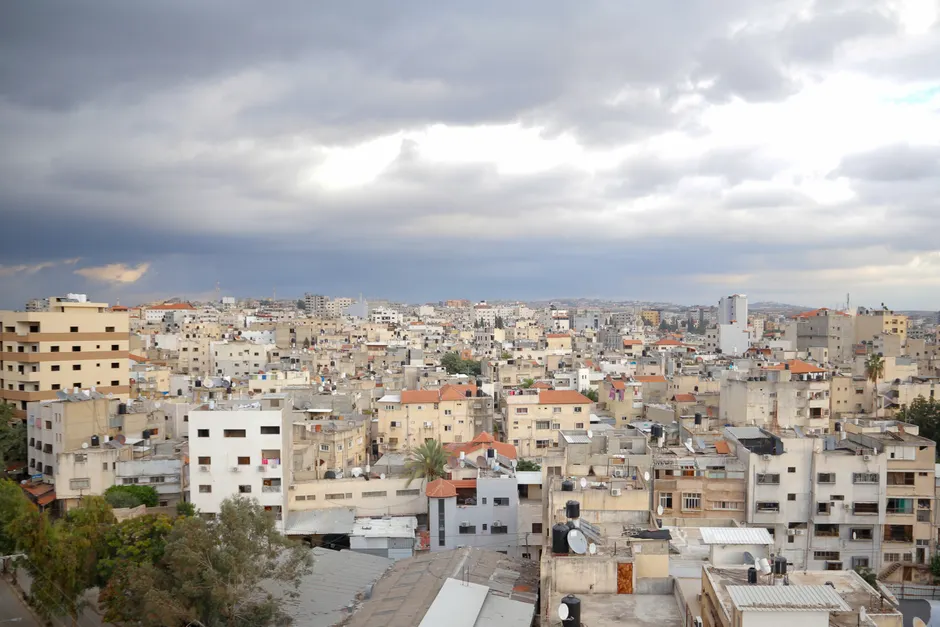
Israeli Settlers Attack NBC News Crew and Palestinian Woman in the West Bank
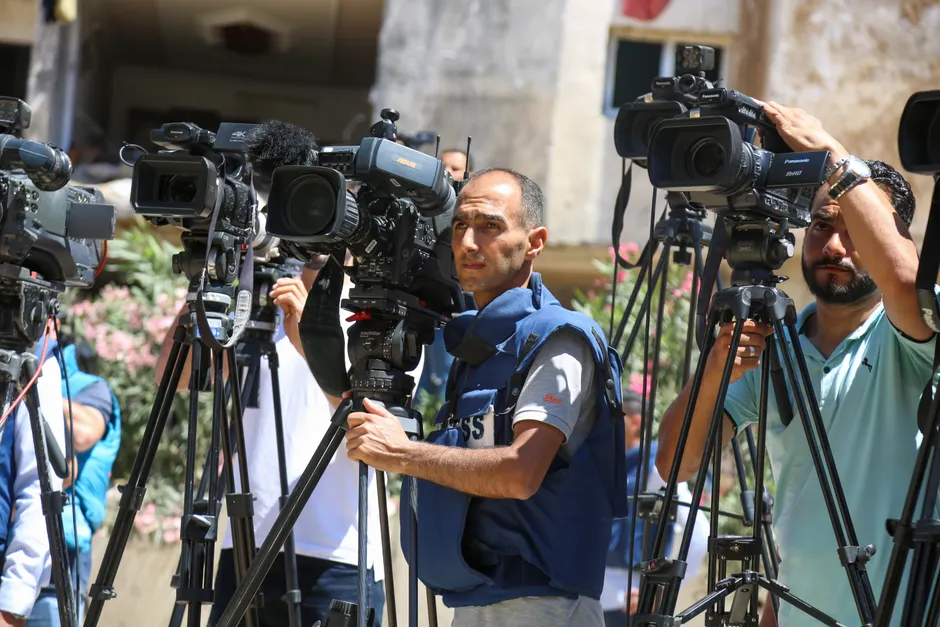
On August 29, 2026, masked Israeli settlers attacked and injured a Palestinian woman and an NBC News team in the Palestinian town of Jalud, near Nablus, in the Israeli-occupied West Bank. The Guardian and NBC News both reported the attack the same day.
Four members of the NBC News team were interviewing Aida Ahmed Abdullah, 51, and her family when a car with Israeli license plates reversed up a hill toward them. At least four masked men leapt out, hitting them with sticks and throwing rocks. NBC producer Lawahez Jabari said she saw a gun among the settlers, though it was not used.
NBC News correspondent Matt Bradley was hit twice in the arm and treated at a nearby clinic. Three other members of the NBC News team were also injured and treated. Abdullah was taken for medical care by the Red Crescent; her injuries were not life-threatening. NBC camera operator Khaldoon Eid said the team had not expected to be attacked in a village. Abdullah told NBC News that she and her family had been driven out of their home by settlers.
The attack in Jalud was not an isolated incident on August 29. In the nearby town of Qusra, Palestinian workers were pepper-sprayed by masked Israeli settlers the same day. Israeli security forces said they received reports of violent clashes, including stone-hurling directed at Palestinians and additional civilians. Security forces identified dozens of rioters who had barricaded themselves inside a Palestinian home while Palestinian residents were still inside. Forces removed the rioters from the home to protect the residents and confiscated vehicles belonging to the Israeli rioters. IDF soldiers and Israel Border Police continued to operate in Qusra and Jalud to prevent further disturbances and restore order.
Israeli Prime Minister Benjamin Netanyahu condemned the violence, attributing it to "a handful of rioters who violate the law, cause enormous injustice to the law-abiding settler public, hinder the IDF in fulfilling its missions and harm Israel's standing in the world." He called the attacks "criminal acts of violence."
The broader context here is worth pausing on. Netanyahu's decision to speak publicly reflects the political sensitivity of settler violence at a moment when Israel's international standing is under sustained scrutiny. The fact that the victims included a major American television network's crew raises the incident's diplomatic profile considerably.
The August 29 attacks fit a pattern of escalating settler activity in the West Bank that has drawn international attention through August. Earlier in the month, a group of settlers began blocking supplies from entering Palestinian houses on the outskirts of a village near Nablus. NBC News reported on the siege of Qusra on August 13, documenting settler attacks on the home of Loui Ridi. US Ambassador to Israel Mike Huckabee called the settlers' actions "thuggish behavior," a notably blunt characterization from a diplomat whose public statements tend toward measured phrasing.
Huckabee's use of that language is worth noting. The US ambassador's willingness to label settler conduct in those terms signals that Washington's patience with unchecked violence in Area C — the West Bank territory under Israeli security and administrative control under the Oslo Accords, the 1990s framework that divided the West Bank into zones of shared and separate Israeli-Palestinian governance — may be wearing thin. At the very least, the current ambassador seems less constrained than predecessors in matching rhetoric to the gravity on the ground.
Whether that translates into concrete policy shifts is a separate question. Sanctions — official penalties that restrict individuals or entities from accessing financial systems or trade — are one possible tool. The Biden-era sanctions regime targeting extremist settlers was inherited by the Trump administration; Huckabee's comments suggest continuity of concern even if the instruments may differ.
The toll of the broader conflict in the West Bank is stark. According to the UN Office for the Coordination of Humanitarian Affairs, Israeli forces or settlers killed 76 Palestinians in the West Bank in the year to July 24, 2026. Three Israelis were killed in the West Bank over the same period. Those figures point to an asymmetry in lethality that has long characterized the West Bank's friction points, where settler-community violence against Palestinians frequently occurs in areas where IDF presence is robust but enforcement against settler perpetrators has historically been uneven.
The targeting of a foreign press corps introduces a different dimension. Attacks on journalists in conflict zones are not unprecedented, but the deliberate assault of a credentialed American network's team by masked settlers during a recorded interview in a Palestinian village creates a record that is harder to dismiss or minimize than accounts gathered solely from Palestinian witnesses. NBC News published its own account of the attack, and the presence of multiple team members who can corroborate details — Jabari's observation of a gun, Eid's account of the attack's unexpectedness, Bradley's injuries — gives the incident an evidentiary weight that may complicate official Israeli narratives minimizing settler violence as aberrational.
Netanyahu's framing of the perpetrators as "a handful of rioters" is consistent with prior Israeli government characterizations of settler violence as the work of a marginal minority. The question for observers and policymakers is whether that framing holds under the weight of mounting incidents across multiple villages on a single day, or whether the structural conditions enabling settler impunity in the West Bank will draw a more forceful response from both Jerusalem and Washington.