Australia Weighs Optional Social Media Algorithms and a Ban on Strangulation Content in Pornography
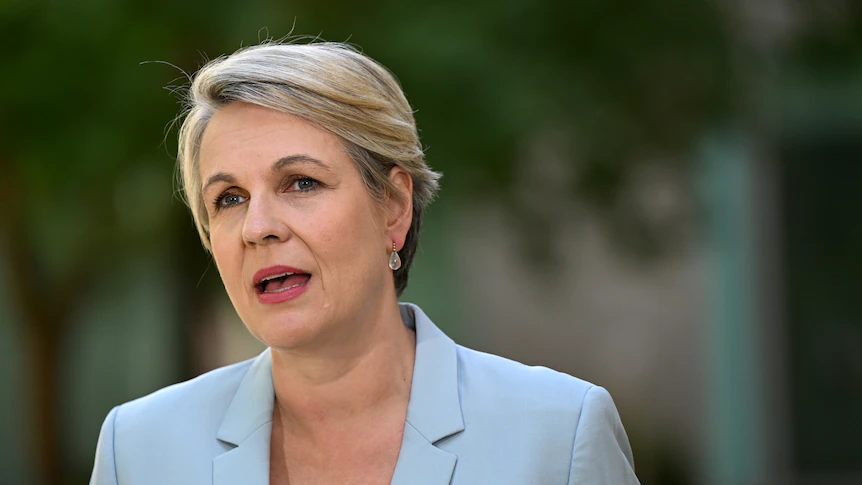
The Australian government is considering letting social media users switch off platform algorithms and may follow a recent UK ban on depictions of strangulation and suffocation in pornography, as it drafts its second action plan to end family and domestic violence against women and children (The Guardian).
Social Services Minister Tanya Plibersek, speaking on the ABC's Insiders program on 30 August 2026, said social media algorithms are "deliberately feeding boys and men violent content and normalising strangulation during sex." She cited a striking data point: a new account set up as a young boy in Australia takes an average of 23 minutes before the platform begins serving misogynistic, violent content. Plibersek also noted that 60% of young people now report having experienced strangulation during a sexual encounter, calling it no coincidence given the content pipeline (The Guardian).
The government's consideration follows the death of a 16-year-old girl in Sydney. Guardian Australia reported that the teenager was believed to have become unconscious as a result of asphyxiation during sexual intercourse, commonly referred to as "choking" (The Guardian). Plibersek said social media was playing a substantial role in the increase in sexual violence among teenagers and choking specifically.
To understand the algorithm proposal, it helps to know what an algorithmic feed does. Most social media platforms do not show posts in the order they were shared. Instead, a recommendation system — the algorithm — sorts and ranks content based on what it predicts will keep a user engaged longest. The government is exploring whether users should have to actively choose that system (opt in) or be able to turn it off (opt out). Plibersek said the government is working with Chanel Contos's Teach Us Consent campaign, which has advocated for algorithms to be opt-in only. No legislation has been introduced yet. Separately, the federal government faces pressure to outlaw strangulation and suffocation depictions in pornography, mirroring the UK ban. New South Wales MP Kellie Sloane has publicly called for such a prohibition, stating there is "no safe way to strangle someone" (Michael West Media; ABC News).
These measures form part of a broader set of rules the Labor government has been building around online safety. Australia legislated a ban on social media access for under-16s that took effect in December 2025, and has introduced age-verification requirements for pornography. Yet Plibersek has previously conceded that children are easily able to circumvent both sets of rules (The Guardian).
Labor is also preparing to begin consultation on a digital duty of care bill that would place the onus on tech companies, including AI firms, to make online spaces safer for all users (The Guardian). A "duty of care" is a legal concept meaning that an organisation must take reasonable steps to prevent foreseeable harm. This approach parallels the UK's Online Safety Act framework, which imposes a duty of care on platforms and informed the UK's subsequent ban on strangulation content in pornography. The Australian proposal would extend the duty-of-care concept to AI companies, a notable expansion of regulatory scope.
Plibersek has been a consistent voice on the intersection of online content and gendered violence. In a September 2025 address to the 5th World Conference of Women's Shelters, she framed the issue as systemic (Department of Social Services). The Department of Social Services ran a campaign in May 2024 countering the "corrosive influence" of online content that condones violence against women (Department of Social Services). In a December 2024 editorial, Plibersek argued the under-16 social media ban was designed to let children "grow up free from addictive algorithms," not to punish or isolate them (Department of Social Services). More recently, in a July 2026 editorial titled "Dismantling the manosphere," she criticised Senator Pauline Hanson for using her platform to restrict abortion access and question the veracity of domestic violence claims (Department of Social Services).
The broader context here is whether Australia's layered approach can achieve what individual measures have not. The under-16 ban, age-verification for pornography, and now the proposed algorithm opt-out and strangulation content ban each target a different point in the ecosystem: access, content distribution, and content production. But Plibersek's own concession that children bypass existing rules suggests that without robust enforcement, each layer risks operating as a statement of intent rather than a structural barrier. The digital duty of care bill, by shifting responsibility onto platforms themselves, could prove the most consequential of these measures, though its consultation phase has not yet begun.
The algorithm opt-out proposal also raises design questions that go beyond content moderation. An opt-in or opt-out regime would require platforms to maintain a non-algorithmic alternative — essentially a chronologically ordered feed — which has implications for the engagement metrics and advertising revenue models that platforms depend on. How the government defines "algorithmic" content, whether the regime covers recommendation systems broadly or narrowly targets specific content categories, and whether compliance is enforced through the eSafety Commissioner or a new statutory body remain open questions.
For policymakers and platform designers watching from other jurisdictions, Australia's approach is becoming a test case for whether democracies can move beyond age-gating toward structural intervention in how platforms distribute content. The UK has already travelled part of this road. The outcomes in Canberra will inform debates in Ottawa, Brussels, and beyond.