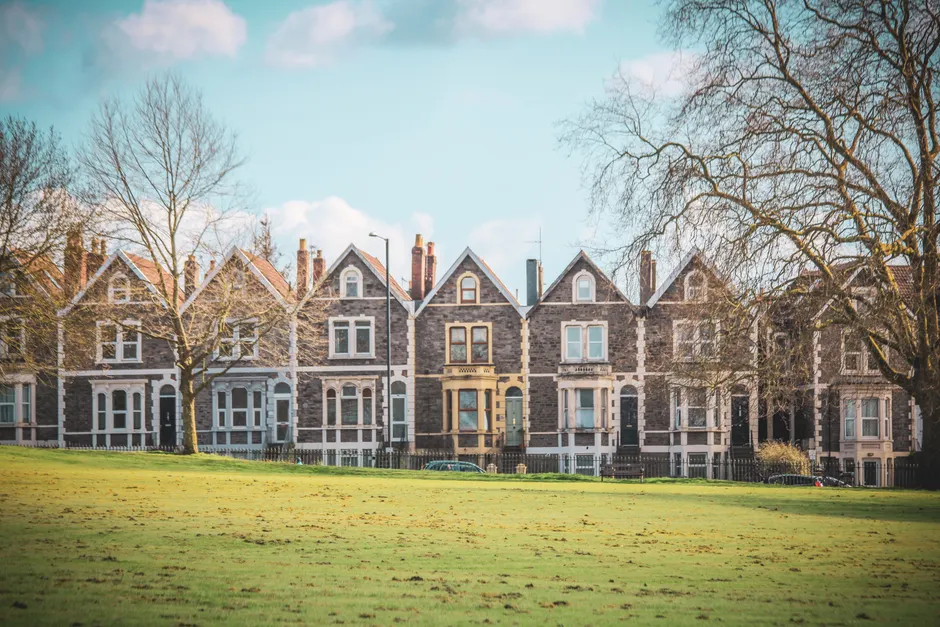
Living Near Beauty Comes at a Price: UK National Park Properties Cost 24% More

Homes inside a UK national park cost 24% more on average than similar properties elsewhere, according to new analysis by Nationwide published on 31 August 2026. The building society's updated research also found a 6% price bump for homes within three miles of a national park boundary, and a 14% premium for properties in the national landscapes of England and Wales — the protected areas formerly known as areas of outstanding natural beauty (The Guardian).
Nationwide attributed the higher prices partly to planning constraints that restrict new housing construction within the parks. The idea is straightforward: when you limit how much can be built in a place people want to live, the existing homes become more expensive. The 24% figure marks a modest decline from the 25% premium the same research identified in 2024, when national landscape properties were found to be 15% more expensive than comparable homes outside protected zones. The 2026 data shows that gap narrowing to 14% for national landscapes (The Guardian).
The premium has shifted across Nationwide's successive analyses. Earlier iterations of the research, published without firm dates on Nationwide's website, reported figures ranging from a 20% premium (around £45,000 in cash terms) to a 25% premium (approximately £66,700 to £67,600). One undated report cited a 7% spillover premium within five kilometres of a park boundary, while another referenced a 6% premium within five kilometres. A report dated August 2022 restated the 25% within-park premium with the 7% proximity figure. The 2026 findings use a three-mile proximity band rather than five kilometres, reporting a 6% spillover effect.
The New Forest remains the most expensive UK national park for residential property, with an average price of £563,000 in the latest data. In November 2024, The Guardian reported the same park's average at £576,000, based on Nationwide's earlier research. A separate Yahoo Finance report from November 2020 put the New Forest's cash premium at £95,000 over otherwise identical properties elsewhere, while the South Downs commanded a £74,000 premium in the same analysis. The 2026 figures show average prices of £485,000 in the South Downs and £450,000 in the Peak District (The Guardian).
Among national landscapes, Surrey Hills commands the highest average property price at £710,000. Designated in 1958, the area covers approximately a quarter of the county of Surrey and is home to about 40,000 people, most of whom live in small villages and rural hamlets such as Shere, Mickleham, and Westhumble (The Guardian).
The broader context here is one of persistent tension between environmental protection and housing affordability in some of England and Wales's most scenic regions. National parks and national landscapes operate under planning regimes designed to preserve landscape character — rules that by design limit the volume and type of new construction permitted. That restriction is not an unintended side effect but a core function of the designation. Think of it like a museum that controls how many visitors enter to protect the artwork: the cap preserves what makes the place special, but it also means fewer people get in. What Nationwide's data quantifies is the housing-market consequence: buyers pay a measurable premium for proximity to protected landscapes, and that premium adds to broader affordability pressures already affecting the UK market.
The narrowing of the national-park premium from 25% to 24%, and the national-landscape premium from 15% to 14%, is a marginal shift. A single percentage-point movement between two data points does not establish a trend. It may reflect changing buyer preferences, wider house-price dynamics, or methodological refinement in Nationwide's modelling. Without a longer time series, the direction of travel is unclear.
What is clear is the scale of the geographic price effect. A 24% premium on a UK average property price translates into a substantial cash differential, concentrated in communities where supply is structurally constrained. The New Forest at £563,000 and Surrey Hills at £710,000 sit well above national averages, and the proximity premium means even properties outside the formal boundaries of protected areas absorb a portion of the valuation uplift. For policymakers weighing the trade-off between landscape protection and housing delivery, Nationwide's figures provide a recurrent, quantified reminder of the cost of constraint.