Airlink Defends Low Flyover at Springboks–All Blacks Rugby Match
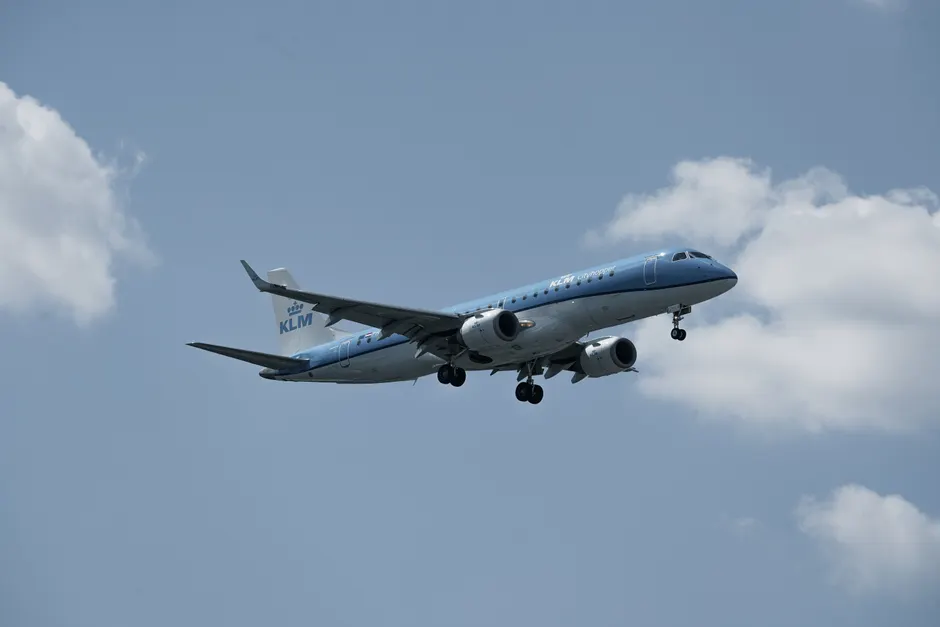
Airlink has defended the safety of a two-plane flyover conducted during a rugby match between the Springboks and the All Blacks at a packed DHL Stadium in Cape Town. According to flight tracking service Flightradar24, the lead aircraft in the formation passed less than 50 feet (15 metres) above the top of the stadium. Fox News reporting placed the lead Embraer E-Jet roughly 45 feet above the stadium roof — a distance roughly equivalent to the height of a four-storey building. On 30 August 2026, Airlink issued a statement acknowledging concerns raised on social media and online forums regarding the formation flyby.
The regional carrier stated that the two Embraer E-Jets were flown by highly experienced crew, with each aircraft staffed by three senior captains in the roles of commander, co-pilot, and safety/technical officer. Airlink said the flypast flights were performed within approved and rehearsed safety altitude and speed limits. On its social media channels, the company accompanied footage of the event with the message "Planning. Precision. Performance." BBC
Flight tracking data gives specific dimensions to the public debate over the flypast. The figures from Flightradar24 and Fox News help explain the public reaction that prompted Airlink's 30 August statement. They place the aircraft well below typical terminal maneuvering altitudes — the height range used by planes when approaching or departing an airport — and into a zone where the margin for error around obstacles becomes very tight. The carrier's defense rests on the assertion that the maneuver was not improvised but executed within a rehearsed safety envelope, monitored by augmented flight decks staffed with extra oversight.
The flyover also draws on a deep cultural precedent in South African rugby. In 1995, a South African Airways jet flew over a Johannesburg stadium before the start of the rugby World Cup final, in which South Africa beat New Zealand. That event was immortalized in the Hollywood film Invictus and is remembered for Nelson Mandela wearing the jersey of the national side at the match. BBC
The broader context here involves the intersection of civil aviation safety protocols and ceremonial stadium flyovers, a dynamic that frequently invites scrutiny from regulators and the public. Airlink's decision to staff the flight decks with three senior captains per aircraft signals an internal awareness of the operational risks inherent in low-level formation flight over populated areas. The carrier's defense hinges on distinguishing between an unscripted low pass and a pre-approved maneuver conducted within established parameters.
For commercial operators, the friction between visually dramatic promotional events and the rigid safety margins governing commercial aircraft operations is a familiar challenge. Airline flypasts require extensive coordination with air navigation service providers and airport authorities to keep the maneuver clear of active traffic flows. The altitude figures reported by flight tracking services, however, suggest a margin between the approved safety altitude and the physical stadium structure narrow enough to draw public scrutiny, regardless of the crew's qualifications.
Looking at what this means for operational oversight, the focus will likely remain on how such approved safety altitudes are calculated and verified for urban stadium environments. When commercial jets operate in close proximity to large public gatherings, tracking data often provides a granular, independent check on official narratives. The carrier's reliance on the presence of safety officers and rehearsed limits serves as the primary defense against the specific altitude metrics recorded by external sensors.


