Why Britain's Defence Secretary Quit Over Military Spending
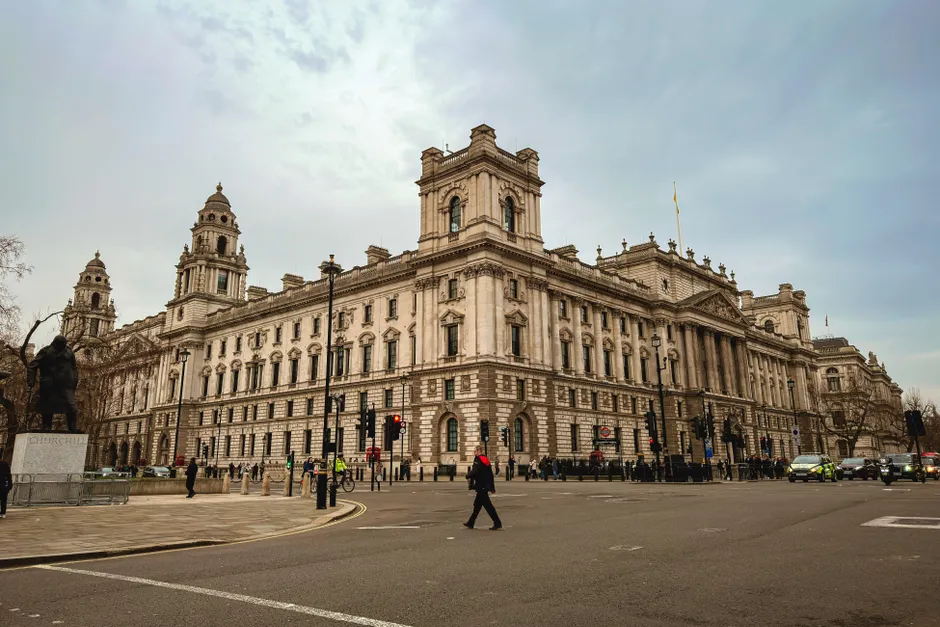
John Healey resigned as Secretary of State for Defence on 11 June 2026, citing insufficient investment in the armed forces by Prime Minister Keir Starmer — a rare public confrontation between a Cabinet minister and his own Labour leadership over military funding, per Reuters and AP News. Dan Jarvis MBE MP was appointed to the role the same day, per the official ministerial appointment notice.
Healey held the Defence brief for two years, since Labour's 2024 election victory. His tenure covered a period when the Defence budget was being substantially rebuilt — the first major recapitalisation in decades. His resignation letter exposed a dispute that had developed inside government for months: whether the spending commitments the government had announced were enough to meet what the armed forces actually needed.
On paper, the government's numbers looked substantial. Ministers had committed to raising defence spending to 2.6% of GDP from 2027–28 and to deploying over £270 billion in cash terms across the current spending period — publicly presented as the largest continuous increase since the Cold War ended. A Defence Investment Plan was announced on or before 5 June 2026, per the Prime Minister's remarks, just days before Healey resigned.
The timing reveals something important. Healey left almost immediately after that plan became public, which suggests his complaint was not that a plan existed but that the plan itself — its size, how spending was scheduled, or its conditions — did not go far enough. Without the full text of his resignation letter, speculating about exact figures would be guesswork. What is clear is that Healey publicly accused the Prime Minister of failing to invest sufficiently. That statement, from a sitting Secretary of State, carries more weight than typical backbench complaints about defence budgets.
The New Defence Secretary
Dan Jarvis brings an unusual background to this role. A former Army officer and MBE holder, he had been serving as Minister of State at the Home Office from July 2024 and in the Cabinet Office from September 2025 — until his appointment to Defence. His military experience gives him direct familiarity with how the Ministry of Defence and armed forces work, though his recent portfolio involved law and order and government administration rather than military procurement or alliance management.
Jarvis takes over a department mid-way through major commitments it is still carrying out. Luke Pollard MP continues as Minister of State for Defence Readiness and Industry, a position covering day-to-day decisions on industrial supply chains. The MoD had also committed, before Healey left, to publishing an action plan for small and medium-sized enterprises (SMEs) in the defence sector alongside spending targets once the Defence Investment Plan was finalised — a task that now falls to Jarvis to either deliver or modify.
Why This Matters
Healey's departure reveals a longstanding tension in UK defence policy. Governments across the political spectrum have announced headline spending targets only to find a persistent gap between what they promise and what they actually fund — a disagreement that often pits military leaders against their civilian overseers. Grant Shapps, the Conservative defence secretary before Healey, also managed a period of announced increases that critics said were not fast enough in turning into real operational capability.
The broader context is a NATO alliance that has been pressing European members to spend more than 2% of GDP on defence and to spend it sooner rather than later. Britain also has bilateral obligations — like a mission data partnership with Belgium signed in March 2026 — and regional commitments such as a £50 million Northern Ireland defence growth deal, part of a sector already generating over £270 million per year in MoD spending and supporting 900 jobs. These commitments constrain how defence budgets can be spent.
What happens next will become visible in whether Jarvis amends the Defence Investment Plan, delays it, or keeps it as it stands. That answer will affect not only how the British armed forces are structured and equipped but also whether other NATO members see Britain as a reliable partner — a concern at a moment when the alliance faces sustained political strain.


