Reform UK Heads Into Its 2026 Conference Under Multiple Clouds
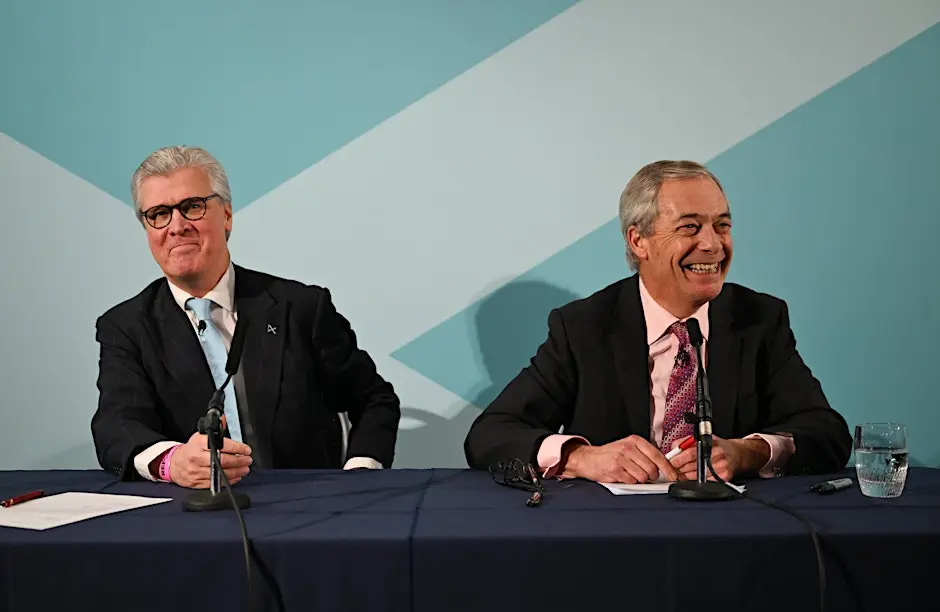
Reform UK's 2026 annual conference opens at the National Exhibition Centre in Birmingham on 3 September, capping a summer in which the party has weathered a financial-disclosure scandal, an internal suspension, and a self-triggered byelection that returned its leader to Parliament while a standards investigation resumes (The Guardian, 2026-08-31).
The conference, scheduled to run 3–5 September, follows a Scotland Conference held on 19 March 2026 that set out the party's plan for Scotland ahead of polling day on 7 May 2026 (Reform UK events page). Early-bird tickets for the Birmingham gathering have been on sale through the party's conference page (Reform UK conference page).
The immediate pressure on Nigel Farage traces to The Guardian's April 2026 revelation that he received £5 million from Christopher Harborne, a cryptocurrency billionaire, in 2024 — a payment that went undeclared in parliamentary records (The Guardian, 2026-08-31). Farage has said the money was for personal use and denied breaking any rules (The Guardian, July 2026 podcast). A separate disclosure controversy emerged in July, when Reform UK insisted no rules were broken after it came to light that Farage had failed to declare benefits provided by George Cottrell, an ally once convicted of fraud (BBC News, 2026-07-05). A Montenegro-based company founded by Cottrell subsequently closed after weeks of scrutiny over his financial dealings (openDemocracy).
Farage triggered a byelection in Clacton — a process where a parliamentary seat is contested mid-term, in this case because the sitting MP resigns and then runs again to seek a fresh mandate — in what The Guardian describes as a move to neutralise pressure over the undeclared £5 million payment (The Guardian, 2026-08-31). He won the contest with 22,239 votes, defeating his closest challenger, Count Binface (The Guardian, 2026-08-31; BBC News). The parliamentary standards investigation into the £5 million payment, which had been paused during the byelection period, has now restarted (The Guardian, 2026-08-31).
Giles Dilnot, editor of ConservativeHome and a former political adviser, offered a blunt assessment of the byelection decision: Reform are "quite good at tactics but bad at strategy," and Clacton was a strategic mistake that bound Farage to one part of the country for six weeks (The Guardian, 2026-08-31).
The party's internal discipline has also been tested. Reform UK suspended Tim Montgomerie, a high-profile activist who had defected from the Conservative Party (The Guardian, 2026-08-31). Separately, home affairs spokesperson Zia Yusuf was reprimanded by Farage for calling former Conservative defence secretary Ben Wallace a "traitor" (The Guardian, 2026-08-31).
On the policy front, Reform UK politician Robert Jenrick promised during summer 2026 to cut the benefits bill and remove what the party describes as excessive bureaucracy for businesses (The Guardian, 2026-08-31; The Guardian, August 2026).
The funding architecture surrounding Reform UK has drawn wider scrutiny. Al Jazeera reported in May 2026 that the party's rise is backed by individual donors, overseas trips, and networks that contrast with its nationalist message (Al Jazeera, 2026-05-06). Farage's own rhetoric on civil unrest has been a recurring thread: in summer 2025, he warned of "civil disobedience on a vast scale" during protests against hotels housing asylum seekers in England (The Guardian, 2026-08-31; The Guardian, July 2025).
The broader context here is a party simultaneously navigating regulatory exposure, internal fissures, and a strategic debate about its electoral trajectory. The restarted standards investigation into the Harborne payment means the financial-disclosure question that prompted the Clacton byelection has not been resolved by the byelection itself. Farage's personal-use defence and Reform UK's insistence that no rules were broken regarding Cottrell-provided benefits will be tested against parliamentary standards processes that operate on their own timeline, independent of the party's conference messaging.
The suspension of Montgomerie and the reprimand of Yusuf point to a party calibrating how much internal dissent it can absorb while presenting a unified front in Birmingham. Jenrick's benefits-and-red-tape platform signals the policy direction Reform UK intends to foreground as it looks toward the next electoral cycle — one in which the party will need to reconcile its nationalist branding with the transnational funding networks that have underwritten its ascent.
For party members and delegates arriving at the NEC, the conference will offer the first opportunity to gauge how Farage and the leadership intend to frame the summer's events: as evidence of resilience under hostile media scrutiny, or as a warning that the party's tactical agility has outpaced its strategic coherence. The standards investigation, in particular, will not pause for the conference agenda.