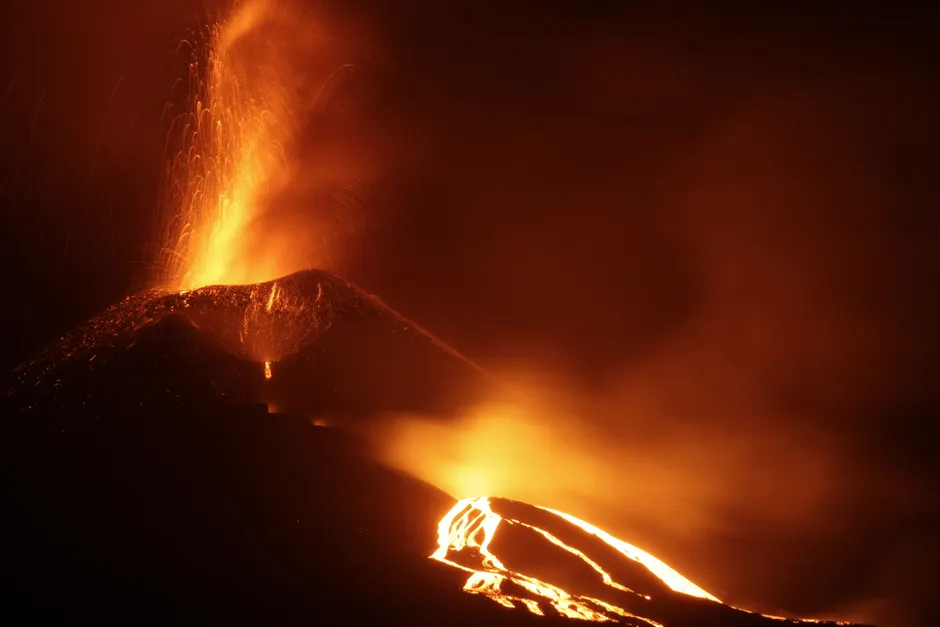
Anak Krakatau Eruption Shuts Eight Indonesian Airports, Disrupting Hundreds of Flights

Indonesia shut down operations at eight airports on Sunday, 6 September 2026 — including Soekarno-Hatta International Airport near Jakarta — after the Anak Krakatau volcano erupted and pushed ash clouds to altitudes of up to 15,000 metres into the airspace over Java and Sumatra. The eruption and its aftermath disrupted more than 209 flights and affected over 22,000 passengers, according to Indonesia's transport ministry, with cancellations spreading across international routes to Singapore, Doha, Sydney, and Kuala Lumpur.
Anak Krakatau first erupted on Saturday, 5 September 2026, producing lava and booming sounds heard up to 700 kilometres away, according to Indonesia's geology agency. Two further eruptions were recorded on Sunday. The ash plume reached roughly 6,000 metres on the Java side of the volcano and 15,000 metres on the Sumatra side and parts of Banten province, as measured by Indonesia's meteorological agency BMKG.
AirNav Indonesia, the country's air navigation provider, issued a series of NOTAMs throughout the day. A NOTAM (Notice to Airmen) is an official bulletin that alerts pilots and airlines to changes in airspace conditions, including closures. The agency progressively extended the shutdowns: NOTAM A3348/26 replaced an earlier one to keep Soekarno-Hatta closed, and NOTAM A3355/26 extended that closure from 18:00 WIB (Western Indonesia Time) until 23:59 WIB on 6 September. Three airspace sectors were also closed via NOTAM B1125/26, effective from 09:55 WIB. A brief return to normal operations on runway 06/24 had been declared earlier at 02:28 WIB under NOTAM A3342/26 before conditions worsened again.
The closures at Soekarno-Hatta affected hundreds of flights, including international services, according to airport operator Angkasa Pura. Singapore Airlines cancelled all flights to and from Jakarta for the rest of Sunday. Qantas reported disruptions to multiple services, including cancellations on Jakarta routes. At least 16 domestic flights to Bali were cancelled, according to local airport authorities. Reuters separately reported six airports suspending operations, while the Guardian placed the figure at eight.
The civil-aviation response follows well-established safety protocols around volcanic ash. Ash particles can damage jet engines by melting onto hot internal components, wearing out turbine blades, and clogging fuel and air systems; they can also scour pilots' windscreens, reducing visibility. These hazards drive the precautionary closure model that Indonesia and other volcano-prone aviation jurisdictions apply.
The impact extended beyond aviation. Several schools cancelled activities on Saturday after students and residents reported eye irritation, and fishers cancelled trips to sea, according to local media outlet Kompas. Port authorities prohibited vessels transiting the Sunda Strait from approaching within a two-mile radius of Anak Krakatau.
Indonesia's disaster mitigation agency BNPB announced plans to conduct a weather modification operation, potentially including cloud seeding — a technique that involves dispersing substances into clouds to encourage rainfall — to wash ash from the air and surfaces. The method has been used previously in Indonesia for haze and ash mitigation, though its effectiveness depends heavily on existing atmospheric moisture conditions.
The broader context here is Anak Krakatau's recurrent eruptive pattern and its proximity to one of Southeast Asia's busiest aviation corridors. The volcano sits in the Sunda Strait, roughly midway between Java and Sumatra, directly beneath flight paths connecting Jakarta to Singapore, Kuala Lumpur, and points west. Any sustained eruptive phase threatens repeated airspace closures across a region where aviation traffic density is high and rerouting options are constrained by competing airspace boundaries. Sunday's events show how a single volcanic eruption can ripple simultaneously across domestic networks and long-haul international routes spanning the Gulf, Australia, and ASEAN. Operators and travellers alike will be watching BMKG and AirNav Indonesia advisories closely for any sign of further eruptive activity or extended NOTAMs in the coming days.