US Destroys Iranian Tankers After IRGC Missile Attacks on Warship
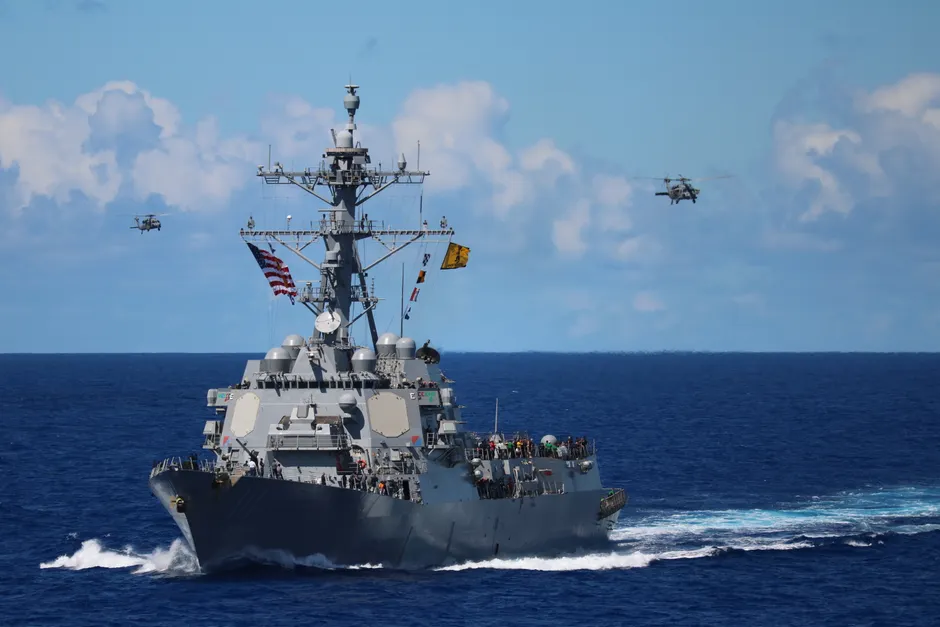
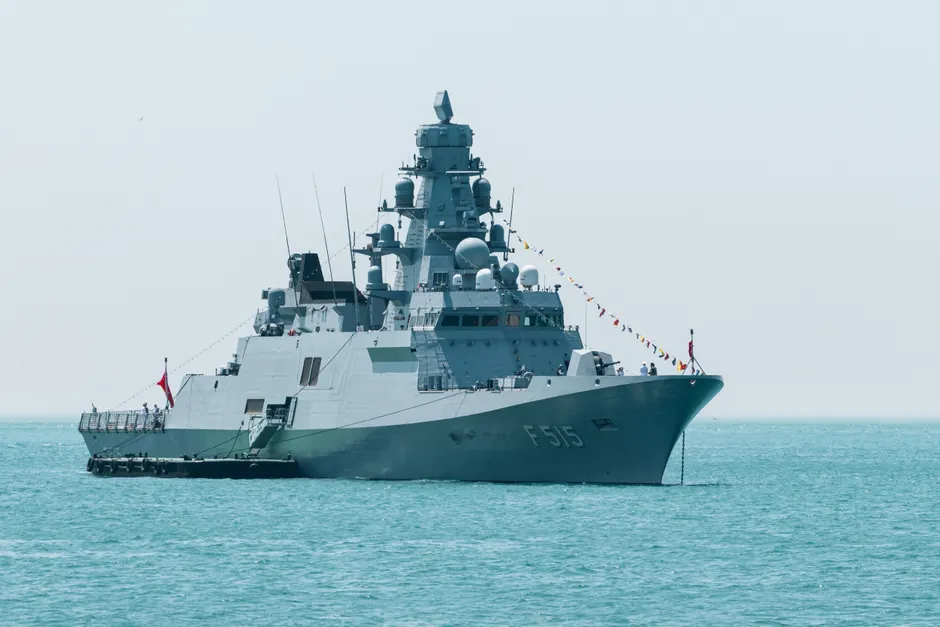
The US military destroyed multiple Iranian oil tankers on September 8, 2026, after Iran's Islamic Revolutionary Guard Corps (IRGC) twice attempted to strike a US Navy warship with ballistic missiles, according to US Central Command. American forces struck the vessels in the Gulf of Oman and near Iran's Kharg Island. CENTCOM said the targeted warship evaded both attempted attacks and no American personnel were injured. (The Guardian; CENTCOM)
The five tankers, CENTCOM said, were part of a multibillion-dollar shadow network that funds the IRGC and its regional proxies, armed groups supported by Iran across the Middle East. Before striking the vessels, American forces directed the tanker crews to abandon ship. Targeting oil carriers tied to IRGC financing is an escalation in US strategy: imposing direct material costs on Iran's military apparatus rather than relying solely on conventional sanctions (economic penalties that restrict trade) or interdiction (seizing shipments en route).
Secretary of State Marco Rubio said the US would not let Iran's attacks go unanswered and that Iran would lose tankers for every attempt to hit US naval ships. (The Guardian)
The strikes followed an earlier dispute over an American underwater drone in the Strait of Hormuz. The IRGC claimed its naval forces had seized the unmanned submersible as part of a "complex intelligence and operational action at dawn." The US military said the vessel had malfunctioned more than a day before the IRGC's seizure claim. US Navy Capt. Tim Hawkins, a CENTCOM spokesperson, said the submersible was defective and an older model that neither collected sensitive data nor carried classified sonar or radar equipment. (The Guardian)
The drone episode and the subsequent missile attacks on a US warship cap a rapid re-escalation after a month of relative calm. In August, exchanges of fire between Iran and the US had subsided. That lull has now ended, and global oil prices have returned to levels last seen in July. (The Guardian)
Iran has maintained a blockade of the Strait of Hormuz since the outbreak of the war more than six months ago. The strait normally carries about one fifth of global oil and gas shipments. The blockade has reshaped commercial shipping routes and pressured energy markets throughout the conflict. The war has claimed the lives of 18 US service members. (The Guardian)
The September 8 exchange follows a pattern established days earlier. On September 5, CENTCOM struck three IRGC oil tankers after the IRGC targeted two US Navy warships. Reuters reported no casualties in that exchange, in which Iran said it had targeted three tankers. CENTCOM published video of the September 5 strikes. (CENTCOM; Reuters)
Earlier incidents in the strait trace a rising curve of confrontation. Iran said two tankers had been struck by mines while being steered through the Strait of Hormuz by US personnel. The IRGC separately said two "offending" supertankers had been hit and disabled after ignoring repeated warnings, and that two oil tankers had exploded after attempting to transit via an "unsafe" route. (Reuters; Reuters; Reuters)
The Houthis, an Iran-aligned armed group in Yemen, announced a Saudi naval blockade, threatening a new front in the war. (Reuters)
The broader context here is a conflict that has settled into a reciprocal attrition cycle, where each side inflicts losses on the other in a repeating pattern. Each IRGC attempt on a US warship triggers a proportional destruction of Iranian maritime assets, and each cycle narrows the space for de-escalation. The US decision to strike tankers near Kharg Island, a critical node in Iran's oil export infrastructure, signals a willingness to impose costs directly on Iran's energy revenue streams. The IRGC's seizure claim around the drone, meanwhile, suggests Iran retains an interest in framing individual engagements as operational successes for domestic audiences, even when the adversary disputes the intelligence value of the seized asset.
Several dynamics bear watching. Rubio's formula, tankers lost for every missile attempt, establishes a clear if informal escalation ladder that Tehran must now factor into its operational calculus. The resumption of active exchanges after August's pause indicates that neither side views the status quo as sustainable. And with the Strait of Hormuz still under Iranian blockade and the Houthis opening additional maritime pressure, the convergence of fronts raises the risk that a single miscalculation could cascade beyond the bilateral US-Iran exchange into a wider regional confrontation.